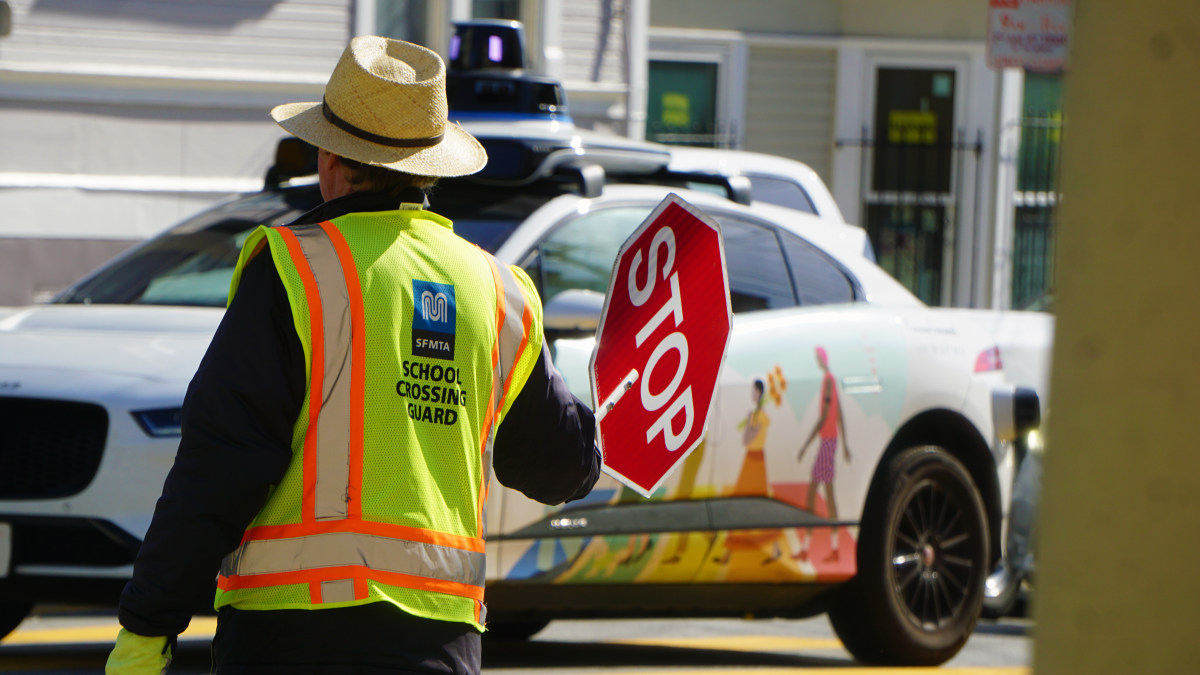
California DMV approved new enforcement rules effective July 1 that let law enforcement issue 'notices of noncompliance' to autonomous vehicle companies for traffic violations, with repeated or serious cases risking permit suspension or revocation. Companies must report incidents to the DMV within 72 hours, or 24 hours for serious cases, and the rules also open a pathway for testing autonomous big rigs over 10,000 pounds. The changes increase regulatory accountability for AV operators such as Waymo, but the article presents them as a compliance and safety update rather than a direct operating setback.
This is a marginally negative regulatory step for autonomy operators, but the bigger effect is not fines — it is operating friction. The new regime creates a paper trail and a compliance clock that will force companies to devote engineering and legal resources to incident triage, which raises the cost of scaling fleets in California and increases the odds that a small number of high-visibility violations become broader permit-review events. That matters most for companies with dense urban deployments, where even a low per-mile incident rate can generate recurring regulatory noise.
The second-order winner is the incumbent human-driven mobility stack, not because demand instantly shifts, but because the narrative of “autonomy as inevitable” gets harder to defend on a straight-line timeline. For large platform owners, the more important risk is that municipal and state scrutiny slows commercial rollout in adjacent categories such as trucking, delivery, and airport access, pushing monetization farther out and compressing optionality value. Any company with a consumer-facing AV brand is also exposed to reputational asymmetry: one incident can force public disclosure and invite localized political response.
For GOOGL, this is more about valuation duration than earnings. Waymo remains strategically advantaged, but additional disclosure and enforcement raise the probability of intermittent operational pauses, which can temper the market’s willingness to assign a premium for near-term fleet expansion. For GM, the direct effect is limited after its retreat from robotaxi ambitions, but the headline flow reinforces the market’s skepticism toward capital-intensive autonomous programs and reduces investor appetite for any future re-entry thesis.
Contrarian view: the market may overstate the downside because clearer rules can actually improve survivability for the best-capitalized operator. A formalized enforcement process may weed out weaker competitors faster than it constrains Waymo, whose compliance infrastructure is likely stronger than smaller peers. In that sense, this is less a sector-wide kill shot than a consolidation catalyst.
AI-powered research, real-time alerts, and portfolio analytics for institutional investors.
Request DemoOverall Sentiment
neutral
Sentiment Score
0.05
Ticker Sentiment
