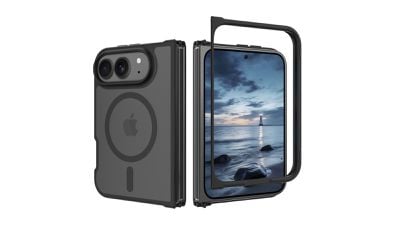
Accessory maker iFunSmart has listed early foldable iPhone cases, adding credibility to rumors that Apple’s first foldable will feature a 2-lens rear camera, Camera Control button, and no Action button. Leaks point to a 5.5-inch outer display, 7.8-inch inner display, A20 Pro chip, 12GB of memory, and a roughly $2,000 starting price for a fall 2026 launch alongside the iPhone 18 Pro lineup. The news is mostly speculative accessory-chain color rather than a direct Apple product announcement, so near-term market impact should be limited.
The real signal here is not the case itself but the compression of uncertainty around Apple’s foldable industrial design. Once accessory makers are tooling to a near-final form factor, the market starts to price the device as a credible 12-18 month product rather than an abstract project, which matters for suppliers and for forward multiple support in AAPL. The first-order beneficiaries are the accessory ecosystem and hinge/material suppliers, but the second-order effect is that Apple can begin preconditioning demand through an ultra-premium halo product without yet spending launch-day marketing dollars. The bigger implication is strategic segmentation: a ~$2,000 foldable would not need massive unit volume to matter, because it can pull iPhone ASPs higher, expand gross margin mix, and create an upgrade cliff among the top decile of buyers. If Apple executes even modestly well, the device becomes less a unit-growth story and more a pricing-power and ecosystem-retention story, with AirPods, Watch, iCloud, and services attach likely doing more of the P&L work than the handset itself. The absence of certain buttons/features in the leaked accessory geometry also suggests Apple is still optimizing for durability and internal space tradeoffs, which leaves room for last-mile spec changes and keeps launch risk elevated. Consensus is probably underestimating how much accessory validation can move the narrative this early, but overestimating how linear the monetization path will be. Foldables historically face hinge reliability, crease perception, and battery-life scrutiny, and Apple’s premium price point narrows the addressable market to enthusiasts and high-income upgraders first; that means near-term upside to AAPL is more about sentiment than earnings revisions. The key reversal trigger is any evidence that the company slips the launch window or strips features to hit thickness targets, because a delayed or compromised foldable would invite skepticism about Apple’s innovation cadence rather than reward it.
AI-powered research, real-time alerts, and portfolio analytics for institutional investors.
Request DemoOverall Sentiment
neutral
Sentiment Score
0.15
Ticker Sentiment
