
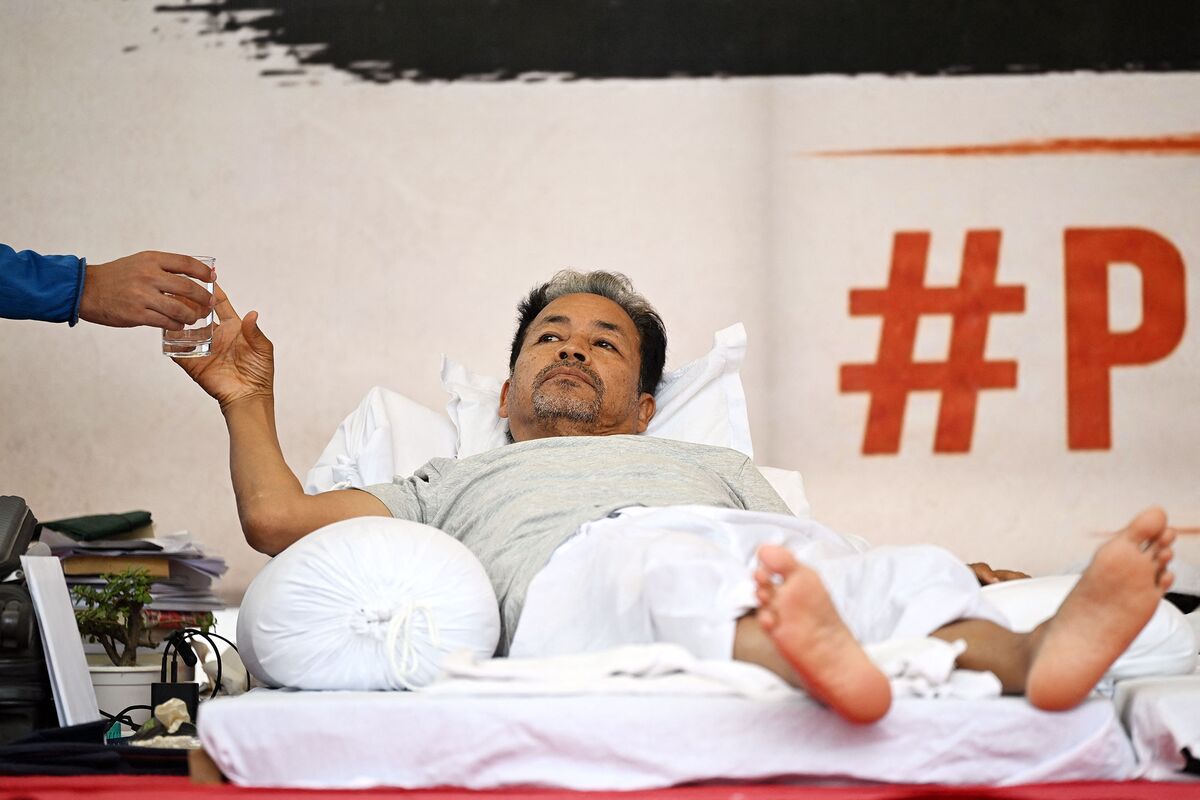
Indian youth activist Sonam Wangchuk’s health is deteriorating 2+ weeks into a hunger strike over exam paper leaks, with reported weight loss of 8.5 kg (19 lbs) and dropping blood pressure since his June 28 start at Jantar Mantar. The worsening condition is increasing pressure on the government to respond to one of the country’s most prominent youth protests in years.
This is a political-sentiment event, not an earnings event, so the first-order market impact is likely limited. The real mechanism is whether a visible youth grievance turns into a broader governance narrative: if so, it can pressure domestic-risk multiples in India, but only after the story escapes a single protest and starts to look like a recurring trust issue in hiring/education.
The near-term winners are any private test-prep, digital assessment, and compliance/proctoring vendors that can monetize a push toward tighter exam security and centralized verification. The losers are state-run institutions and, second-order, consumer-discretionary names with the most exposure to urban youth sentiment if the protests spread to campuses or recruitment hotspots. For now, the direct read-through to consumer demand is small; the bigger channel is policy credibility and its effect on India beta.
Contrarian view: the market may be underpricing how quickly exam integrity issues can become a labor-market issue, especially if students perceive the system as unreliable and shift spending toward private coaching or alternative credentials. But the setup is still too binary to express aggressively: a quick concession or localized crackdown would likely end the trade in days, while a broad campus contagion would matter over 1-3 months. The key falsifier is the absence of spread beyond the current protest core over the next 2-4 weeks.
AI-powered research, real-time alerts, and portfolio analytics for institutional investors.
Request TrialOverall Sentiment
mildly negative
Sentiment Score
-0.20
Ticker Sentiment
