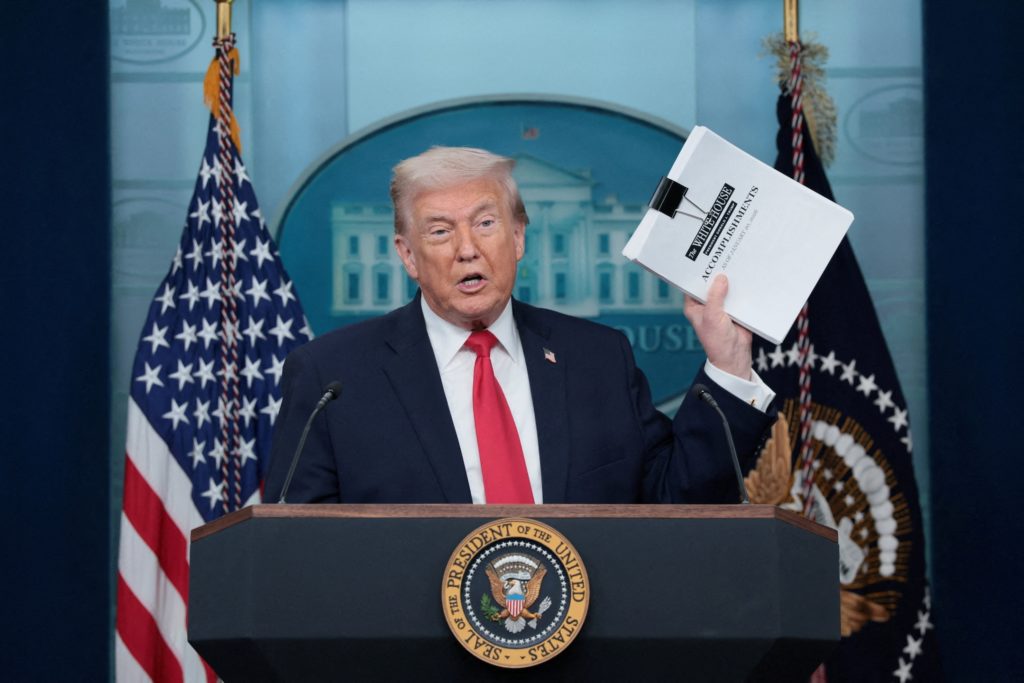
In the year since President Trump’s second inauguration, the administration has pursued expansive use of executive power—imposing unilateral tariffs, asserting control over independent agencies, directing DOJ inquiries into political opponents, deploying the National Guard, and authorizing limited military actions (Venezuela, Iran-related operations). Key near-term items to monitor for investors are ongoing legal challenges and Supreme Court decisions on agency removal and tariffs, the administration’s repeated pauses of a congressional TikTok divestiture mandate, and efforts to remove a Fed governor—factors that elevate regulatory, geopolitical, and governance uncertainty for sectors such as trade-exposed industries, defense, and U.S. tech, though immediate market-moving clarity awaits court outcomes and legislative follow-through.
Market structure: Expanded executive action increases cyclical winners (defense contractors, homeland security, cybersecurity) and short-term losers (import-reliant retail, global supply-chain exposed consumer names). If unilateral tariffs proliferate (despite legal risk), expect margin compression across XRT/XLY names and modest pricing power for domestic steel and parts suppliers; conversely, successful court checks reduce that premium. Cross-asset: risk spikes push flows to USD, Treasuries, and gold; equity implied vols (VIX) and single-name skew in defense/cyber will rise on headline risk.
Risk assessment: Tail risks include a large-scale tariff program (10–25% across consumer imports) or a constitutional standoff that freezes markets—both low probability but >1000 bps equity downside if realized. Time horizons: immediate (days) for headline-driven vol; short-term (weeks–3 months) for SCOTUS decisions and tariff litigation; long-term (6–24 months) for structural regulatory re-pricing. Hidden dependencies: market pricing assumes legal relief via courts; congressional abdication or quick executive moves would invalidate that, accelerating sector rotation. Key catalysts: SCOTUS rulings on agency removal and Fed-removal case (next 1–6 months), DOJ indictments (30–90 days), and statutory TikTok divestiture deadlines (90 days).
Trade implications: Tactical long defense/cyber, short retail/consumer-discretionary exposure. Use options to express asymmetric bets: buy 3-month call spreads on LMT/RTX to capture geopolitical spikes; buy puts or inverse ETF exposure on XLY/XRT to hedge tariff shocks. Rotate 3–6% portfolio weight from consumer discretionary into defense (LMT/RTX) and cybersecurity (PANW/CRWD) over next 4–12 weeks; hedge with 1–2% GLD/TLT allocation for systemic risk.
Contrarian angles: Consensus assumes courts will blunt executive overreach; that may be underpriced—if courts defer or timelines stretch, regulatory unpredictability becomes persistent, elevating defense/cyber multiples 10–30% over 6–12 months. Conversely, if courts strike down tariffs quickly (as historically in 2018–2019 reversals), consumer names could snap back — creating a short-term mean-reversion trade. Unintended consequence: premium paid into defense/cyber could compress if bipartisan Congressional constraints return, so scale positions with clear stop/profit rules.
AI-powered research, real-time alerts, and portfolio analytics for institutional investors.
Request DemoOverall Sentiment
neutral
Sentiment Score
-0.12
