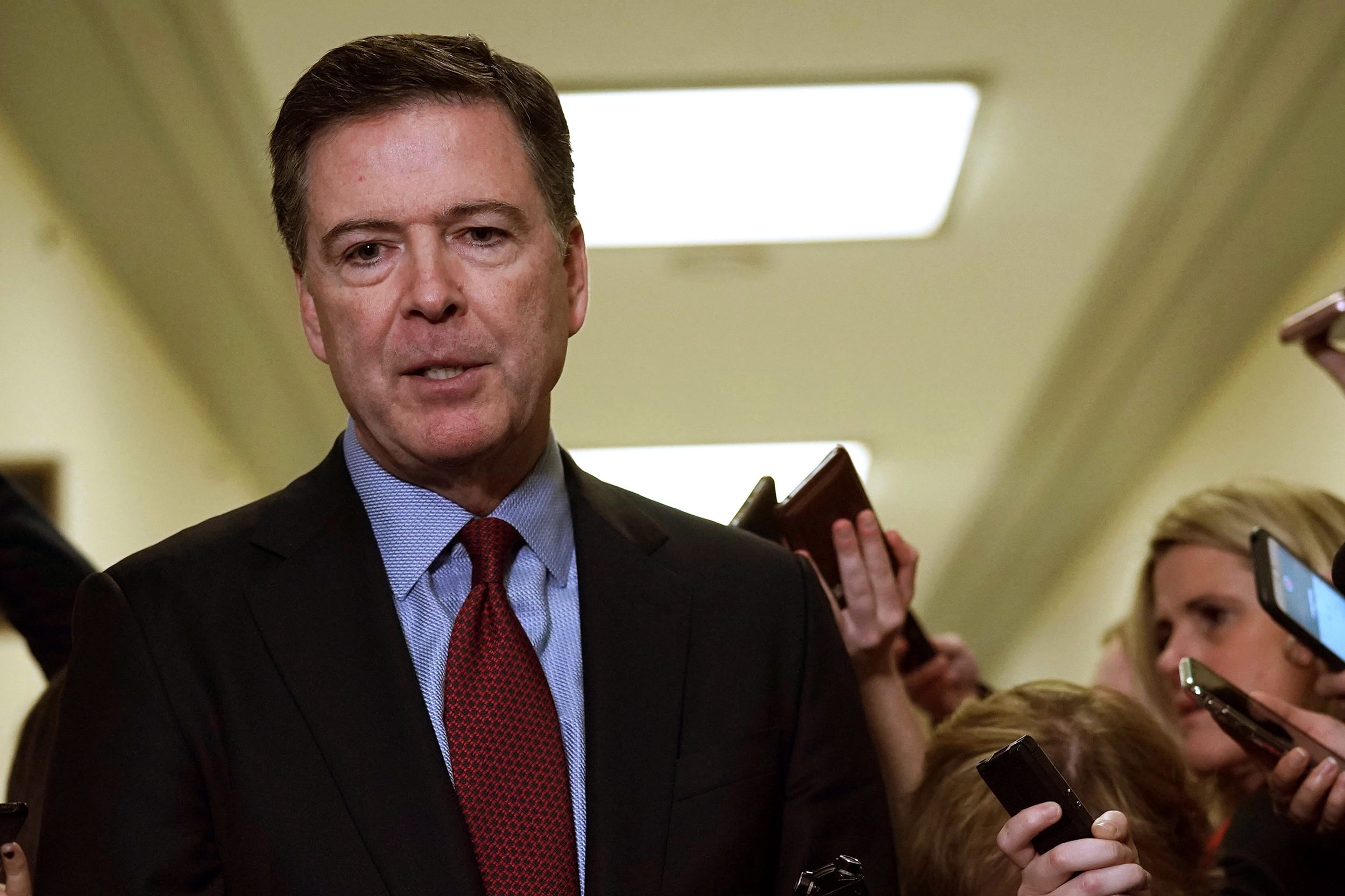
Former FBI Director James Comey was subpoenaed for documents in a ‘grand conspiracy’ probe tied to a 2017 Intelligence Community Assessment on Russian election meddling. The probe, led by Trump-appointed U.S. Attorney Jason Reding Quiñones in the Southern District of Florida, has also subpoenaed John Brennan, Peter Strzok and Lisa Page; the investigation is based on a widely disputed theory and no public evidence has emerged. Market implications are minimal.
The current environment looks like an intensification of politically driven legal activity rather than a one-off event; that raises the odds of additional investigative actions touching former officials, affiliated contractors and vendors over the next 3–9 months. Mechanically, that produces two clusters of market moves: near-term headline-driven spikes in volatility around filings/hearings (days–weeks), and a slower re-pricing of firms with concentrated government/intel exposure driven by increased compliance costs and contract/timing risk (months).
Expect uneven sectoral impacts. Small- and mid-cap government services and consultancy firms — those with >30% federal revenue and thin liquidity — are most exposed to working-capital stress and bid delays, which can widen their credit spreads by a few dozen basis points within 3–6 months. Conversely, vendors that provide cybersecurity and election/infrastructure assurance stand to capture incremental budget flows and mandate renewals; their revenue growth could beat peers by 5–15% over 6–12 months as agencies prioritize risk mitigation.
Policy and reputational spillovers amplify market structure effects: law firms, forensic consultancies and insurance underwriters will increase retainer and D&O pricing, shifting costs from discretionary budgets into recurring operating expenses — effectively compressing normalized margins for exposed firms by a few hundred basis points over a full fiscal year. The most acute reversals will come from court outcomes or bipartisan de-escalation language — in those scenarios equity volatility collapses rapidly and small-cap, eligible contractors typically bounce back first (within 2–4 weeks) while cyclicals lag.
Key monitoring triggers: major court filings, DOJ leadership statements, and federal contracting announcements. These calendar items will be the primary catalysts; absent them, the story decays but the higher structural compliance baseline persists, keeping a modest premium on security and defense-related names for 6–12 months.
AI-powered research, real-time alerts, and portfolio analytics for institutional investors.
Request DemoOverall Sentiment
neutral
Sentiment Score
0.00
