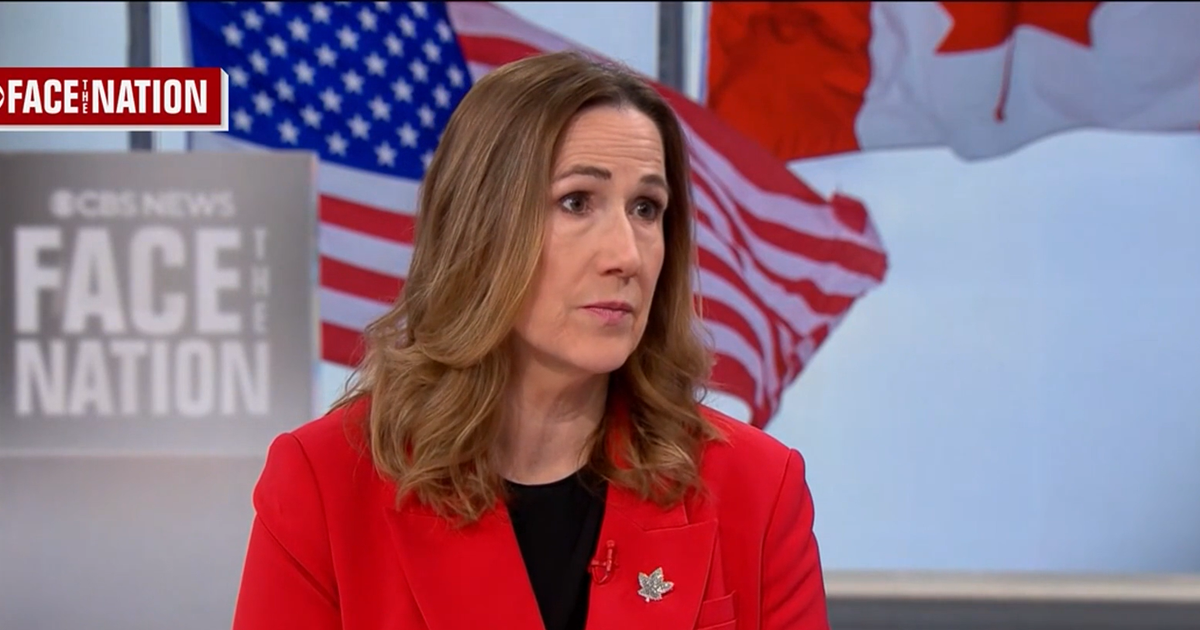
Canada signals rising bilateral friction with the United States driven by tariff disputes and political unpredictability, while seeking pragmatic market access with China to roll back punitive tariffs on agricultural and seafood exports. Ottawa defended USMCA as critical to continental competitiveness even as U.S. officials question its value, highlighted existing punitive tariffs on steel, aluminum, autos and lumber, and announced roughly CA$80 billion (over $80 billion) in defense spending over five years including Arctic over‑the‑horizon radar. The mix of trade tension, potential rule‑changes around autos and supply chains, and heightened geopolitical alignment uncertainty increases political and sectoral risk for autos, metals, lumber and agriculture exposures.
Market structure: Short-term winners are Canadian commodity and export-oriented sectors (agriculture, seafood, lumber, rails) if Beijing’s tariff rollbacks hold; defense suppliers (Lockheed LMT, Raytheon RTX, L3Harris LHX) are secondary beneficiaries from Canada’s CAD$80bn/5yr defense lift. Losers include North American integrated auto/metal supply chains exposed to tariffs and cheap Chinese EV imports (headline risk to TSLA) and small-mid cap Canadian manufacturers facing rerouted trade flows. Expect 1–3% higher input/capex costs for firms accelerating nearshoring, and incremental margin pressure for automakers over 6–12 months.
Risk assessment: Tail risks include unilateral U.S. tariff escalation or formal USMCA reformatting (low prob but >10% portfolio shock), and domestic Canadian political fracturing (Alberta referendum) causing CAD dislocation >5–10%. Immediate (days): headline-driven FX and options vol spikes; short-term (weeks–months): negotiation outcomes that swing CAD ±2–5% and reroute rail volumes ±8–12%; long-term (quarters–years): structural supply-chain reconfiguration and higher defense/Arctic capex. Hidden dependencies: rail capacity (CNI/CP) and Pacific port throughput are choke points for restored China trade.
Trade implications: Tactical plays favor long Canadian exporters/railers (EWC, CNI) on confirmed China access within 30–60 days, and directional long on defense primes via 3–6 month call spreads (LMT/RTX) sized 1–2% portfolio to capture contract flows. Buy short-dated protective put spreads on TSLA (0.5–1% hedge) to guard against headline-driven EV competition or tariff shocks; consider CAD long via FXC or 3-month forward if trade normalizes, target 3–5% move.
Contrarian angle: Markets assume a permanent Canada–US rupture; that underprices Canada’s pragmatic dual-track diplomacy and the high likelihood of targeted, reversible tariff rollbacks (historical parallel: 2018–19 US tariff cycles). Reaction is likely overdone for rails/miners priced for prolonged disruption; implied vol in equities/options may offer 20–40% edge for measured mean-reversion trades if tariff de-escalation occurs within 60–90 days.
AI-powered research, real-time alerts, and portfolio analytics for institutional investors.
Request DemoOverall Sentiment
moderately negative
Sentiment Score
-0.30
Ticker Sentiment
