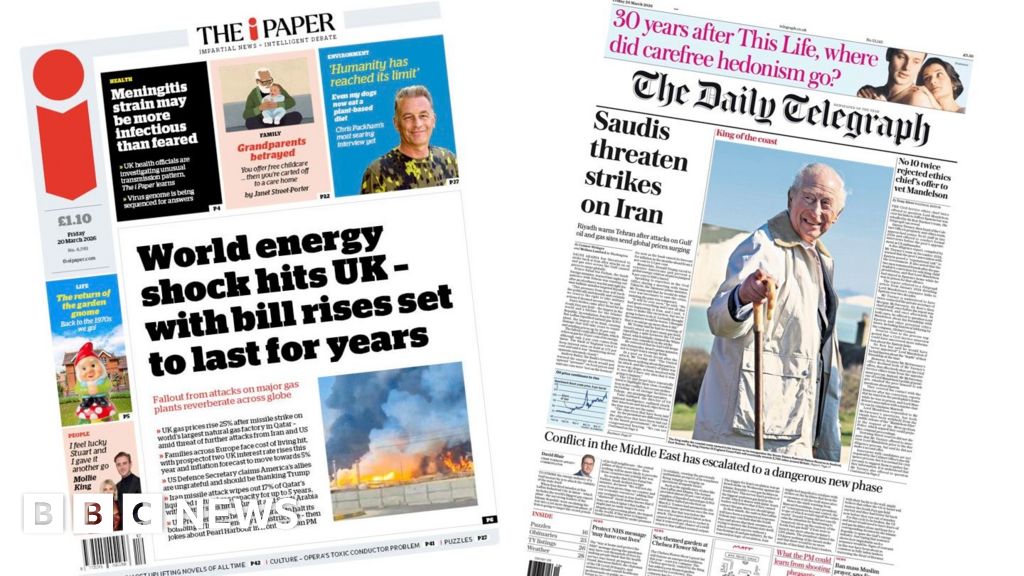
Strikes on Middle East energy infrastructure risk a 'protracted energy shock' that tabloids say could raise household energy bills by up to £300/year and fuel expectations of as many as three Bank of England rate hikes this year, risking a mortgage shock for millions. Bond and equity markets fell on Thursday as investors priced higher inflation and tighter monetary policy, creating a broadly risk-off backdrop.
Energy-risk episodes do two things beyond spot-price blips: they compress global spare capacity and force faster reallocation of shipping and insurance capacity, which raises delivered fuel costs by a variable 5–15% depending on route and cargo type. That transmission disproportionately hits Europe/UK given low storage and high import reliance, creating a near-term stagflation pocket that pressures real incomes and raises default risk in mortgage-exposed segments within 3–9 months.
Monetary policy reaction functions change non-linearly: central banks with inflation mandates (notably the BoE) face a classic policy squeeze — higher headline inflation plus growth angst — which implies front-loaded hikes and a steeper front-end yield curve within weeks, but greater recession risk 6–18 months out if energy prices remain elevated. Credit markets will digest this via wider IG spreads and materially wider HY spreads in cyclical sectors; expect CDS to lead cash spread moves by ~1–2 weeks.
Second-order winners include physical LNG terminal owners and logistics/insurance specialists able to reprice capacity, while vulnerable groups are rate-sensitive domestic sectors (mortgage lenders, consumer cyclical) and high-duration equities. Volatility will create asymmetric option opportunities: short-dated skew will remain rich while 6–12 month implied vol often lags realized moves, offering defined-risk long-dated option positions as efficient ways to express the trade.
AI-powered research, real-time alerts, and portfolio analytics for institutional investors.
Overall Sentiment
strongly negative
Sentiment Score
-0.60
