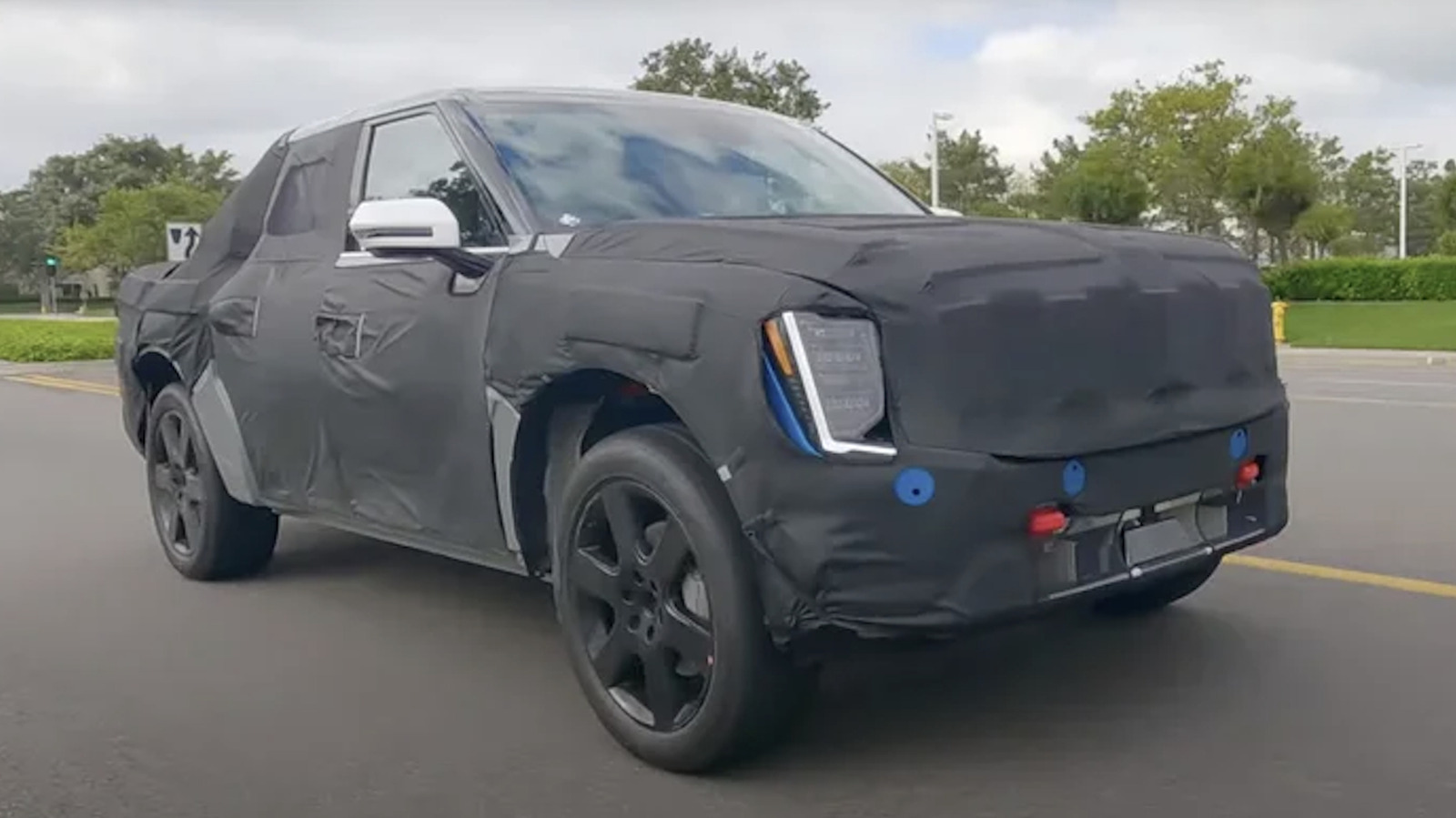
Kia will launch a midsize body-on-frame pickup in the U.S. by 2030 offering conventional hybrid and extended-range EV (EREV) powertrains and aims to sell 90,000 trucks/year to capture 7% of the midsize segment by 2034. Management lowered its EV sales target to 1.0M units in 2030 (from 1.3M previously, and 1.6M earlier) while pushing model-level goals such as Sportage surpassing 200,000 U.S. sales. The announcement is strategic for segment competition versus Toyota Tacoma (274,638 units in 2025), Chevy Colorado (107,867) and Ford Ranger (70,960), but is unlikely to move markets beyond modest company/sector reaction.
Kia's move to a midsize body-on-frame with hybrid/EREV powertrains will shift the battleground from pure BEV engineering to integrated power-electronics, thermal and genset systems — areas where tier-1 suppliers with legacy ICE + electrification expertise can extract incremental content and margin. A realistic scenario: every incremental midsize hybrid/EREV engine requires higher-power inverters, e-axles and cooling solutions versus a conventional ICE variant, creating a multi-year aftermarket and OEM-content tailwind that accrues disproportionately to component specialists rather than cell makers.
Second-order supply-chain effects matter: EREV architectures compress per-vehicle battery volume (think low‑teens kWh instead of 60–100 kWh), shifting near-term demand away from large-format cell makers and toward high‑power cells, power electronics and small genset subsystems. Numerically, even a 100k run of 15 kWh EREV packs is only ~1.5 GWh — trivial versus gigafactory outputs — but it meaningfully ups demand for inverters, e-motors and transmission components at scale, altering which suppliers win RFPs over the next 12–36 months.
Key risks are execution and regulation. Brand acceptance, towing performance and dealer capacity will decide share gains well before 2030, and state-level ZEV rules or future EPA guidance could reprioritize OEM investments back to BEVs, reversing supplier winners in 2–5 years. Watch contract awards, homologation test results and California/NE ZEV rule updates as near-term catalysts that can validate or vaporize this policy-sensitive revenue stream.
Contrarian read: the market underprices the commercial logic of EREVs for towing/long-range buyers — if charging infrastructure growth stalls, EREVs can be the practical compromise and capture share from higher-priced BEVs. Conversely, consensus may overestimate Kia’s ability to take share quickly; dealer reach, residual values and fleet penetration are harder to buy than engineering wins, so OEM equities remain sensitive to actual order books and fleet deals rather than concept announcements.
AI-powered research, real-time alerts, and portfolio analytics for institutional investors.
Request DemoOverall Sentiment
mildly positive
Sentiment Score
0.12
Ticker Sentiment
