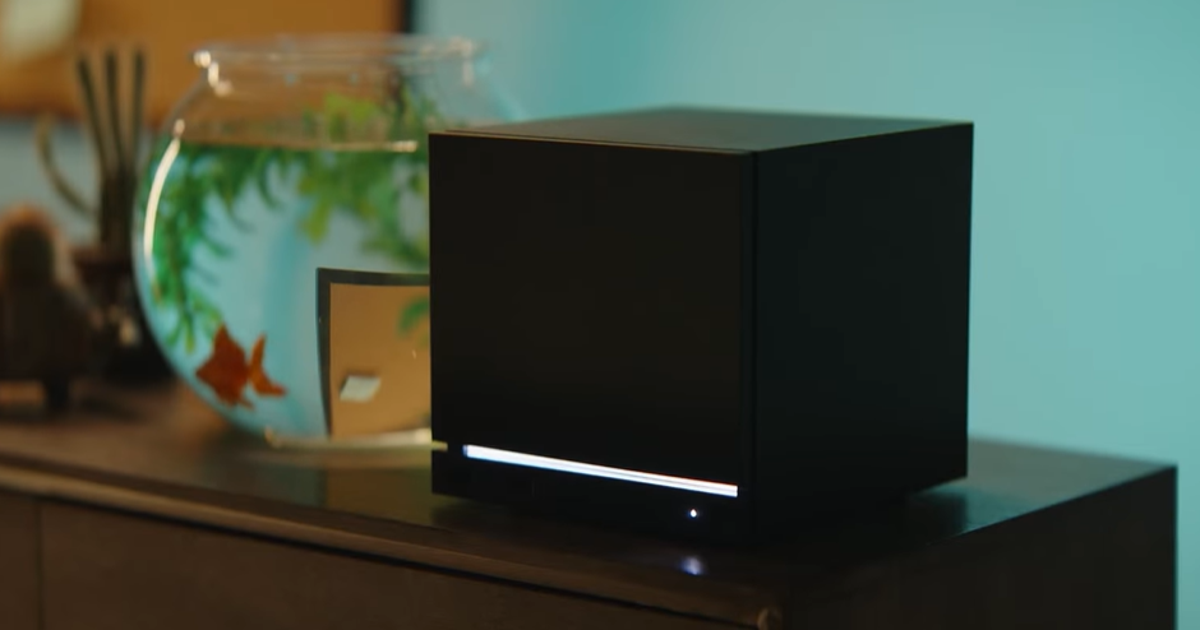
Valve said its Steam Machine starts at $1,049 and is "definitely more expensive than we hoped," citing high component, manufacturing, shipping, and distribution costs. Management would not speculate on whether prices could fall if hardware costs ease, with component scarcity and pricing still too high for the target entry-level positioning. Analysts say the device is likely to remain niche because of its price and form factor.
The key implication is not the device itself, but what its price signals about the state of hardware economics: BOM inflation and component scarcity are still strong enough to prevent even a platform owner with software leverage from forcing an entry-price product. That argues the near-term constraint is supply-chain elasticity, not demand ambition, which is bearish for any hardware model relying on low-cost scale. More broadly, it reinforces a bifurcation in consumer tech: premium and enthusiast devices can clear, but mid-tier “mass market” hardware is still getting squeezed out.
For competitors, the biggest second-order winner is not necessarily a direct rival but the broader PC ecosystem that already sits above this price band. High-priced hybrid devices tend to validate the traditional gaming PC upgrade path and sustain demand for discrete GPUs, higher-end motherboards, power supplies, and peripherals rather than new-box hardware. The loser set includes any company betting on a cheap living-room compute category; if the category is niche, attach-rate economics weaken and channel partners will be reluctant to allocate shelf space or marketing dollars.
The catalyst path is asymmetric over the next 1-2 quarters: if component prices ease, the market will likely reward the narrative of margin expansion and wider adoption before unit volume data proves it. But the deeper risk is that a non-committal pricing stance becomes a signal that the company lacks flexibility to defend share, which can cap preorder enthusiasm and reduce ecosystem momentum. Over 6-12 months, the key question is whether supply normalization actually reaches the relevant chips/memory/storage stack; if not, the product remains a prestige demonstration rather than a volume driver.
Consensus may be underestimating how bearish this is for category creation but overestimating the downside for the incumbent gaming PC stack. A niche outcome is bad for the new hardware line, but it can still be constructive for the installed-base monetization model that sells software, accessories, and high-spec upgrades to existing users. The market may be too focused on console-like unit disappointment and not enough on the fact that expensive hybrid devices often expand rather than replace high-ASP PC spending.
AI-powered research, real-time alerts, and portfolio analytics for institutional investors.
Request DemoOverall Sentiment
mildly negative
Sentiment Score
-0.20
