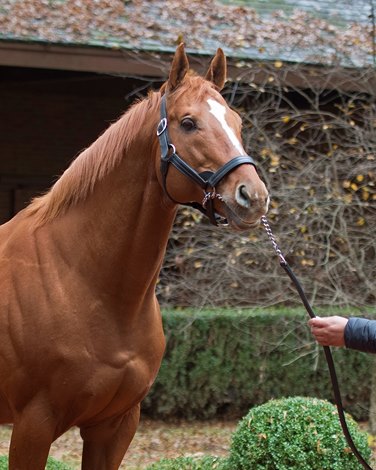
Curlin sired his first Kentucky Derby winner when Golden Tempo won the race by a neck over Renegade on May 2, adding a long-sought classic victory to his stud record. The article highlights Curlin’s broader breeding success, including 11 stakes winners from 72 foals of racing age in the Curlin x Bernardini cross and multiple prior Derby near-misses. The piece is largely celebratory and informational, with limited direct market impact beyond Thoroughbred breeding interests.
This is a useful signal for the economics of elite bloodlines, not just a feel-good pedigree update. A first Kentucky Derby winner materially strengthens Curlin’s pricing power at the margin because the stallion’s value is driven less by raw volume than by proof of durability across classic distances; that tends to support top-tier stud fees, improve book quality, and widen the funnel of high-end broodmare demand for the next 1-2 breeding cycles. The second-order winner is the farm with scarce access to proven classic sires: scarcity plus brand reinforcement usually allows fee rigidity even if the broader yearling market softens.
The more interesting takeaway is the validation of the Curlin x A.P. Indy/Bernardini nick, which has already shown an unusually high stakes conversion rate. That kind of concentrated cross success can shift capital allocation by breeders quickly, because there are only a few commercial windows each season to act; if this pattern persists, it should lift residual values for foals out of Bernardini-line mares and increase demand for similar A.P. Indy descendants. The downside is overcrowding risk: when a cross becomes consensus, the marginal foals of the same nick often get diluted in the auction ring once supply catches up 12-24 months later.
For the broader racing ecosystem, Curlin’s influence through sire, broodmare sire, and grandsire roles is a franchise-level indicator of multi-generation dominance. The market may be underestimating how much this accelerates collector behavior around his descendants, especially in high-end private sales where narrative matters almost as much as performance. The main risk is that one Derby result gets extrapolated into a full-cycle thesis too early; classic-sire economics remain highly sensitive to future crop quality and injury luck over the next 6-18 months.
AI-powered research, real-time alerts, and portfolio analytics for institutional investors.
Request DemoOverall Sentiment
mildly positive
Sentiment Score
0.20
