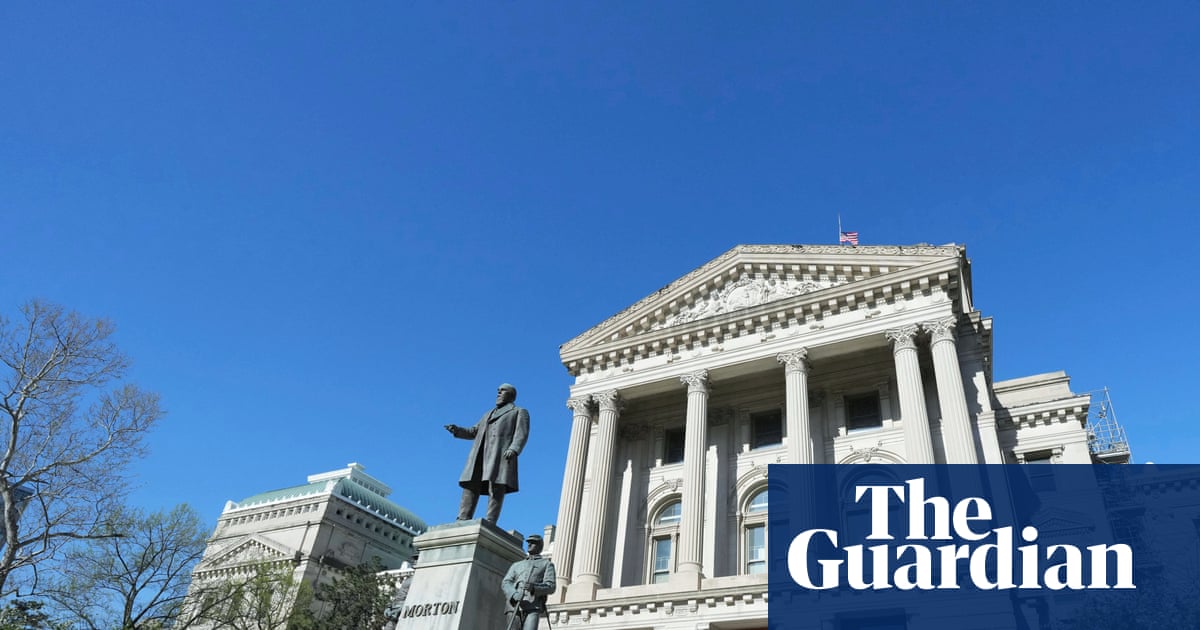
Indiana voters are weighing a state-level Republican primary shaped by Trump’s push for mid-decade redistricting, with seven state senators who opposed him facing endorsed challengers. Trump-aligned groups have spent more than $7M on ads in Indiana this year, while total ad spending in the 2026 primary has reached $25.5M, indicating a high-stakes but largely political rather than market-moving event. Republicans are still expected to retain control of seven of Indiana’s nine congressional districts, so the broader balance of power is unlikely to change.
The immediate market read is not about Indiana-specific electoral outcomes; it is about the durability of a coercive national political playbook. The second-order effect is that intra-party resistance in a low-population state can become a template for other state legislatures, raising the probability of more fragmented redistricting fights and a longer window of legal and procedural uncertainty into 2026. That matters for sectors exposed to regulatory discretion and procurement flows because state-level political volatility tends to slow capital commitments even when headline partisan control appears stable.
The bigger trading implication is that this is a signal for elevated governance risk inside the Republican coalition, not a clean directionally bullish or bearish catalyst for broad equities. If retaliation politics becomes normalized, donors, local officeholders, and business-aligned Republicans will face more pressure to choose between federal loyalty and state-level moderation, which can distort policy outcomes on taxes, utilities, gaming, and infrastructure over the next 6-18 months. The underappreciated effect is on incumbency protection: the more redistricting becomes weaponized, the less reliable district maps are as a forecast tool for legislative stability, which raises the odds of surprise outcomes in down-ballot races.
Consensus may be overestimating how much this changes congressional control and underestimating how much it changes candidate behavior. The near-term risk is not seat flipping; it is self-censorship and candidate quality deterioration, as potential officeholders decide the expected value of governing is lower than the cost of crossing national leadership. That tends to favor outsider/activist challengers in primaries and increase the volatility premium in state policy-sensitive names, especially where rate cases, permitting, or licensing depend on long-lived relationships with legislators.
The tradeable edge is to lean into volatility rather than direction: expect more dispersion in state-capital-exposed assets, and use any post-primary stabilization to fade the political-risk bid. If similar pressure campaigns expand to other states over the next 1-3 months, the market will likely reprice away from policy continuity assumptions, which is modestly negative for regulated utilities, regional banks, and infrastructure contractors with concentrated state exposure.
AI-powered research, real-time alerts, and portfolio analytics for institutional investors.
Request DemoOverall Sentiment
neutral
Sentiment Score
-0.05
