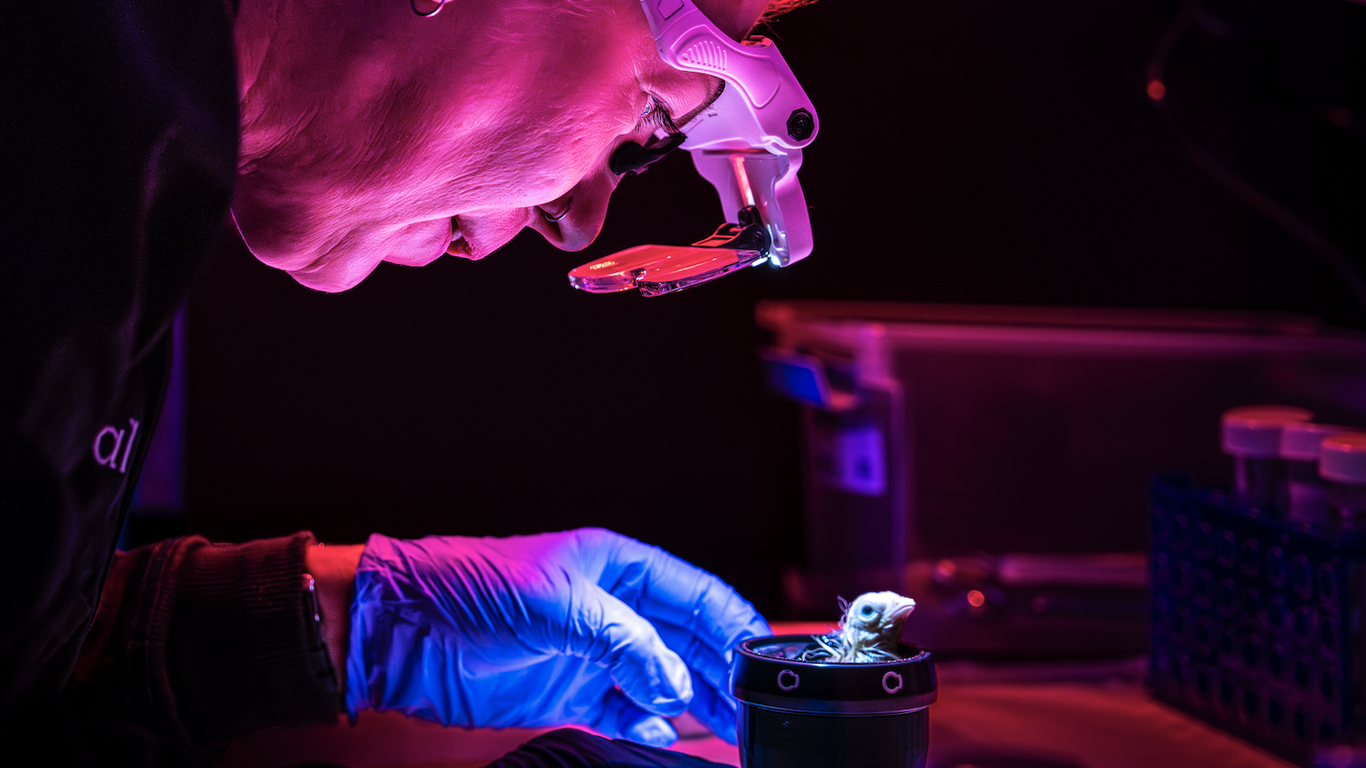
Colossal says it has hatched live chicks from fully artificial eggs after 14 iterations of its bioengineered silicone-based membrane system. The breakthrough supports the company's de-extinction efforts for the South Island giant moa and could also be used to rescue compromised embryos or aid conservation of threatened bird species. The development is promising but remains early-stage and unlikely to have immediate market-wide impact.
This is less a single-product science headline than a validation event for a platform that could create a non-obvious IP moat in reproductive engineering. If the company can reliably control oxygen diffusion, nutrient delivery, and embryo viability ex vivo, the real optionality is not de-extinction first; it's reusable infrastructure for high-value animal breeding, conservation, and potentially human-relevant organoid/embryology adjacent tools. That means the near-term economic signal may show up more in licensing, research partnerships, and synthetic-materials demand than in the headline species goal.
The second-order winner is likely the picks-and-shovels layer: specialty biomaterials, precision manufacturing, and automated lab workflow tools. Any company exposed to advanced silicone, membrane science, microfluidics, or incubator/controlled-environment systems could see downstream demand if this moves from demo to repeatable protocol. The loser set is more subtle: traditional surrogate breeding, conservation logistics, and some forms of captive propagation become less central if artificial incubation becomes a lower-failure, scalable alternative.
The biggest risk is execution time, not concept risk. Moving from a one-off hatch to statistically reliable batches is a multi-quarter validation process, and the market tends to overcapitalize early milestone risk when the commercialization path is still years away. A reversal catalyst would be any evidence that survival rates, developmental abnormalities, or cost per viable hatch remain too poor for scale; that would collapse the near-term narrative while leaving the long-dated science intact.
Consensus is likely underestimating how quickly the addressable market broadens beyond de-extinction. Conservation budgets are small, but high-margin specialized breeding and biobanking services can support premium pricing if the platform becomes the best way to rescue fragile embryos. The more interesting question is whether this becomes a recurring revenue tools business versus a binary moonshot story; the former is investable now, the latter is mostly venture-style duration risk.
AI-powered research, real-time alerts, and portfolio analytics for institutional investors.
Request DemoOverall Sentiment
mildly positive
Sentiment Score
0.45
