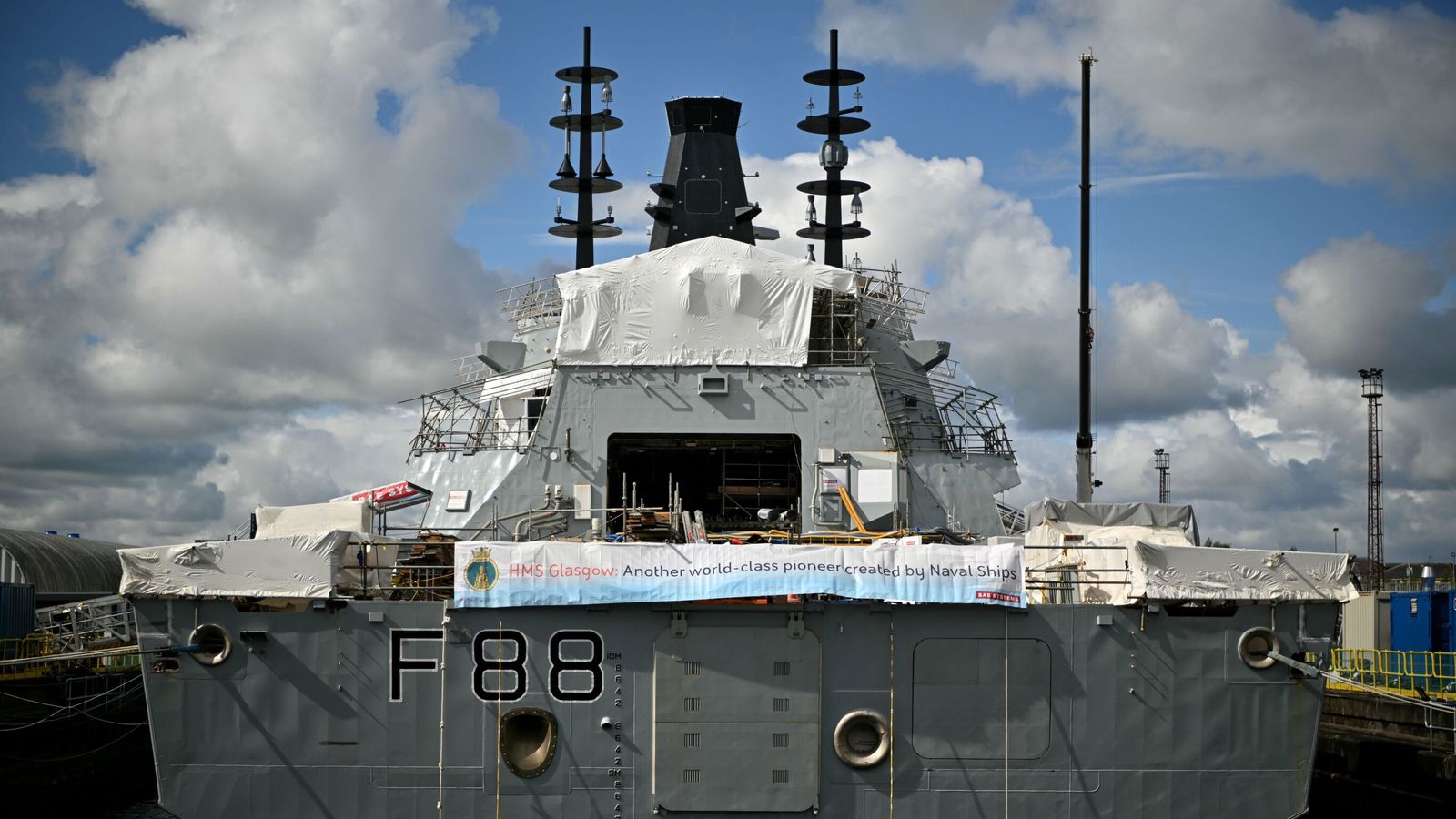
The UK and Norway signed the Lunna House defence pact to operate a combined fleet of British-built Type-26 frigates to hunt Russian submarines and protect critical undersea cables; the agreement builds on a £10bn UK-Norway warship deal (Oslo ordered five Type-26s) with ships to be constructed by BAE Systems in Glasgow. The pact enables at least 13 joint anti-submarine vessels to monitor Russian movements across the North Atlantic amid a reported 30% rise in Russian vessels sighted in UK waters, supporting UK shipbuilding jobs and boosting defense-sector revenue visibility.
Market structure: The £10bn UK–Norway Type‑26 programme (and a combined 13-ship ASW fleet) is a multi‑year revenue stream concentrated in BAE Systems (prime shipbuilder) and UK supply‑chain firms; expect meaningful workflow visibility for Glasgow yards and tier‑1 suppliers over 3–7 years. Defence budgets and export positioning strengthen pricing power for UK naval shipbuilding versus continental yards, but delivery lags mean near‑term revenue recognition is back‑loaded and capex/cash‑flow timing is critical. Risk assessment: Tail risks include kinetic escalation with Russia (energy shock, sanctions) or sabotage of undersea cables causing short, sharp market dislocations; probability low but impact high — hedge horizons: immediate (days) for tactical hedges, 3–12 months for programme execution, 2–5 years for cash flows. Hidden dependency: UK sovereign funding and BAE’s order book depend on political continuity and capex allocation; a fiscal squeeze or contractor underperformance would compress margins. Trade implications: Direct plays favor BA.L (BAE Systems) and tier‑1 services/maintenance contractors (e.g., Babcock BAB.L) with 12–36 month horizon; options can express asymmetric upside while limiting capital at risk. Cross‑asset: modest GBP support and slightly higher gilt yields priced if Defence spending expands; commodity winners include steel and specialty metals over the next 6–24 months. Contrarian angles: Markets may underweight supply‑chain winners (steel, marine engines, specialist sensors) because headlines focus on primes; conversely, consensus could already price in political upside—shipbuilding contracts have historically taken 2–5 years to translate into free cash flow. Watch delivery milestones and export announcements as true value catalysts; programme delays or cost overruns would create buying opportunities only after visible resets.
AI-powered research, real-time alerts, and portfolio analytics for institutional investors.
Request DemoOverall Sentiment
mildly positive
Sentiment Score
0.25
