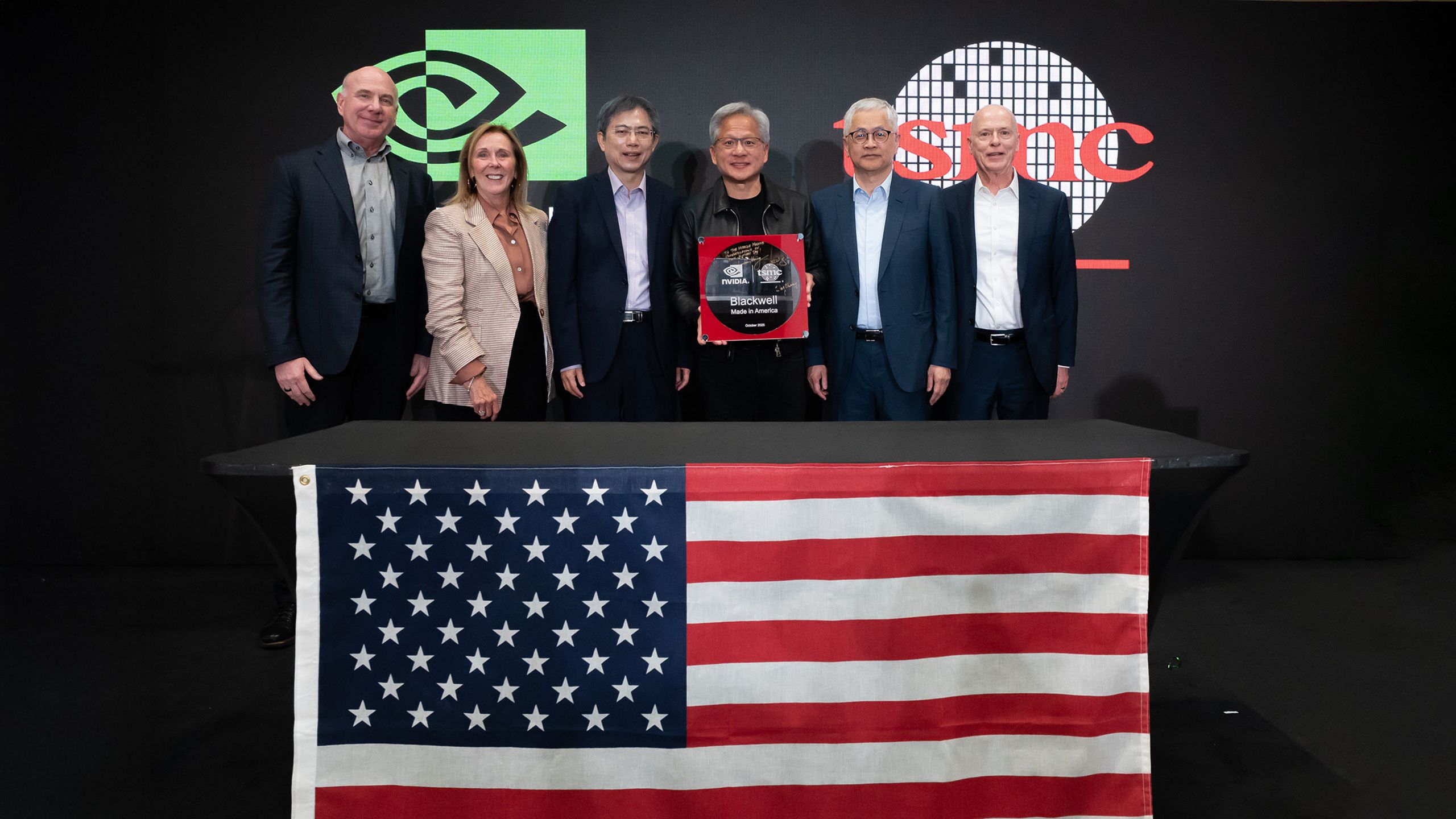
Nvidia and TSMC have achieved a significant milestone by producing the first Blackwell wafers in TSMC's Arizona Fab 21, marking the first time such advanced chips are manufactured in the U.S. This development holds strategic and political importance, aligning with U.S. industrial policy to onshore advanced semiconductor manufacturing and diversifying TSMC's production away from Taiwan, thereby mitigating geopolitical risks. However, a critical limitation remains as these U.S.-produced wafers still require shipment to Taiwan for advanced packaging and HBM integration, increasing costs and diminishing immediate strategic autonomy. This dependence is expected to decrease later in the decade as TSMC and Amkor plan to bring advanced packaging facilities online in the U.S.
Nvidia and TSMC have successfully produced the first Blackwell B300 silicon wafers at TSMC's Fab 21 in Phoenix, Arizona, marking a significant milestone as the most complex chip ever created to be manufactured in the U.S. This achievement leverages TSMC's 4N fabrication process, demonstrating the Arizona fab's advanced capabilities and aligning with the U.S. government's strategic goal of onshoring advanced semiconductor production. The move provides Nvidia with U.S.-made components for its critical AI GPUs and diversifies TSMC's global manufacturing footprint. This development holds substantial strategic and political importance, fulfilling objectives of the CHIPS Act and reducing U.S. reliance on Taiwan for sophisticated chips, thereby mitigating geopolitical supply chain risks. Nvidia's U.S. production could also help circumvent potential tariffs on Taiwan-made goods. However, a critical limitation persists as these U.S.-produced wafers must still be shipped to Taiwan for advanced CoWoS-L packaging and HBM3E integration, increasing costs and diminishing immediate strategic autonomy. The current dependence on Taiwan for advanced packaging is temporary, with TSMC and Amkor planning U.S. advanced packaging facilities online by the decade's end, alongside Micron and SK Hynix's HBM packaging investments. This phased approach suggests a gradual but significant shift towards full domestic semiconductor production. For Nvidia, the world's most valuable company with a $4.5 trillion market capitalization, this U.S. manufacturing initiative underscores its commitment to supply chain resilience for its high-demand AI GPUs.
AI-powered research, real-time alerts, and portfolio analytics for institutional investors.
Request DemoOverall Sentiment
mixed
Sentiment Score
0.15
Ticker Sentiment
