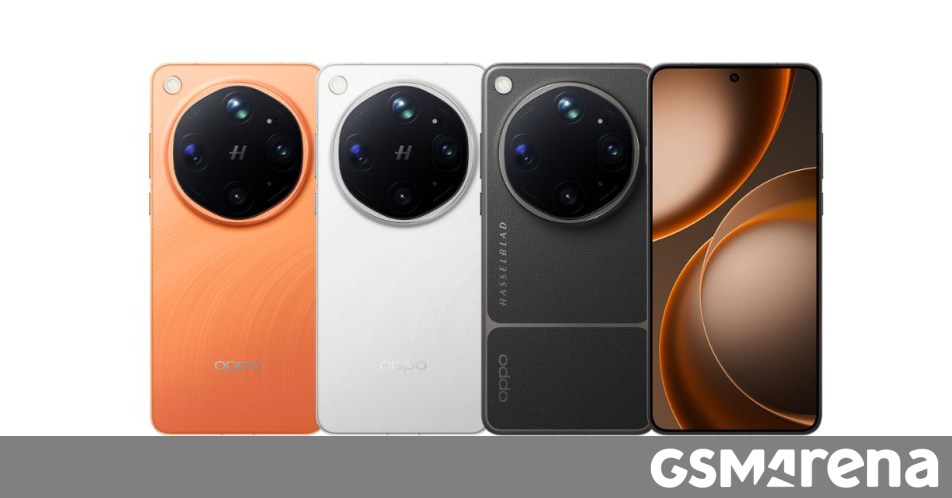
Oppo officially launched the Find X9 Ultra, a new flagship smartphone centered on a Hasselblad quad-camera system with 200MP main and telephoto sensors, 4K 120fps/8K 30fps video, and a 7,050mAh battery with 100W wired and 50W wireless charging. The device is priced from €1,699 in the EU and CNY 7,499 in China, with higher-end configurations reaching CNY 9,499 for the Hasselblad Master Edition. The announcement is positive for Oppo’s premium product positioning, but the likely market impact is limited.
This is incrementally positive for premium smartphone imaging ecosystems, but the market impact is less about handset volume and more about component mix. The bigger second-order signal is that flagships are pushing deeper into multi-camera, high-end sensor, lens, and optical-stabilization content per unit, which supports supplier ASPs even if global handset shipments remain flat. SONY is the cleaner beneficiary because image sensors remain the gating item in premium camera differentiation; if this class of phone gains traction outside China, it modestly extends the upgrade cycle for top-tier sensor content and keeps pricing power intact.
The more interesting read-through is competitive pressure on peers to match a spec stack that is becoming expensive to replicate. That tends to compress margins for Android OEMs that lack scale or brand pull in the ultra-premium segment, while raising bill-of-materials intensity across the category. The near-term winner is the supply chain, but over 6-12 months the risk is that aggressive feature inflation has diminishing willingness-to-pay in a slowing consumer environment, so the uplift to component vendors may be more durable than the handset OEM's own economics.
For GLW, the direct read-through is weaker and likely not material unless the device meaningfully shifts mix toward more advanced cover glass, ceramic-like materials, or premium substrate applications across a broader portfolio. The contrarian view is that the market may overrate headline specs and underrate integration complexity: these devices often showcase capability that does not translate into scalable demand, especially at EU pricing where elasticity is much more punitive than in China. The real reversal trigger is not a better camera from a rival, but evidence that flagship sell-through is failing to expand the premium replacement cycle over the next 2-3 quarters.
AI-powered research, real-time alerts, and portfolio analytics for institutional investors.
Request TrialOverall Sentiment
mildly positive
Sentiment Score
0.30
Ticker Sentiment
