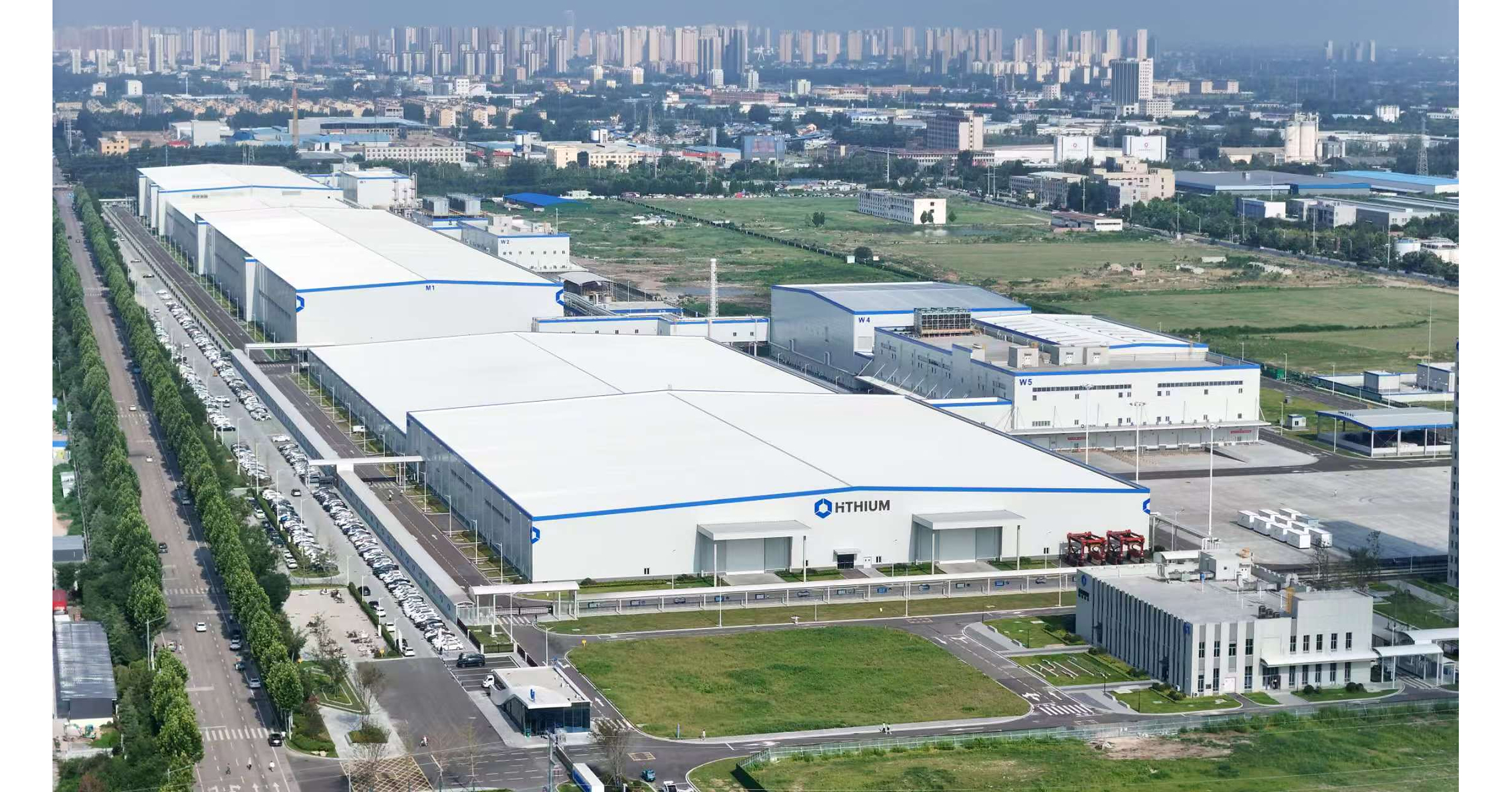
Shandong HiTHIUM (Base Heze) inaugurated the world’s first integrated long-duration energy storage (LDES) industrial base, launching production in Heze Luxi, China. The project targets ~80 hectares and RMB 13B+ investment, scaling LFP cell manufacturing through full value-chain integration. The new 5th-generation smart production lines exceed 15GWh per line and claim 50% less physical space/GWh, 58% lower production labor, 13% lower manufacturing energy use, and 200% higher efficiency vs. the prior generation, with automation >95% and AI-assisted quality checks. Overall, this is a capacity and cost-efficiency milestone that supports large-scale LDES delivery globally.
This is more important as a cost-curve signal than as a single plant opening. If the claimed productivity gains are real, the next leg of competition in stationary storage shifts from capacity announcements to installed $/kWh and balance-sheet-backed financing, which is where Western integrators and smaller balance-sheet-constrained developers are weakest. The near-term market impact should be limited outside China because bankability, warranties, and tariff frictions still gate cross-border adoption.
The second-order winners are renewable owners with chronic curtailment and capacity scarcity: cheaper long-duration storage improves merchant capture and reduces the all-in cost of firmed renewables, especially in markets with weak transmission and high evening peaks. That creates a medium-term tailwind for utility-scale developers and IPPs with storage-heavy pipelines, while pressuring legacy peakers only after 12-18 months of actual deployment, not on headlines alone. Upstream lithium exposure also gets a volume tailwind if LDES scales, but only if the economics translate into orders rather than pilot projects.
The contrarian risk is that the market may over-interpret manufacturing scale as immediate global pricing power. The real bottleneck is still project finance and interconnection, so hardware cost declines do not automatically accelerate adoption unless RFPs, warranty terms, and insurance markets accept the new platform. I would treat this as a watch item until we see export-qualified orders or margin compression in public peers; otherwise the reaction is likely to be more sentiment-driven than fundamental.
AI-powered research, real-time alerts, and portfolio analytics for institutional investors.
Request DemoOverall Sentiment
moderately positive
Sentiment Score
0.35
