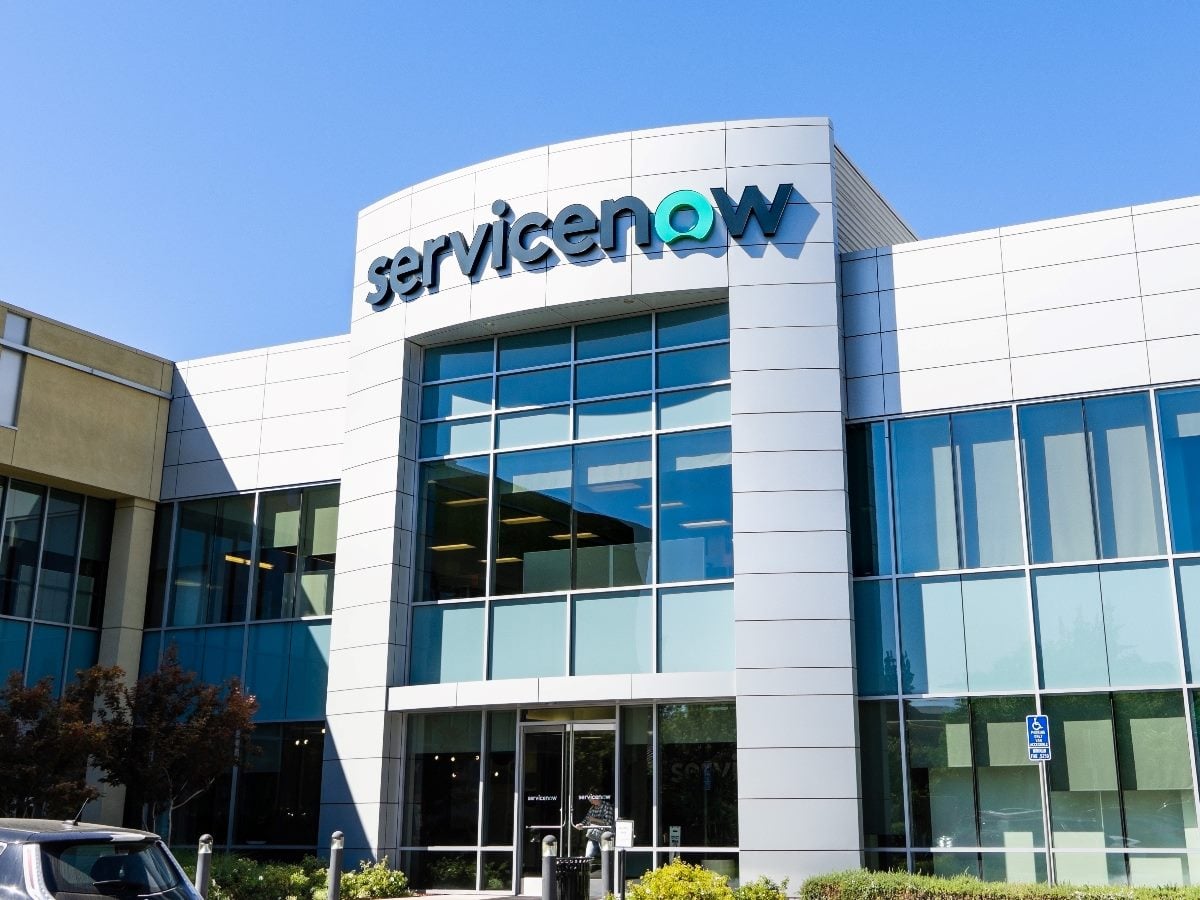
ServiceNow launched Autonomous CRM on May 5, a new AI-and-workflow platform designed to automate customer tasks end to end for sales, service and field operations. The company says the system already resolves more than 100 million customer cases, orchestrates 16 million orders, configures 7 million quotes and executes 11 million work order tasks each month. The launch expands ServiceNow’s AI footprint with OpenAI and Anthropic integrations and an OEM partnership with Tenon, supporting a more bullish long-term enterprise automation narrative.
This is less a CRM feature release than a bid to reprice NOW as the enterprise control plane for agentic workflows. The second-order effect is that the value pool shifts away from point-solution CRM vendors toward vendors that sit across service, field ops, identity, and orchestration; that broadens NOW’s TAM but also raises the bar on execution because buyers will compare it against the cost of stitching together best-of-breed AI agents. The most important implication for CRM incumbents is not immediate share loss in seats, but margin pressure as enterprise budgets migrate from license expansion to workflow automation and integration spend.
The near-term catalyst is not revenue recognition from a headline launch, but attach-rate acceleration in large accounts where customer service, field service, and sales are already adjacent to the core platform. If NOW can turn pilot wins into multi-department standardization over the next 2–4 quarters, it creates a land-and-expand flywheel that is harder for CRM to defend because the switching cost becomes process redesign, not data migration. The main bear case is that autonomous workflows are still brittle in edge cases; one visible failure in regulated workflows could slow adoption materially, especially in public-sector and healthcare verticals.
The contrarian read is that the market may be underestimating how disruptive agentic orchestration is to legacy CRM economics, while overestimating how quickly customers will trust fully autonomous execution. That asymmetry favors NOW over CRM, but with a time horizon measured in quarters to years rather than weeks. The competitive risk is that hyperscalers and model providers commoditize the AI layer, forcing NOW to prove it owns the workflow graph rather than merely reselling intelligence on top of it.
AI-powered research, real-time alerts, and portfolio analytics for institutional investors.
Request DemoOverall Sentiment
mildly positive
Sentiment Score
0.45
Ticker Sentiment
