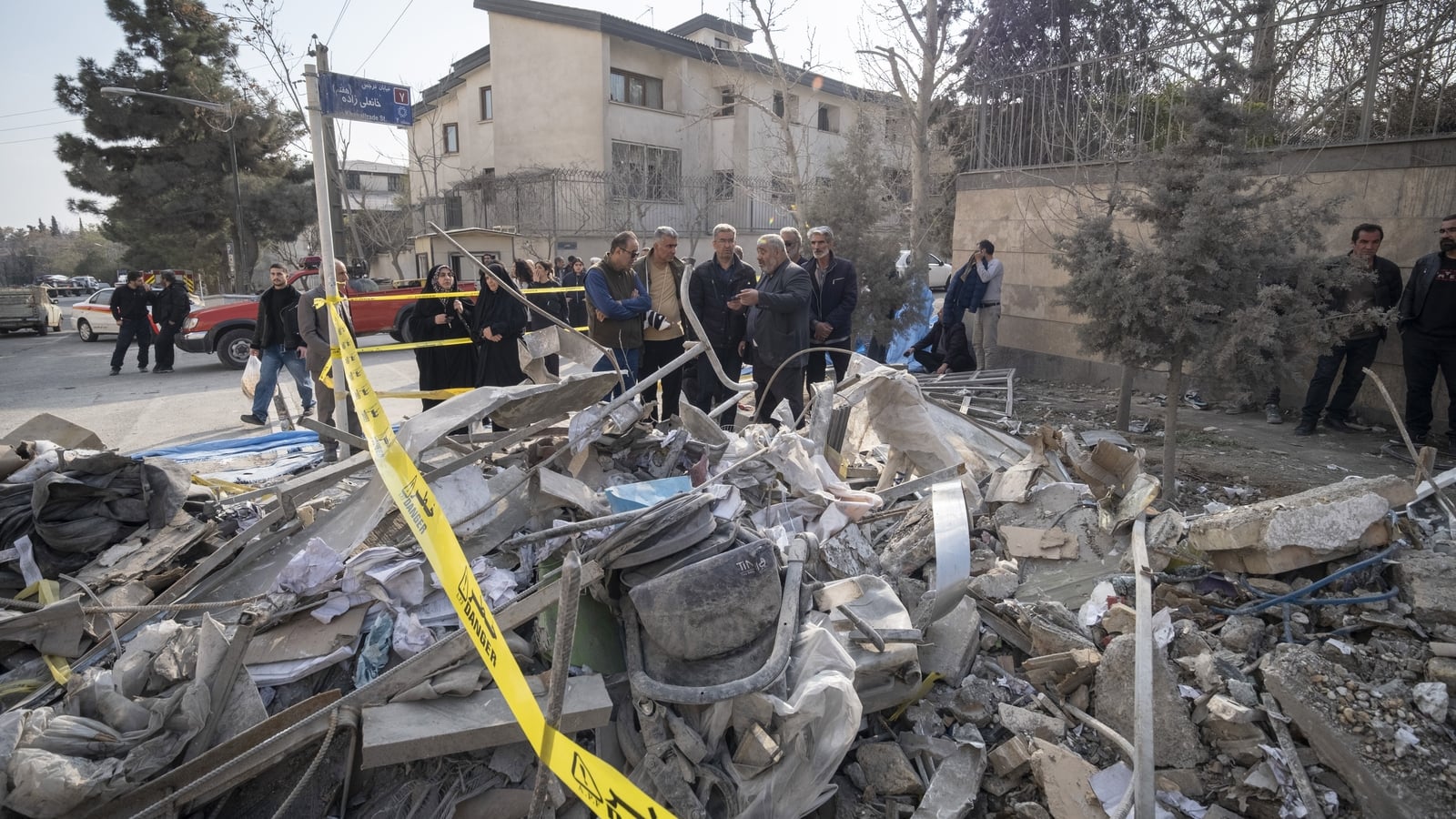
Iran launched multiple missile rounds at Israel overnight, with at least four identified volleys causing infrastructure damage in Haifa (reports of a refinery hit and shrapnel damage to an educational institution) but no reported casualties. Israeli PM Netanyahu declared Iran 'decimated', signaling continued military action and high geopolitical tension. Ireland's Tánaiste warned of humanitarian concerns and said government support on fuel costs will be finalised shortly, flagging the risk of higher fuel prices and significant inflationary pressure ahead of Eurogroup meetings.
Market mechanics: a localized surge in kinetic exchanges centered on Iran/Israel will transmit to global prices through two fast channels — maritime insurance/freight re‑routing and refined product supply shocks — producing outsized moves in diesel/jet spreads within days and Brent volatility for several weeks. Expect an initial $3–8/bbl re‑pricing window if tanker transits near the Gulf or eastern Mediterranean face sustained risk, with freight rate shocks persisting longer as ships reroute and cargoes rebalance.
Sector winners/losers and second‑order effects: defense primes with air‑defense and missile‑munition exposure (large backlog visibility, replaceable by prime contractors) stand to see order acceleration over 12–24 months, while airlines and regional refiners face immediate margin compression from higher jet/diesel cracks and disrupted logistics. Insurers and commodity traders will widen premia and bid/offer spreads, creating trading opportunities in volatility and working capital financing products; manufacturing supply chains that depend on timely diesel deliveries (chemicals, autos) will see input cost passthrough into CPI over 1–3 quarters.
Risk profile and reversal scenarios: worst‑case (weeks to months) is broader regional escalation dragging in external powers, pushing Brent > $100 and embedding higher inflation expectations; mean reversion catalysts are credible ceasefire talks, coordinated SPR releases, or a rapid restoration of regional transit security, any of which could erase a large portion of the premium inside 30–90 days. The market often overshoots near‑term energy premia versus durable supply impairment — short‑dated volatility trades that fade into multi‑month defensive/defense long exposures are the most attractive asymmetric plays.
AI-powered research, real-time alerts, and portfolio analytics for institutional investors.
Request DemoOverall Sentiment
strongly negative
Sentiment Score
-0.60
