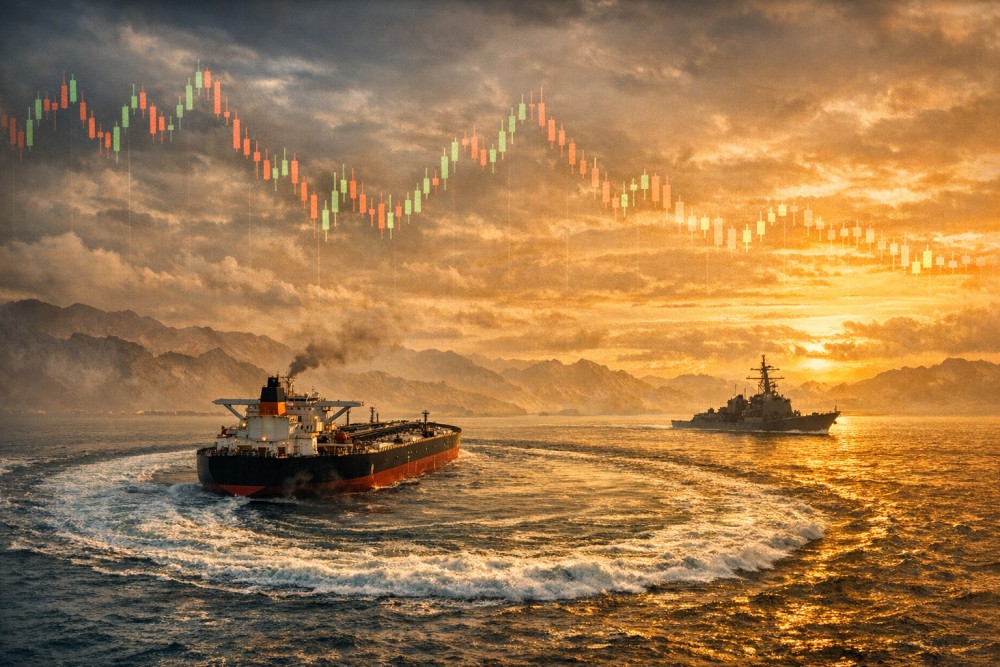
The Strait of Hormuz blockade took effect Monday at 10:00 AM ET, sending tankers to reverse course and forcing some vessels to reroute around the Cape of Good Hope, adding 10-14 days of transit time and pushing shipping costs to two-year highs. Global markets sold off sharply, with Nasdaq 100 futures leading declines and Tokyo, Seoul, and Sydney down 1.5% to 2.8%; oil stayed above $100/barrel. Bank Indonesia warned of rupiah pressure, higher import inflation, and a wider current account deficit, underscoring broad macro and market stress.
This is a classic first-order energy spike with a much larger second-order macro impulse: the real trade is not just higher crude, but a forced repricing of global risk premia as freight, insurance, and working capital all re-rate simultaneously. The Cape routing adds a latency shock that will hit refinery inventories and product spreads over the next 1-3 weeks, which means the winners are likely to be upstream producers and selected tanker/shipping names before the broader commodity complex fully adjusts. OXY and COP should outperform on the margin, but the more asymmetric upside may sit in oil-services and transport-linked volatility products if the market starts pricing sustained capex discipline and delayed cargo flows. The biggest near-term loser is anything with imported-energy exposure and balance-sheet sensitivity to FX: Indonesia is a good example, but the broader EM basket could see a tighter financial conditions shock through dollar strength and higher import bills. That creates a negative feedback loop for consumer discretionary, airlines, chemicals, and regional banks in countries reliant on energy imports. Over days, the market may overreact to headline risk; over months, the more durable issue is that higher fuel prices can compress real incomes and force central banks to remain restrictive even as growth slows. A key contrarian point: if the blockade holds but no physical damage occurs to Gulf production infrastructure, the move in crude could fade faster than the market expects once inventories and shipping routes normalize. The consensus is likely underestimating how quickly policymakers can create a de-escalation narrative if financial stress intensifies, especially if equity markets continue to gap lower and pressure rises on risk assets globally. That makes upside in outright long oil less attractive than expressing the view through volatility and relative value, where you can monetize sustained dispersion without requiring a permanent supply shock.
AI-powered research, real-time alerts, and portfolio analytics for institutional investors.
Request DemoOverall Sentiment
extremely negative
Sentiment Score
-0.85
Ticker Sentiment
