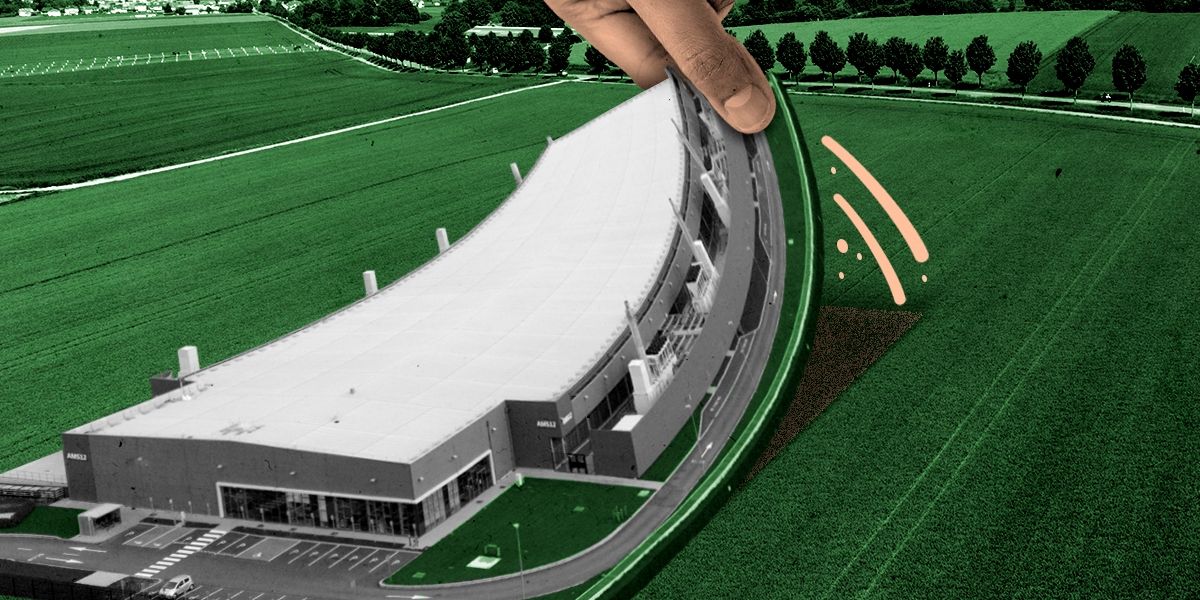
Heatmap Pro says at least 20 proposed U.S. data center projects were canceled in Q1 2026 after local pushback, totaling more than $41.7 billion in investment and at least 3.5 gigawatts of electricity demand. The largest cancellation was Project Jarvis/Sentinel Grove, a proposed 1-gigawatt, $13.5 billion data center in Florida that was withdrawn after a failed planning vote and state-level AI regulation concerns. The article also warns that Trump-era FAA/Defense Department actions may be effectively stalling about 165 wind projects representing roughly 30 gigawatts, underscoring heightened regulatory risk for large infrastructure and energy development.
The market is underpricing the difference between a noisy local permitting fight and a true federal choke point. Data center opposition is still mostly a siting and community-acceptance issue, but the article’s key signal is that load growth is now colliding with grid bottlenecks, transmission scarcity, and policy risk at the state level all at once. That combination favors incumbents that own constrained assets — regulated utilities with existing substation/transmission footprint, gas turbine suppliers, and companies monetizing behind-the-meter solutions — while penalizing “announce first, build later” developers whose timelines depend on clean, predictable approvals.
The second-order effect is that project cancellations don’t just remove future capex; they can reprice the entire local utility investment plan. If hyperscalers slow or relocate, utilities that overbuilt for incremental load may see rate-base growth deferred, while those able to charge for dedicated infrastructure, interconnection upgrades, or self-build solutions can accelerate earnings. The article also hints at a political inversion: data centers were supposed to be a bipartisan industrial-policy tailwind, but they may instead become the wedge that expands permitting reform for generation and transmission while simultaneously hardening local resistance to anything perceived as subsidizing Big Tech.
The wind section is the more important tail risk. If a quasi-administrative freeze can functionally stop a major category of new build without a courtroom loss, then the investability premium on U.S. power development rises sharply and foreign capital may demand higher returns or shift to less politicized markets. That is bullish for scarcity-value assets in existing generation and grid services, but bearish for long-duration clean-energy developers and any business model dependent on stable federal process. The near-term catalyst is whether this starts showing up in canceled PPA negotiations and delayed capex commitments over the next 1-2 quarters, not just in headlines.
Consensus is likely too focused on the moral of the story — “permitting is hard” — and not enough on the capital-allocation consequence: optionality is disappearing. When approval risk becomes non-linear, the winners are firms that can either self-fund infrastructure, control land and interconnects already in hand, or sell the picks-and-shovels needed to harden the grid. The losers are those with the most power-hungry growth stories and the least political insulation.
AI-powered research, real-time alerts, and portfolio analytics for institutional investors.
Request DemoOverall Sentiment
moderately negative
Sentiment Score
-0.35
Ticker Sentiment
