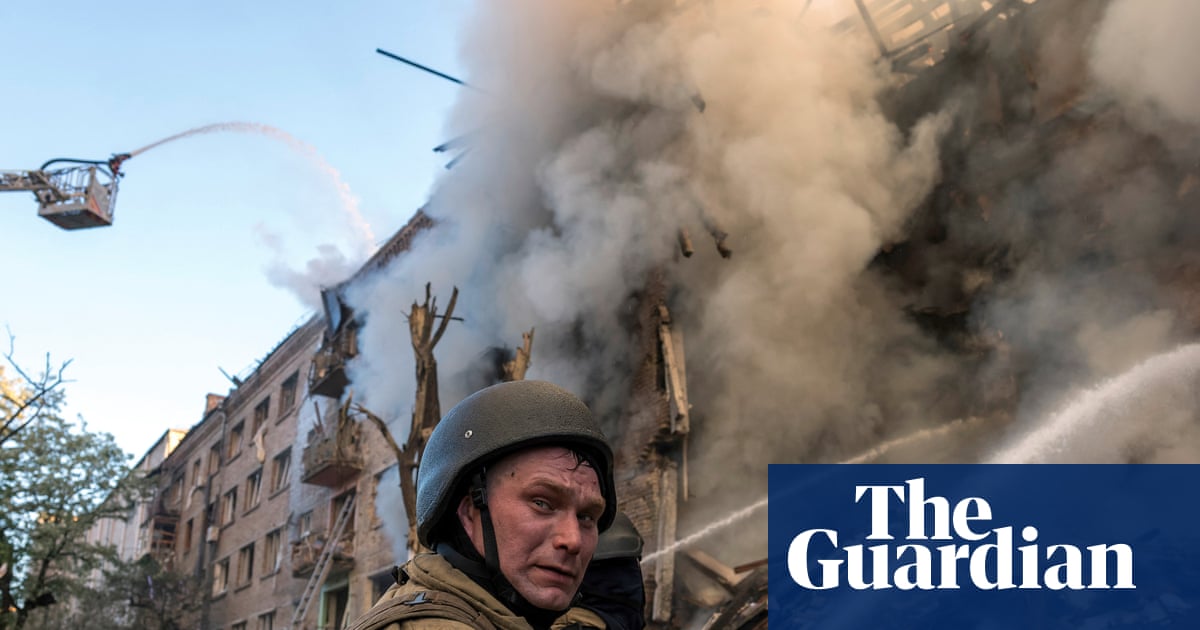
Russia’s latest strikes on Ukraine reportedly involved Oreshnik intermediate-range ballistic missiles, with the attack on Kyiv and surrounding areas killing at least four people and injuring about 100. EU and UK officials condemned the escalation as reckless nuclear brinkmanship, while WHO said its Kyiv offices were damaged by debris. Ukraine also said its drones hit an oil pumping dispatch station in Russia’s Vladimir region, adding to cross-border energy infrastructure risk.
The market read-through is less about the headline blast radius and more about escalation asymmetry: Russia is signaling it can raise the perceived cost of supporting Ukraine without materially changing the battlefield balance. That typically lifts implied risk premia in European defense, air defense, electronic warfare, and hardening/infrastructure-rebuild names while leaving broad European cyclicals vulnerable to a “higher for longer geopolitics” discount, especially if investors start treating recurring city-center strikes as a persistent supply-chain tax rather than one-off events.
The more interesting second-order effect is on energy logistics and regional fuel balances. Targeting an oil-pumping node near Moscow shows Ukraine can still punch at domestic Russian distribution, not just frontier assets; that raises the odds of localized product shortages, higher inland transport costs, and periodic bottlenecks even if crude export volumes hold. In the medium term, repeated infrastructure disruption matters more for refined products than for crude benchmarks, which suggests the trade is better expressed through distillate exposure, regional refining margins, and shipping/insurance risk premia than through a simple directional crude bet.
For Europe, the Belarus channel is a tail risk worth pricing as a low-probability, high-impact escalation vector over the next 3-12 months. Any sign of deeper Belarusian involvement would widen the scope of sanctions and complicate eastern flank logistics, which would be bullish for NATO-enabling defense contractors but negative for Central/Eastern European transport, airlines, and industrials with Baltic/Black Sea exposure. The health-system damage also keeps reconstruction and humanitarian funding in the foreground, which supports a long-duration rebuild trade once there is any ceasefire signal.
Consensus may be underestimating how much of this is already embedded in “war headline fatigue.” The opportunity is not to chase every spike, but to own the names that monetize sustained threat perception: air defense, ammunition, satellite comms, and critical infrastructure protection. Conversely, if diplomatic pressure on Belarus or a ceasefire framework emerges, the air-pocket in defense multiples could be sharp because these stocks are increasingly priced on durable urgency rather than near-term earnings alone.
AI-powered research, real-time alerts, and portfolio analytics for institutional investors.
Request DemoOverall Sentiment
strongly negative
Sentiment Score
-0.80
