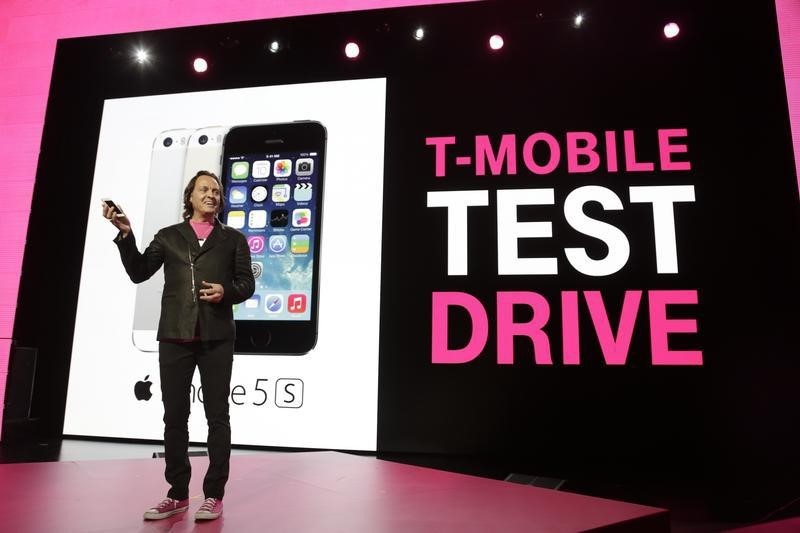
T-Mobile fell 4.3% to $174.76 and briefly hit a new 52-week low of $169 after reports that SpaceX is considering a Starlink-branded U.S. retail mobile service and potentially its own terrestrial cellular network. The FCC’s approval of SpaceX’s roughly $17 billion EchoStar spectrum acquisition in May 2026 adds credibility to the competitive threat, while Goldman Sachs had expected T-Mobile to add about 250,000 postpaid net subscribers in Q2. The article frames the move as an industry-wide telecom disruption rather than a company-specific issue, with TMUS already down more than 26% from its 52-week high of $261.56.
The market is treating this as a pure TMUS negative, but the bigger second-order effect is a re-rating of the entire U.S. wireless capital intensity curve. If SpaceX goes from wholesale/spectrum monetization into a direct retail posture, incumbents will need to defend share with either higher handset subsidies, richer unlimited plans, or faster rural capex — all of which compress returns on incremental subscriber growth. The first-order damage shows up in TMUS sentiment, but the longer-duration winners are equipment vendors and tower owners only if carriers choose to spend rather than discount; otherwise the industry absorbs the shock through margin pressure.
The key nuance is timing: a terrestrial buildout is a multi-year optionality story, but the negotiating leverage is immediate. Over the next 1-3 quarters, the trade is not actual subscriber defections but multiple compression as investors revisit terminal growth and competitive durability. That makes TMUS vulnerable to further downside on any evidence of slower postpaid net adds, weaker ARPU, or a more aggressive promo environment; conversely, a lack of concrete product rollout or financing details could trigger a sharp mean-reversion rally once the market recognizes the infrastructure hurdle.
The setup also creates a potential relative-value read-through to GS, not as a direct beneficiary but as a signaling vehicle: if capital markets stay open for SpaceX, the company can keep weaponizing optionality without immediate execution risk. That means this is less about near-term disruption and more about changing the bargaining power between platform owners and network operators. In that framing, the selloff may be directionally right but likely over-weights the probability of a near-term service launch versus the probability of prolonged strategic pressure.
AI-powered research, real-time alerts, and portfolio analytics for institutional investors.
Request DemoOverall Sentiment
moderately negative
Sentiment Score
-0.45
Ticker Sentiment
