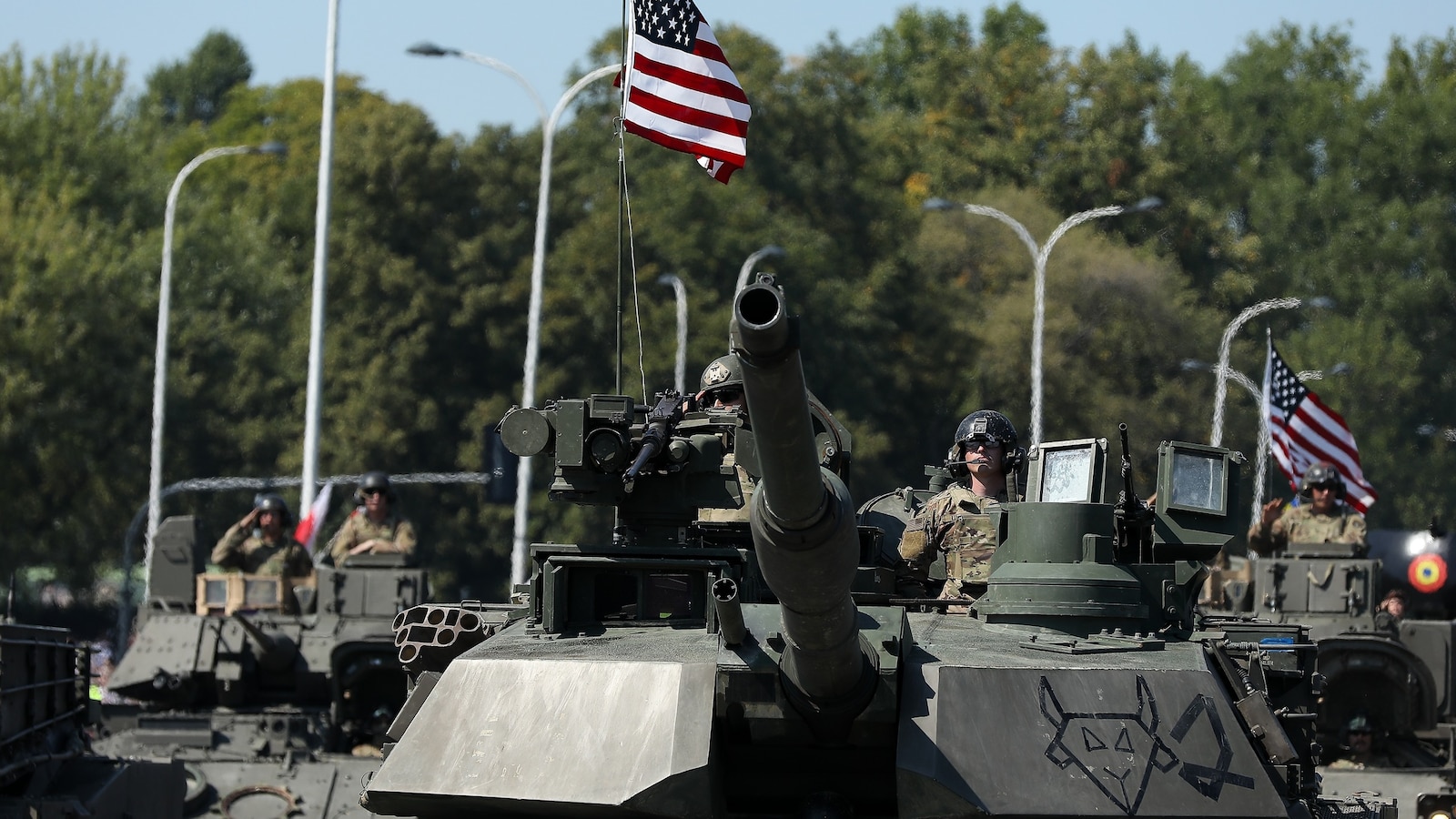
Trump said the U.S. will send an additional 5,000 troops to Poland, appearing to reverse last week’s Pentagon plan to halt a 4,200-soldier brigade deployment. The announcement is directionally supportive for Poland’s security posture, but the details remain unclear on which troops will deploy, from where, and when. The article also highlights broader uncertainty around U.S. force posture in Europe, including a separate planned 5,000-troop drawdown from Germany.
The market should read this less as a clean force-posture shift and more as evidence that European security commitments are becoming a bargaining chip in bilateral political signaling. That raises the probability of short-cycle whipsaws in NATO-related defense budgets and host-nation procurement decisions, which is bullish for contractors with broad European exposure but bearish for firms relying on a stable multi-year basing plan. The second-order effect is higher demand for rapidly deployable enablers—airlift, ISR, air defense, logistics, and ammo stockpiles—rather than legacy heavy formations.
The biggest winner is Poland itself: every incremental U.S. troop presence increases the political urgency to front-load domestic defense spending, which should support local primes, munitions suppliers, and infrastructure contractors over the next 6-18 months. Germany is the relative loser if this becomes a pattern, because force redistribution away from Germany reduces its leverage inside NATO and could slow industrial co-investment tied to U.S. basing. For defense equities, the more important signal is not the troop count but the possibility of accelerated procurement orders after summit-level pressure; that tends to show up in 1-2 quarter revenue revisions before headline force changes are fully implemented.
The contrarian read is that the announced move may be more reversible than market participants assume. If the final disposition ends up being a rotation extension or administrative re-labeling, the near-term equity reaction in European defense could fade quickly, while implied volatility around NATO headlines stays elevated. That creates a tactical opportunity to fade overly aggressive defense beta trades after headline spikes, while staying long the names that monetize replenishment and readiness rather than permanent basing.
Catalyst path: the next 2-8 weeks are about clarification from Pentagon/NATO channels; the next 3-9 months are about whether Poland converts this into larger air defense, artillery, and logistics buys. Tail risk is a broader U.S. retrenchment from Europe, which would force an abrupt re-rating of European defense localization and could steepen the curve for local suppliers if governments respond with emergency procurement.
AI-powered research, real-time alerts, and portfolio analytics for institutional investors.
Request DemoOverall Sentiment
neutral
Sentiment Score
0.05
