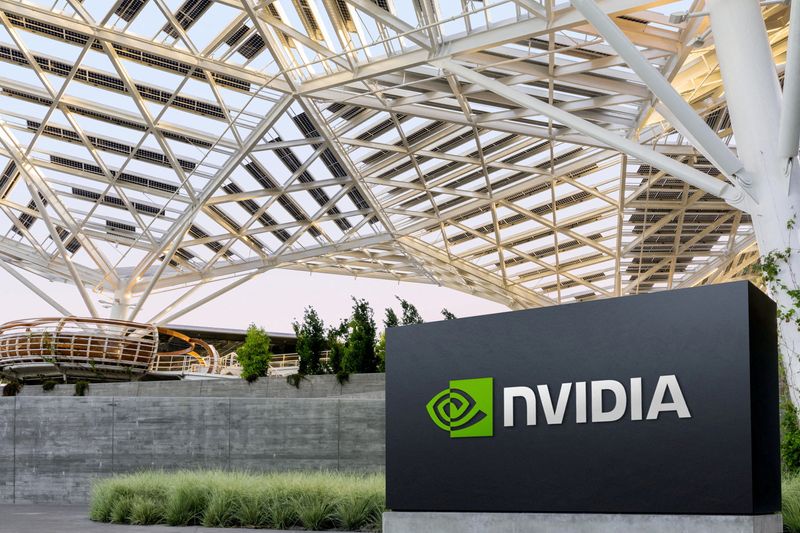
NVIDIA fell 1.8% to $211.04 even after CEO Jensen Huang outlined a Taiwan spending increase from about $100 billion to $150 billion and a new regional HQ plan for 4,000 employees by 2030. The stock remains pressured by a "sell the news" reaction, Michael Burry’s bearish commentary, and concerns over customer concentration and a sharp decline in mainland China/Hong Kong revenue, even as Wall Street still sees a Strong Buy consensus with a $306.46 average target. Broader markets were roughly flat, making NVDA’s decline an individual stock underperformance rather than a market-driven move.
The key signal is not the Taiwan capex itself, but that the market is no longer rewarding incremental evidence of strength. When a dominant AI supplier can announce a larger addressable ecosystem, a bigger buyback, and still fade, it usually means the marginal buyer is already fully positioned and the stock is transitioning from narrative-driven to fundamentals-driven trading. That makes near-term price action more sensitive to any slowdown in order growth, gross-margin compression, or signs that hyperscaler capex is normalizing in 1H next year. The second-order risk is customer concentration turning from a disclosure issue into a financing issue. If a small number of buyers are driving receivables, then any delayed payment, inventory digestion, or procurement shift can create a visible revenue air pocket before it shows up in headline demand trends. The China/Taiwan mix also matters: Taiwan strength may be partly a supply-chain and routing effect, while mainland weakness removes a geopolitical diversification cushion, leaving the stock more exposed to one region and one capex cycle. This setup favors relative-value trades over outright directional shorts because the secular AI demand story is still intact and analyst support remains anchored by long-dated targets. The cleaner expression is to fade NVDA versus beneficiaries of the broader AI infrastructure buildout that are less dependent on a single customer cohort and less exposed to sentiment air pockets. Over the next 4-8 weeks, the main catalyst is whether management commentary from peers confirms continued acceleration or starts to sound more cautious on near-term order cadence. Contrarian view: the pullback may be overdone if investors are misreading capex localization as peak demand rather than ecosystem entrenchment. Building more Taiwan infrastructure could strengthen supply assurance and customer lock-in, which supports share gains even if the stock multiple compresses. But that is a years-long thesis; for the next 1-3 months, positioning and flow likely matter more than fundamentals.
AI-powered research, real-time alerts, and portfolio analytics for institutional investors.
Request DemoOverall Sentiment
mildly negative
Sentiment Score
-0.18
Ticker Sentiment
