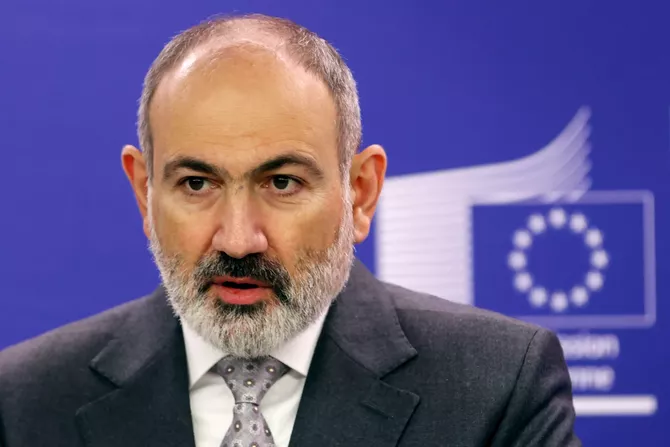
With just days before Armenia’s 7 June parliamentary election, an IRI poll shows Civil Contract at 32% versus 24% in March, while opposition figures remain fragmented and 40% of respondents trust no political leader. Russia has escalated pressure via disinformation and import restrictions on Armenian goods, including products tied to up to 90% of output in some industries, signaling heightened geopolitical and trade risk. The vote is widely seen as a test of Armenia’s Western pivot and could materially shape the country’s foreign policy and the Armenia-Azerbaijan peace process.
The market takeaway is not “pro-Western candidate wins,” but “weak incumbency survives because the opposition cannot assemble a credible governing alternative.” That matters because fragmented parliaments typically compress policy optionality: even a modest plurality can produce outsized control if coalition math fails, so the real asset price reaction should be strongest in assets tied to execution continuity rather than ideology. In practice, that favors local FX and sovereign spreads more than any one election-day headline, because the prize is reduced policy discontinuity, not a clean regime change.
Russia’s pressure campaign is likely to be self-defeating at the margin. Sanctions-by-proxy on Armenian exporters can hurt near-term revenue for a narrow set of consumer/industrial names, but the second-order effect is to reinforce the incumbent’s framing and accelerate the electorate’s decoupling from Moscow. The bigger economic risk is not a sudden shock but a months-long drag: lower export volumes, higher logistics costs, and slower capex from firms exposed to the Russian market, especially in beverages, agriculture, and branded consumer goods.
The main tail risk is a post-election coalition failure or street-level instability that forces a new vote, which would widen spreads and depress the dram if confidence in institutions erodes. The contrarian point is that the market may be overpricing Russian leverage: Moscow’s coercive tools are being deployed after its credibility as a security guarantor was already damaged, so each escalation may have diminishing returns. If that dynamic persists, the medium-term winner is not just the incumbent, but Armenia’s Westernization trade - banks, telecoms, and domestic-oriented names with limited Russia revenue should screen best.
For timing, the key catalyst window is the next 2-6 weeks around vote certification and coalition negotiations; the next 3-6 months matter more for trade flows and FX than the election itself. If no major unrest emerges, expect a relief rally in local risk assets despite the noisy geopolitics, because investors will price continuity and reduced probability of a forced reset.
AI-powered research, real-time alerts, and portfolio analytics for institutional investors.
Request DemoOverall Sentiment
mildly negative
Sentiment Score
-0.20
