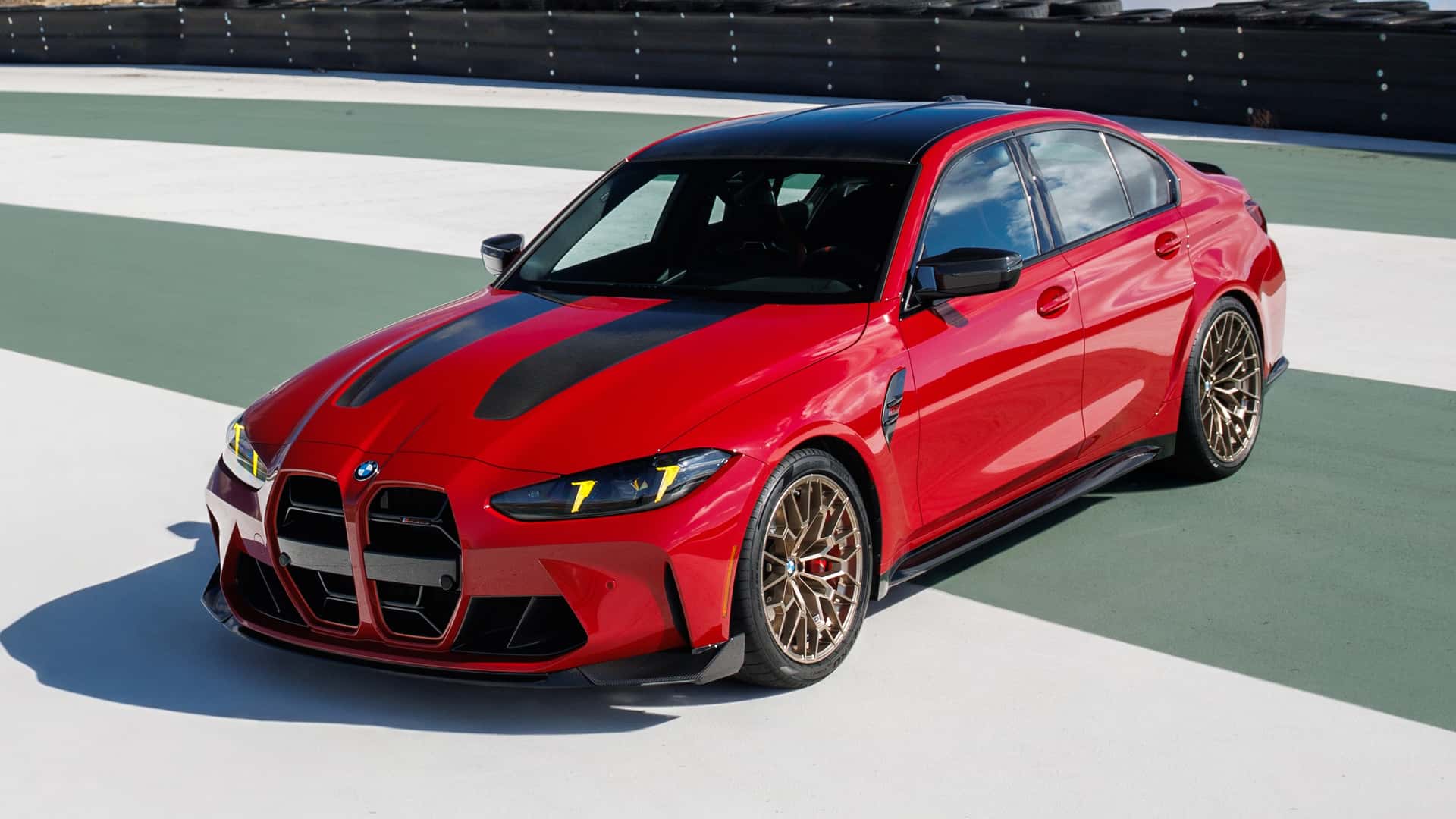
BMW confirmed 2027 will be the final model year for the sixth-generation M3, with the last gas-powered M3 expected to end production around February 2027. A fully electric M3 is slated to enter production in Munich next year, while the next gasoline M3 is expected in 2028 with a twin-turbo inline-six, mild-hybrid tech, and likely automatic-only AWD. The article also signals the gradual decline of manual transmissions at BMW, with the M3 CS Handschalter serving as the manual model's sendoff.
The key market implication is not the lifecycle end of a single halo model; it is BMW’s acceleration of portfolio bifurcation. The brand is effectively using the M3 nameplate to bridge two demand pools that are drifting apart: high-margin ICE purists on one side and EV buyers on the other. That reduces near-term execution risk because the badge retains relevance in both regimes, but it also raises the probability that BMW’s enthusiast franchise becomes less differentiated on drivetrain and more dependent on software, suspension tuning, and brand cachet—areas where switching costs are lower and competitive churn is higher.
Second-order effects are more interesting than the headline itself. A shift of the gasoline M3 to a different factory and likely more automation/xDrive content implies a different cost stack and potentially better compliance economics, but also more content cannibalization from the next-gen M4/M2 architecture. Suppliers exposed to manual transmissions, mechanical differentials, and low-volume bespoke components face a shrinking addressable market over the next 12-24 months; by contrast, battery, power electronics, thermal management, and high-voltage harness suppliers should benefit from the EV M3 ramp in 2027-2028. The transition also reinforces that enthusiast demand is moving from mechanical novelty to scarcity value, which tends to support residual values on the last manual ICE specials even if broader volume declines.
For the equity, the near-term read-through is mildly positive for BMW as a platform strategy story and neutral-to-slightly negative for legacy drivetrain suppliers. The contrarian risk is that the market overestimates EV halo pull: a quad-motor M3 may generate attention but not necessarily profit, especially if the battery is large and the price band overlaps with higher-volume luxury EVs. If consumer acceptance of high-performance EV sedans remains mixed, BMW may be forced to discount more aggressively than expected, compressing margins before the new ICE M3 offsets volume loss.
AI-powered research, real-time alerts, and portfolio analytics for institutional investors.
Request DemoOverall Sentiment
neutral
Sentiment Score
-0.10
Ticker Sentiment
