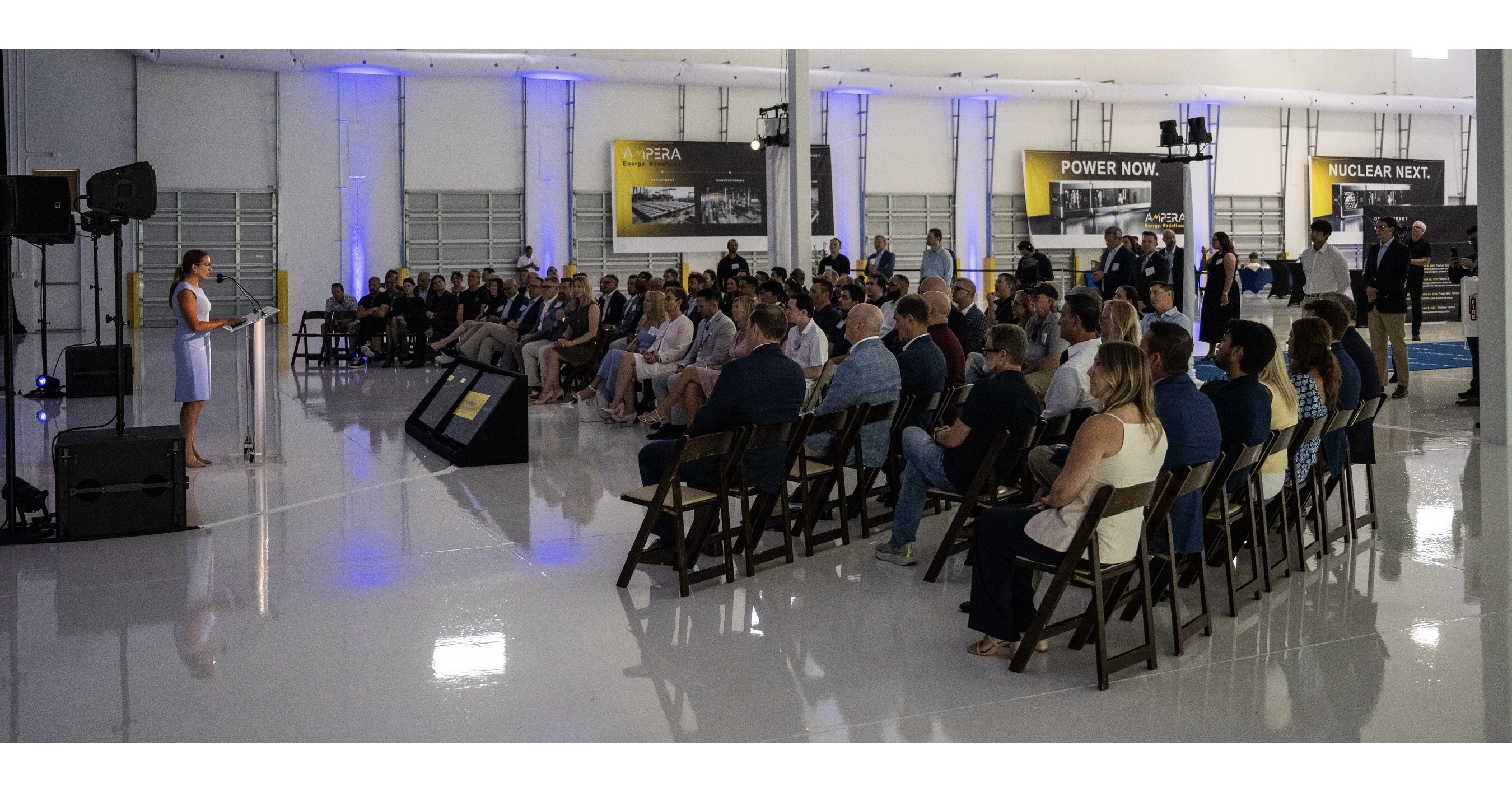
AMPERA completed production of the first full-scale, 3D-printed nuclear reactor module (core + pressure vessel) for its subcritical, solid-state, factory-built thorium design. The spherical gyroid core uses silicon carbide and is designed for up to 30 years of life without refueling, with power expected up to 30 MWe per module and larger configurations planned. Company messaging also ties deployment to AI data centers, defense, industrial and maritime demand, with an earlier Australian subsidiary to secure thorium supply.
This reads more like a distributed-power commercial pitch than a true nuclear de-risking event. The investable read-through is to public names that monetize on-site generation for data centers and defense first: engine OEMs, switchgear, thermal management, and EPCs can see earlier orders if buyers want “power now” capacity while waiting on grid interconnects. That favors the bridge technology stack over the long-duration nuclear stack over the next 1-3 quarters.
The market’s mistake would be to treat a fabricated module as equivalent to a bankable plant. For advanced nuclear, the gating items are not geometry or materials demoed in a showroom; they are licensing, fuel qualification, insured deployment, and customer willingness to sign fixed-price offtakes. Those catalysts are 6-18 months away at best, and a single schedule slip or absence of named customers would sharply compress the multiple on pure-play nuclear stories.
Second-order, if “gas now, nuclear later” becomes the dominant procurement model, it actually helps incumbent distributed power vendors because it normalizes capex for behind-the-meter generation and makes later nuclear conversion optionality valuable. The contrarian view is that the nuclear upside may be overstated while the bridge-market opportunity is underappreciated: the first money is likely in utility-adjacent equipment and service revenue, not in the reactor itself.
AI-powered research, real-time alerts, and portfolio analytics for institutional investors.
Overall Sentiment
moderately positive
Sentiment Score
0.35
Ticker Sentiment
