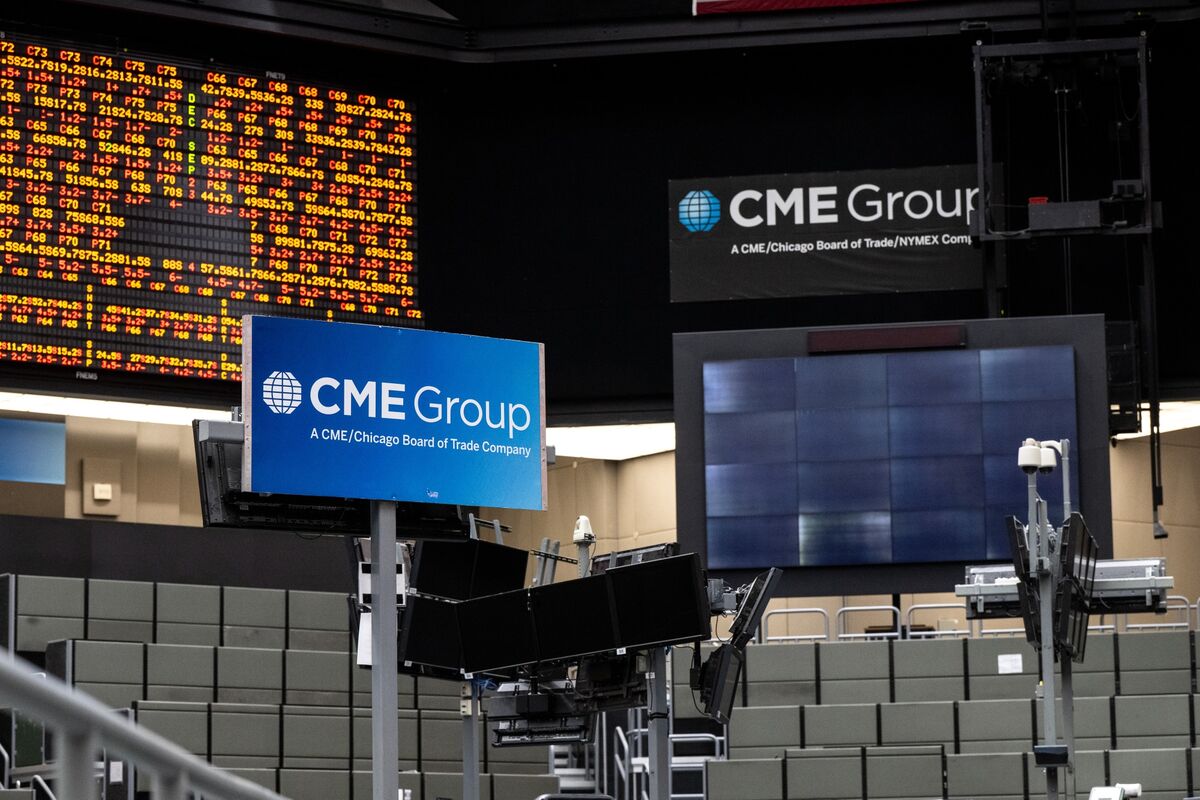
A data-center malfunction at CME Group has halted trading of futures and options on its Globex platform for several hours, disrupting price discovery and hedging across equity-index contracts (S&P 500, Dow, Nasdaq 100), FX, bonds and commodities and prompting concern about a lost trading session. The outage has already exceeded the duration of a similar 2019 technical failure; CME averaged 26.3 million contracts per day in October, underscoring the broad market reach and potential liquidity and volatility implications while participants await resumption of electronic trading.
Market structure: The immediate winners are rival venues and execution brokers (ICE, CBOE/CBO, VIRT) that can advertise uninterrupted matching and take incremental flow; liquidity providers who operate multi-venue algorithms will re-route orders, squeezing CME volumes that average ~26.3M contracts/day (one lost session ~20–30M contracts of forgone flow). Losers are CME (CME) reputation and fee pricing power — recurring outages create leverage for competitors to offer temporary rebates or permanent fee concessions and can force a re-pricing of exchange services over 3–12 months.
Risk assessment: Tail risks include regulatory enforcement actions (CFTC/SEC inquiries, potential fines or mandated remediation) and client migrations that produce a 1–5% structural revenue hit if persistent; operational counterparty stress (clearing members widening haircuts) is a second-order risk that could amplify market dislocations. Timeframe: days — hedging gaps and basis distortions; weeks–months — fee renegotiations and client RFPs; quarters — tech spend and possible market-share shifts.
Trade implications: Tactical trades should capture decoupling between exchanges and a short-term volatility spike. Expect elevated realized volatility in cash indices and FX hedges when flows resume (24–72 hours); use short-dated SPY/SPX volatility instruments and skew-sensitive strategies to monetize that re-pricing, while positioning relatively long ICE/CBO vs short CME to capture fee/flow migration over 1–6 months.
Contrarian: The market may overstate long-term damage — the 2019 outage didn’t remove CME’s dominant clearing role; if CME equity drops >8% this is an asymmetric buy opportunity given high switching costs for large clearing clients. Unintended consequences include faster capex by CME (short-term margin pressure) and competitor price cutting that reduces industry margins — both create near-term dispersion and multi-quarter mean reversion opportunities.
AI-powered research, real-time alerts, and portfolio analytics for institutional investors.
Request DemoOverall Sentiment
moderately negative
Sentiment Score
-0.50
Ticker Sentiment
