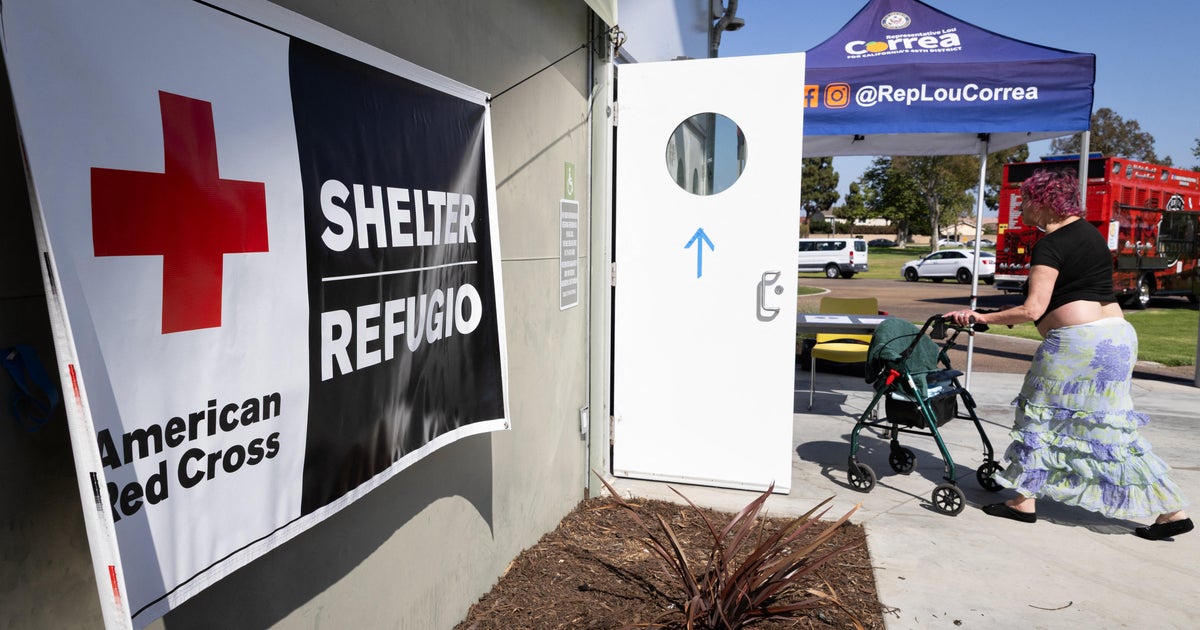
Nearly 50,000 Orange County residents remain under mandatory evacuation orders as a chemical leak at GKN Aerospace enters its fourth day, with most shelters already at or near capacity. Officials have opened additional evacuation and RV facilities, but evacuees are being redirected from non-designated sites like state beaches, adding stress and logistical strain. The event is primarily a localized public-safety crisis with limited direct market impact, though it may temporarily affect local retail, travel, and small-business activity.
This is a near-term consumer/logistics shock more than a direct earnings event, but the second-order effect is material: when evacuation centers hit capacity, displaced households shift spending from discretionary to emergency replacement goods, and the fastest inventory turns accrue to omnichannel retailers with dense local fulfillment. WMT is the cleaner beneficiary because in-store pickup, staple inventory, and emergency essentials skew toward immediate, low-ticket baskets; AMZN benefits more on breadth and delivery convenience, but the actual margin capture is weaker if last-mile congestion and ad hoc rural/temporary addresses increase failed-delivery rates.
The more interesting edge is on duration. If the incident resolves in days, this is a transient basket-mix tailwind for staples, pet, hygiene, and household goods with little P&L persistence. If it drags into weeks, the stress migrates into local small-business disruption, temporary housing, and incremental claims/municipal costs, which can create a short-lived but broad revenue lift for national retailers while depressing regional retail foot traffic and travel/leisure spend in Orange County.
The market may be underestimating the friction cost in the e-commerce channel: emergency demand is highly time-sensitive, so substitution from planned online orders to immediate store runs favors physical proximity over pure online scale. That makes the relative trade more about local density and inventory availability than brand equity. Conversely, if authorities quickly open additional sanctioned shelter capacity and restore access, the entire demand impulse fades within 48-72 hours, making any retail pop fade fast and leaving little room for sustained multiple expansion.
Contrarian view: the obvious read is to buy WMT/AMZN on a micro-basket surge, but the more asymmetric move may be to fade any strength in regional travel/leisure and local discretionary names because the disruption to foot traffic and overnight stays can persist after the headline risk improves. For WMT, the upside is modest and mostly tactical; for AMZN, the operational noise from address changes and delivery exceptions caps the benefit relative to what the market may infer from “online demand spike” headlines.
AI-powered research, real-time alerts, and portfolio analytics for institutional investors.
Request DemoOverall Sentiment
strongly negative
Sentiment Score
-0.55
Ticker Sentiment
