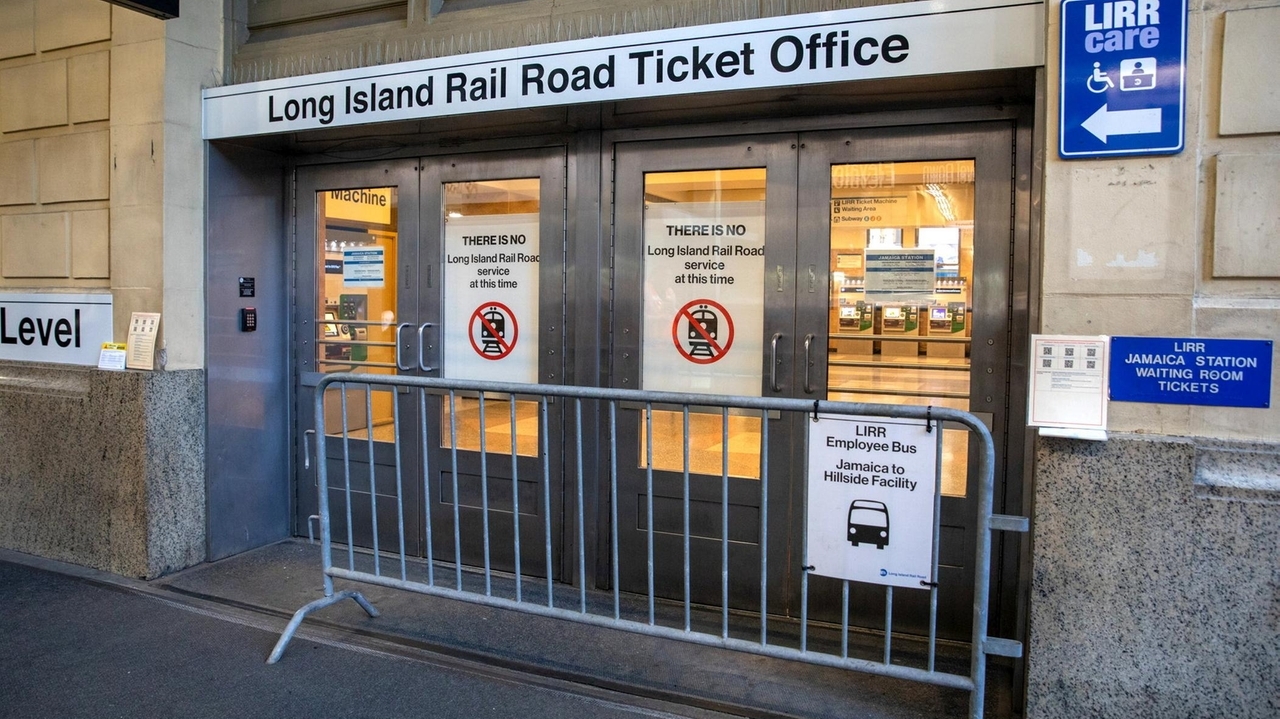
LIRR union members are picketing for a new contract, creating a strike dispute that is frustrating commuters, riders, and local businesses. The article describes service uncertainty and disruption rather than a resolution, implying a modest negative impact on transportation operations and nearby commerce. No financial figures are provided, and the market impact is likely limited unless the strike escalates or persists.
A commuter rail strike is usually a low-beta labor headline, but the second-order damage is concentrated in the marginal spenders: downtown food, quick-service, convenience retail, and service businesses that depend on weekday foot traffic. The bigger issue is not the direct fare loss; it is the activity spillover from missed in-office attendance, which can depress same-day retail receipts and small-business cash flow almost immediately, with the effect compounding if commuters start resetting routines over several weeks.
The competitive dynamic is subtle: alternatives such as ride-hail, buses, park-and-ride, and even nearby suburban shopping nodes gain share, but only temporarily if the disruption persists. If the strike lasts more than a few days, employers may normalize remote work or staggered schedules, which creates a lagging demand hit that outlasts the labor resolution. That makes the economic damage asymmetric: the upside for substitutes is near-term, while the downside for transit-dependent businesses can extend into subsequent pay cycles and weekends.
From a risk standpoint, the tail event is not just a prolonged strike but a settlement that leaves a higher labor cost base without restoring rider confidence fully. That would pressure operating leverage for transit-adjacent businesses for months, while also raising the probability of more fare increases or service cuts later. The reversal case is a fast settlement plus a clear return-to-office rebound; absent that, the behavioral shift can become sticky even after trains restart.
Consensus may be underestimating how quickly localized labor disruptions translate into broader consumer-demand softness in a high-commuter-density corridor. The move may also be overdiscussed as a transit issue and underpriced as a small-cap retail and service-demand problem. In other words, the best short is often not transport itself but the businesses whose same-store sales are most exposed to weekday station traffic and office attendance.
AI-powered research, real-time alerts, and portfolio analytics for institutional investors.
Request DemoOverall Sentiment
moderately negative
Sentiment Score
-0.35
