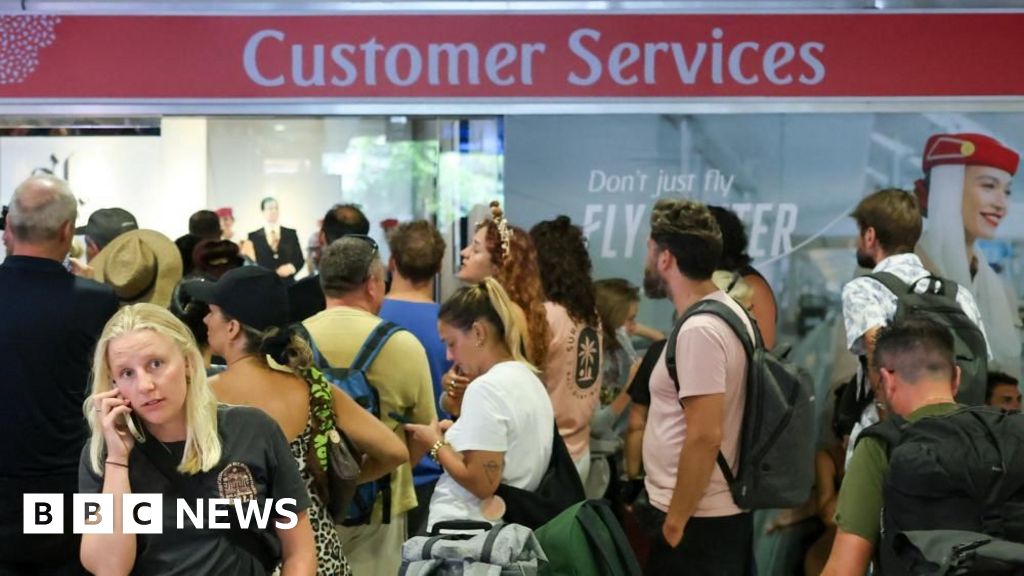
Regional strikes and retaliatory attacks have prompted widespread airspace closures and thousands of flight cancellations across the Gulf since Saturday, leaving many British nationals stranded; the Foreign Office estimates around 300,000 Brits in Gulf countries with 130,000 registered and has scheduled a government charter from Muscat with priority for vulnerable travellers. Major carriers have suspended or cancelled timetabled Gulf routes (British Airways has cancelled services to Heathrow from Abu Dhabi, Amman, Bahrain, Doha and Dubai; flights out of Qatar remain suspended) while some Emirates services from Dubai to UK airports continue, producing operational disruption and a modest near-term risk-off impulse for travel and regional exposures.
Market structure: Immediate winners are oil producers and defense contractors while scheduled-carrier revenues (IAG, LHR) and travel intermediaries (EXPE, BKNG) are losers from cancelled routes and closed airspace. Re-routing raises jet-fuel burn and short-term demand for crude; a sustained airspace closure that lifts Brent by >$5 in 7–14 days materially re-rates energy names (XOM, CVX, XLE) and pushes airlines' unit costs up by an estimated 3–7% for the quarter. Cross-asset: expect USD and Treasuries strength (flight-to-safety) and higher gold; airline equity IV rises, steepening short-dated options smiles.
Risk assessment: Tail risks include a wider Gulf escalation (oil >$120, months-long supply shocks) or cyber/insurance blow-ups that force longer route diversions; probability low but impact extreme. Time horizons: immediate (days) see volatility and cancellations; short-term (weeks) affects Q1 load factors and fuel hedges; long-term (quarters) could shift market share if hub carriers lose passengers. Hidden deps: airlines' fuel hedges, airport slot scarcity, consular/charter interventions and insurance clauses will determine who actually bears cost. Key catalysts: additional airspace closures, oil supply disruption announcements, or diplomatic de-escalation.
Trade implications: Tactical shorting of exposed carriers and volatility buys, paired with energy/defense longs. Execute short-dated put purchases or covered shorts on IAG/EZJ sized 1–2% of portfolio to capture a 10–20% downside if disruptions persist 2–6 weeks. Offset with 2–3% long in XLE/XOM via call spreads keyed to Brent >$85 within 14 days; add 2% defense longs (RTX or BAE) on 3–12 month horizon. Use GLD or treasury duration (+1–2%) as a hedge if equity IV spikes.
Contrarian angles: Consensus assumes prolonged hit to all airlines; that may be overdone because Mideast carriers are private and incumbent European/low-cost carriers can pick up diverted demand once airspace reopens, creating a rapid revenue snapback. Historical parallels (short Gulf flares) show oil and travel stocks often mean-revert within 4–8 weeks absent supply disruption; prefer short-dated options rather than long-term directional shorts to avoid being on the wrong side of a quick détente. Unintended consequence: higher fares and slot scarcity could benefit established, cash-rich LCCs and hub owners once normalcy returns.
AI-powered research, real-time alerts, and portfolio analytics for institutional investors.
Request TrialOverall Sentiment
moderately negative
Sentiment Score
-0.35
