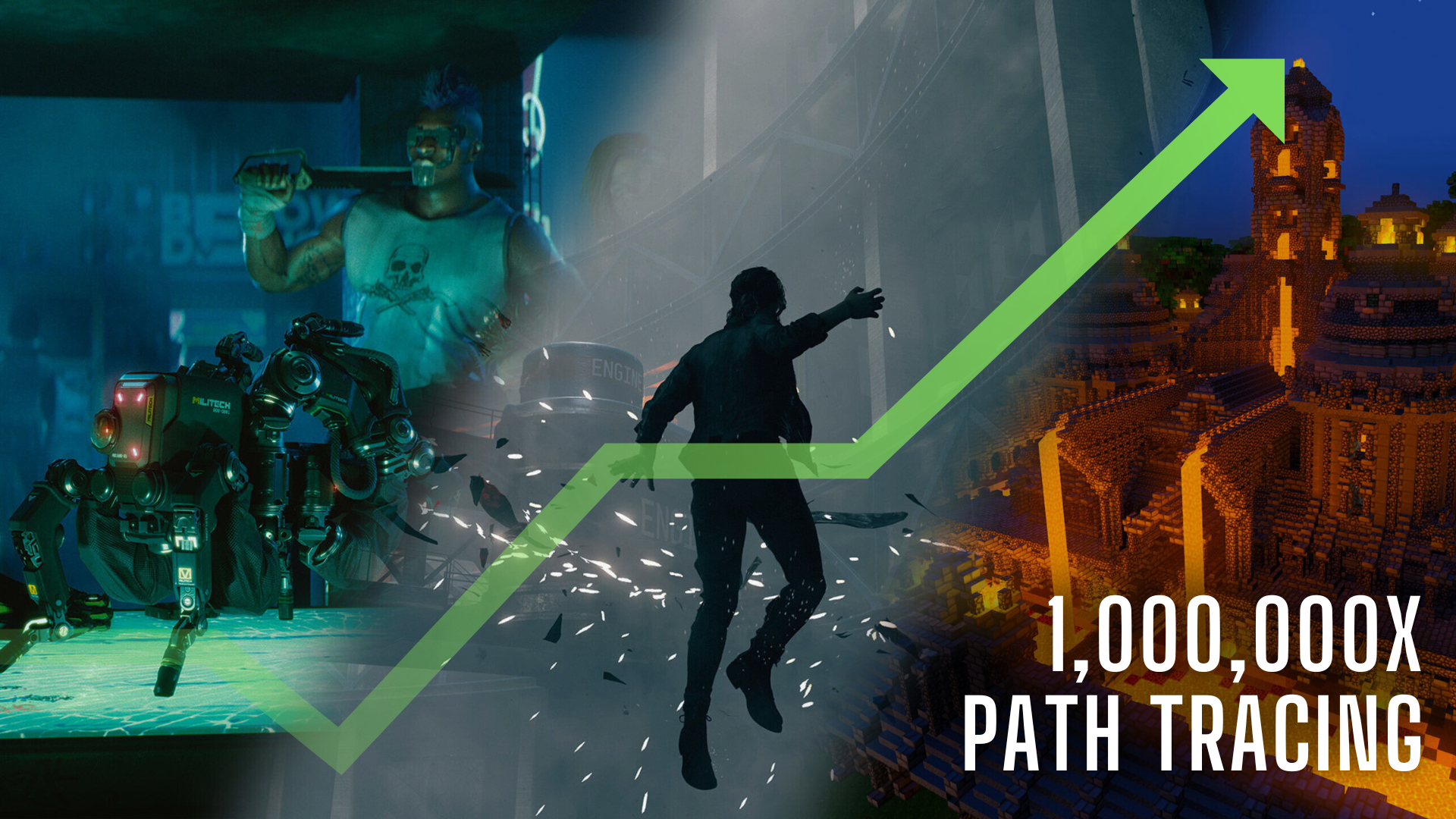
Nvidia says future gaming GPUs could achieve ~1,000,000x path-tracing performance versus Pascal (RTX 10), noting current Blackwell (RTX 50) GPUs are ~10,000x faster already. The company attributes gains to AI-driven neural rendering (RT/Tensor cores, DLSS, ReSTIR, RTX Mega Geometry) and targets Rubin GPUs in 2027–2028 to enable the next leap. This is a technology roadmap/marketing claim rather than financial guidance; expect modest near-term stock impact but continued reinforcement of Nvidia's competitive positioning in ray/path tracing versus Intel and AMD.
Nvidia’s loud roadmap claim is less a pure silicon forecast than a signal about product mix and monetization: future path-tracing gains will be delivered by accelerator blocks + model-based rendering, which disproportionately increases the value of proprietary models, training infrastructure, and high-margin data-center deployments. That favors Nvidia not only for discrete GPU ASPs but for recurring revenue via model/tooling lock-in and cloud partnerships; expect higher attach rates for expensive HBM/packaging and longer tail revenue from SDKs and model hosting over 2–5 years.
Second-order winners include advanced packaging and foundry partners (demand for bigger dies, reticle area, CoWoS/EMIB-like solutions) and cloud GPUs (operators buying more capacity for real-time frame-gen streaming). Losers are mid-range GPU SKUs, where consumers are price-sensitive — broad consumer adoption of Rubin-era capabilities likely stays concentrated at the high end, compressing growth for firms relying on volume consumer upgrades (AMD) and leaving Intel with a hardware-design credibility gap in neural-accelerated rendering for years.
Key risks and catalysts: timelines (Rubin 2027–28) create a multi-year optionality story susceptible to marketing risk and execution: if TSMC capacity, wafer yields, or power/thermal economics don’t scale, Nvidia may commoditize performance by pushing more work into proprietary cloud services — accelerating recurring revenue but widening regulatory/antitrust scrutiny. A faster response from AMD/Intel on cost-efficient neural blocks or a breakthrough software algorithm that reduces tensor dependence would materially compress Nvidia’s implied runway within 12–24 months.
AI-powered research, real-time alerts, and portfolio analytics for institutional investors.
Request DemoOverall Sentiment
mildly positive
Sentiment Score
0.22
Ticker Sentiment
