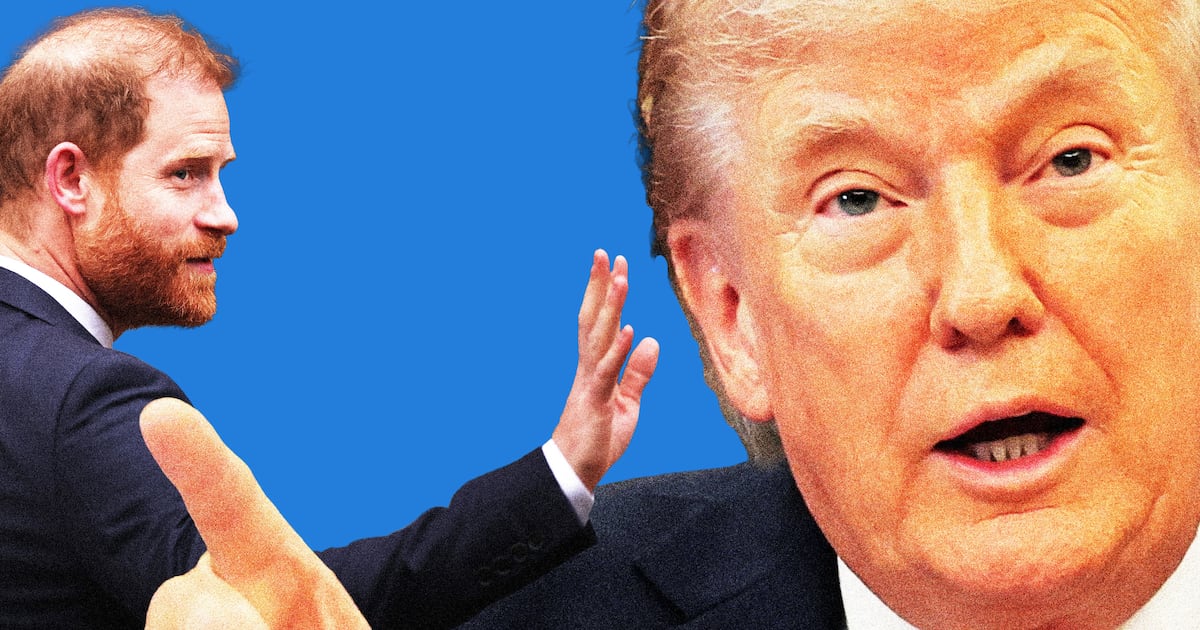
Trump publicly dismissed Prince Harry’s criticism of U.S. support for Ukraine, underscoring ongoing political friction tied to the war. The article also previews King Charles and Queen Camilla’s first official U.S. state visit next week, including a White House dinner and congressional address. The piece is primarily diplomatic and political commentary with limited direct market implications.
This is a low-conviction macro signal, but it does matter at the margin because it reinforces a pattern: foreign policy is being run as personality theater, not as a disciplined coalition-management process. That raises the probability of headline-driven volatility around UK-sensitive assets and defense-related names, but the bigger market implication is that strategic policy still hinges on optics rather than stable decision rules, which lowers confidence in any medium-term diplomacy premium.
The near-term winner is the White House's ability to frame itself as the dominant interlocutor with London, while the loser is any attempt by UK leadership to separate bilateral symbolism from hard policy on Ukraine, trade, energy, and immigration. For equities, the second-order effect is not on sterling or gilts directly; it's on sectors exposed to defense procurement, transatlantic industrial cooperation, and cyber/security spend, where softer diplomatic tone can translate into incremental contract cadence over the next 1-2 quarters. The event also subtly supports U.S. defense primes if it keeps Ukraine funding and NATO burden-sharing in the headlines.
The main tail risk is that the public friction becomes a proxy for broader U.S.-UK policy drift, especially if the upcoming state visit turns into a platform for posturing rather than coordination. That would be mildly negative for UK multinational sentiment and could pressure companies with UK revenue exposure if investors start pricing a less cooperative trade/investment environment over the next 3-6 months. The contrarian view is that this is mostly noise: the ceremonial visit itself is a signal that institutional ties remain intact, so any selloff in UK risk assets on the back of the rhetoric would likely be an overreaction unless it spills into concrete policy action.
AI-powered research, real-time alerts, and portfolio analytics for institutional investors.
Request TrialOverall Sentiment
neutral
Sentiment Score
0.00
