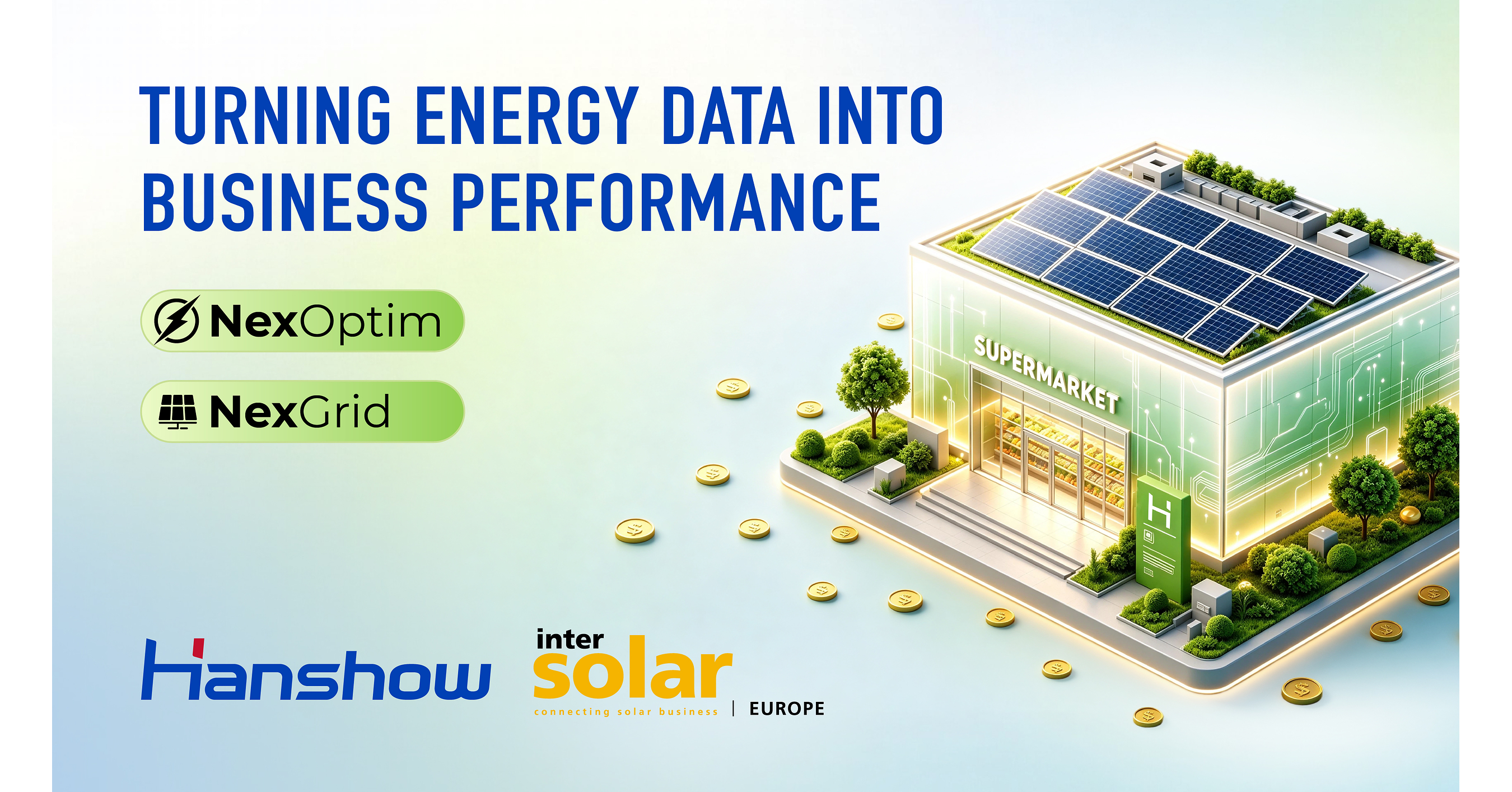
Hanshow Energy presentó en Intersolar Europe 2026 un enfoque de soluciones energéticas integradas (PV solar + almacenamiento + carga EV + gestión inteligente) para reducir costes y mejorar la resiliencia operativa de clientes comerciales e industriales. La empresa destacó NexGrid (gestión centralizada de PV/almacenamiento/carga y activos distribuidos) y NexOptim (gestión de equipos con monitorización en tiempo real, mantenimiento predictivo y optimización energética con IoT y análisis de datos). El artículo enmarca el despliegue como una respuesta a mayores costes energéticos e incertidumbre de suministro, sin cifras financieras o impacto directo en mercado.
The market implication is less about this company and more about where value accrues in the C&I energy stack. If distributed generation, storage, and load control keep converging, the winners are the platform owners with software, controls, and service attach rates — not the commodity panel or cell vendors. That favors industrial electrification franchises such as Schneider Electric, ABB, Siemens, and Eaton, where energy management can become a higher-margin recurring software/service layer rather than a one-off equipment sale.
Second-order, this pressures standalone solar integrators and smaller EPCs that sell hardware without optimization depth. In a world where customers increasingly want dispatchable energy and demand flexibility, the economic moat shifts toward balancing, controls, and maintenance, which raises switching costs and could compress margins for undifferentiated installers. It also creates a pull-through effect for battery PCS, building automation, and grid-edge software, but the monetization will likely show up slowly through backlog and service revenue, not an immediate revenue step-function.
The catalyst path is months, not days: this is a “theme reinforcement” event, not a hard earnings read-through. The key falsifier is continued weakness in C&I payback economics if European power prices normalize faster than expected or if subsidies/tax regimes slip, which would delay capex conversion and mute order growth. Another risk is that AI-driven optimization claims remain largely marketing until customers can show measurable kWh savings and uptime improvement in disclosed projects.
Contrarian view: the consensus may be overestimating near-term monetization of energy software while underestimating how much value still sits in balance-sheet-heavy hardware and installation channels. If customers prioritize uptime and financing over optimization sophistication, incumbents with financing, service networks, and grid relationships can win share faster than pure-play software vendors. In that case, the right trade is not “long energy AI” broadly, but long the industrials that control the system and short the capital-light names that need exuberant adoption assumptions.
AI-powered research, real-time alerts, and portfolio analytics for institutional investors.
Request DemoOverall Sentiment
mildly positive
Sentiment Score
0.12
