





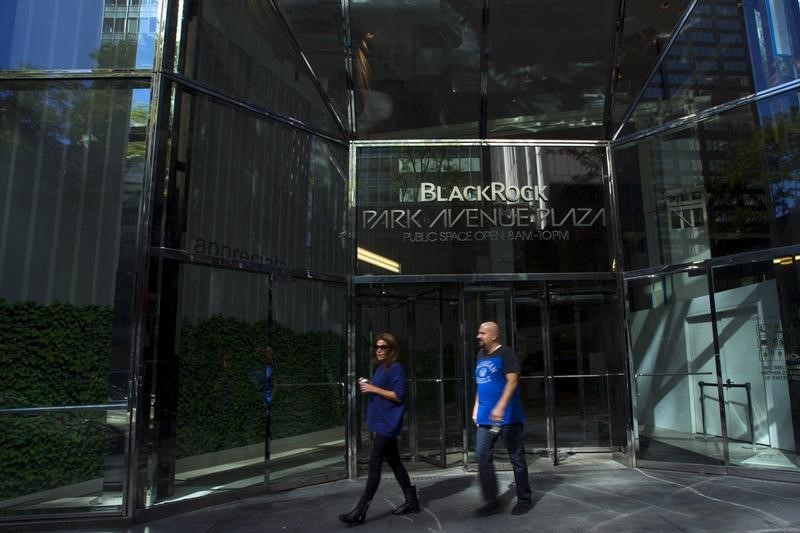
BlackRock reported Q1 2026 EPS of $12.53 versus $11.48 expected and revenue of $6.7 billion versus $6.43 billion expected, while iShares logged a record $132 billion of inflows. Keefe, Bruyette & Woods raised its price target to $1,240 from $1,150 and other firms also lifted targets, citing 8% organic base fee growth and strong mix shift into higher-fee products. Long-term net inflows of $136 billion came in below consensus, but the overall readthrough is positive for fundamentals and earnings momentum.
The setup is less about the headline beat and more about whether BlackRock can keep converting market appreciation into higher-fee mix. That matters because passive AUM growth alone is commoditized; the incremental margin expansion comes from active ETFs, alternatives, and international equity products where pricing power is materially better and flows are stickier. The knock-on effect is a widening moat versus smaller ETF issuers and traditional active managers that are still losing shelf space to low-cost platforms.
The important second-order read-through is to the asset-management complex: if BLK can sustain above-target organic base fee growth while still posting record ETF inflows, peers with less diversified distribution are likely to see a slower recovery in fee-rate stability. UBS, MS, and BCS benefit only indirectly through higher capital-markets activity and wealth-platform exposure, but they also face a competitive threat if clients keep consolidating mandates toward best-in-class scale managers. That means this is more bullish for the platform leaders than for the broader group.
The main risk is not earnings itself; it is a normalization in market beta and net inflows over the next 1-2 quarters. BLK’s growth math is sensitive to equity levels and mix, so a drawdown in risk assets could compress organic fee growth quickly even if reported AUM remains elevated. The consensus may be underpricing how cyclical the “quality compounder” narrative is: once inflow momentum slows, multiple expansion can stall despite still-strong fundamentals.
AI-powered research, real-time alerts, and portfolio analytics for institutional investors.
Overall Sentiment
moderately positive
Sentiment Score
0.55
Ticker Sentiment
