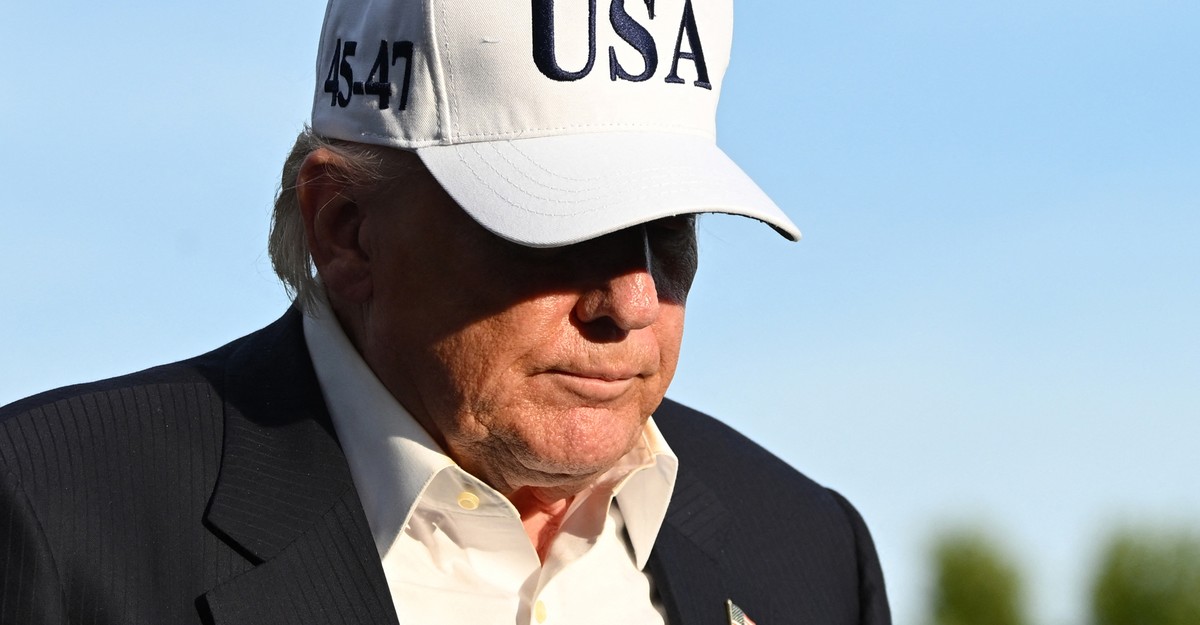
The article argues Trump is ending the Iran war on unfavorable terms for the United States after failing to achieve clear strategic objectives, including preventing Iran from advancing its nuclear program or forcing a durable surrender. It says the conflict began in 2026 for personality-driven reasons rather than strategy and has left Iran in a stronger position over Persian Gulf oil traffic. The piece also frames the outcome as a broader indictment of Trump’s leadership, decision-making, and crisis management.
The market implication is not the war itself but the credibility damage to U.S. coercive policy. When the White House can’t sustain a high-cost confrontation, adversaries learn that escalation pressure works; that lowers the expected value of future U.S. threats and raises the odds of more frequent, shorter-cycle crises in the Gulf. The second-order winner is any asset tied to risk premia staying structurally elevated: defense primes, cyber, missile defense, and select energy infrastructure names with protected cash flows.
The bigger near-term loser is the policy stack that depends on stable Strait of Hormuz risk management. Even if physical flows remain intact, insurance, freight, and inventory buffers will reprice faster than headline crude, so the first beneficiaries are often not producers but logistics, storage, and midstream capacity. That matters because the unwind from a failed coercive campaign usually leaves a residue of higher shipping costs and more onshore stocking, which can support U.S. Gulf Coast infrastructure margins for quarters, not days.
A second-order political read-through is that markets should discount any “victory narrative” as a late-cycle attempt to reflate sentiment rather than a durable de-escalation framework. That raises tail risk for policy whiplash: if domestic approval sags or oil spikes, the same administration may overcorrect with even more erratic signaling. The contrarian mistake would be assuming the end of active conflict means normalization; in these episodes, ambiguity premium often survives the ceasefire and can reappear quickly on the next propaganda mismatch or missile incident.
AI-powered research, real-time alerts, and portfolio analytics for institutional investors.
Request DemoOverall Sentiment
strongly negative
Sentiment Score
-0.55
