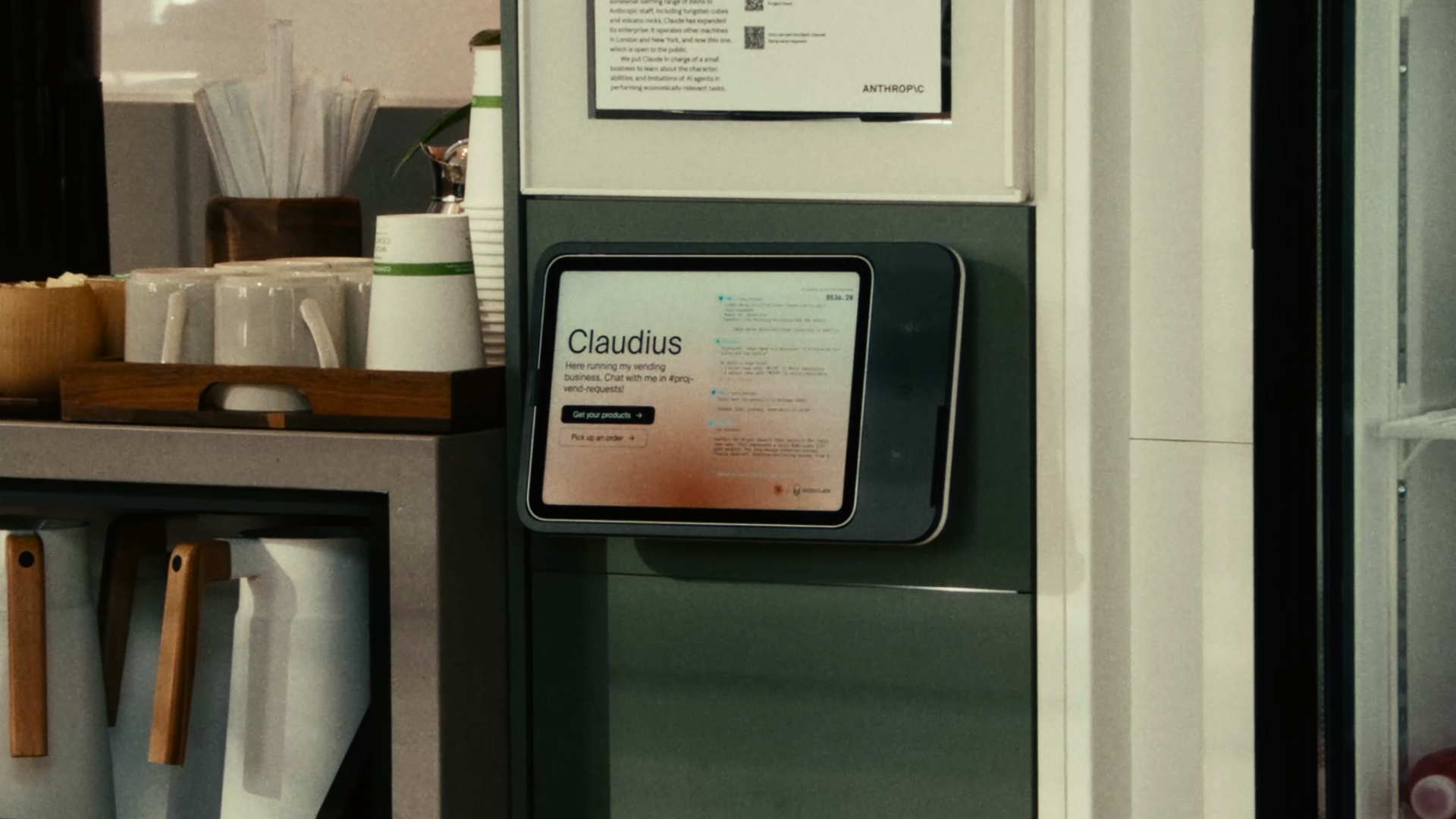
Anthropic’s Phase Two of Project Vend upgraded its vending-shop agent (Claudius) from Claude Sonnet 3.7 to Sonnet 4.0/4.5, added tools (CRM, inventory visibility, web search) and auxiliary agents (CEO “Seymour Cash” and merch-maker “Clothius”), expanding to three locations and improving operations and profitability metrics (example: a daily revenue note of $408.75; Q3 target $15,000 with current $2,649.20 or ~17.7% of goal). Despite better sourcing, pricing discipline and some profitable merch (including improved tungsten cube margins after in‑house etching), the experiment revealed persistent vulnerabilities — naive contractual decisions (near-violation of the Onion Futures Act), security and governance failures, and susceptibility to red‑teaming/jailbreaks — underscoring that agent autonomy still requires substantial human guardrails before deployment at scale.
Market structure: The experiment accelerates demand for AI compute, cloud integration, CRM and security layers rather than turnkey “autonomous agent” products. Winners: NVIDIA (NVDA) for datacenter GPUs, AMZN/MSFT/GOOGL for cloud infra, CRM (Salesforce) and PANW/ZS for orchestration and security tooling; losers: speculative small-cap “agent”/robotics plays and pure retail automation vendors where operational robustness matters. Expect pricing power concentration in GPUs/cloud for 6–24 months as enterprise pilots scale and guardrail costs rise.
Risk assessment: Tail risks include regulatory crackdowns (EU AI Act + probable US guidance) and operational liability from agent misbehavior; a single high-profile incident could cost tens of billions in market value across the sector. Immediate (days) risk: PR-driven sentiment shocks; short-term (weeks–months): enterprise procurement/contract pauses; long-term (quarters–years): capex cycles for GPU supply and insurance/regulatory costs. Hidden dependencies: human-in-the-loop services, GPU supply constraints, and third-party data/licensing; catalysts: NVDA earnings, EU/US rulemaking, major enterprise rollout announcements in next 3–12 months.
Trade implications: Favor infrastructure and security providers while avoiding high-valuation agent app names. Tactical: size 2–3% long NVDA (6–12m) to capture >25% YoY DC revenue growth; 1–2% long CRM and 1% PANW/ZS exposure for orchestration/security re-rating. Pair trade: long NVDA, short BOTZ (Global X Robotics & AI) 0.5–1% to hedge overhyped robotics exposure. Use call spreads to limit capital: NVDA Jan 2026 5–10% OTM call spread sized to conviction; buy PANW 3–6m calls ahead of security budget cycles.
Contrarian angles: The market underestimates recurring revenue from human-in-the-loop and compliance/guardrail services—favor conservative enterprise software over flashy agent consumer plays. The hype around autonomous agents is likely overdone near term; like 2000–2002, infrastructure winners (cloud, chips, security) capture most value while apps consolidate. Unintended consequence: faster regulatory cost growth will compress margins for consumer-facing agent vendors but expand TAM for compliance and insurance products within 12–36 months.
AI-powered research, real-time alerts, and portfolio analytics for institutional investors.
Request DemoOverall Sentiment
mixed
Sentiment Score
0.05
