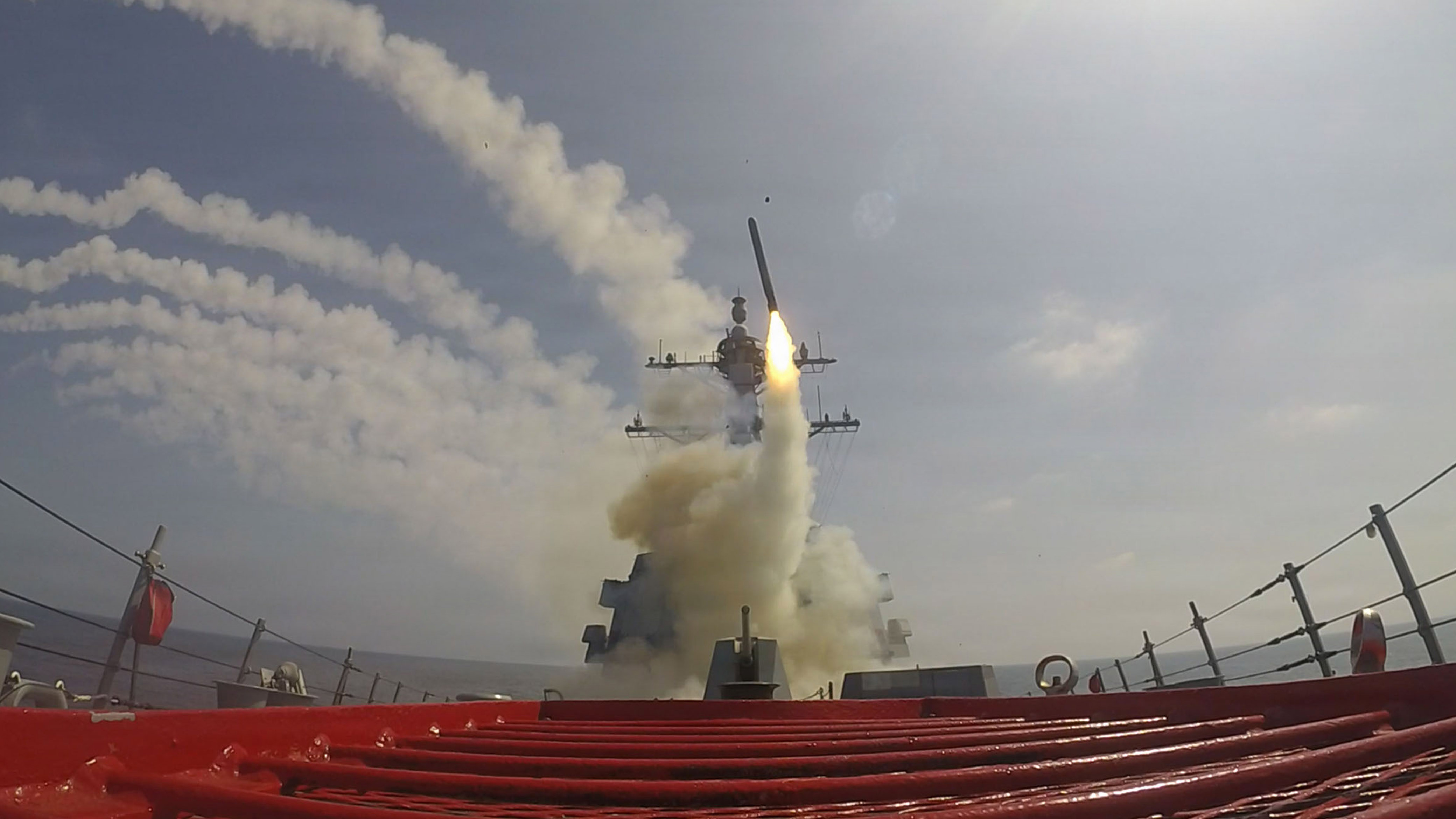
The article says the U.S. has enough munitions to continue the Iran conflict, but inventories of key systems such as THAAD, Patriot, Tomahawk, JASSM, PrSM, SM-3, and SM-6 have been materially depleted, with some categories possibly down by more than half. Replenishment to prewar levels is expected to take 1-4 years, while rebuilding to levels sufficient for a China conflict will take even longer. The report also highlights competition with Ukraine, Japan, and other allies for limited missile production capacity, making near-term defense supply chains tighter.
The market implication is not a simple “missile shortage” headline; it is a multi-year reallocation of constrained industrial capacity toward the highest-priority SKUs. RTX and LMT both benefit, but the mix shift matters: the most acute bottlenecks sit in the interceptors and ship-launched systems with the slowest production ramp, which should improve pricing power, backlog visibility, and margin durability more than top-line growth alone. The second-order winner is the broader U.S. defense supplier base for energetics, seekers, propellants, and guidance electronics, where throughput constraints rather than demand are the near-term gating factor.
The real pressure point is the allocation problem across theaters. Every additional unit sent to the Middle East tightens the queue for Pacific deterrence and allied resupply, so the marginal value of domestic inventory rises while allies face delayed delivery windows. That creates a subtle but important positive for prime contractors: if the U.S. and partners are forced to place larger, earlier orders to rebuild stockpiles, the order book extends, but the timing mismatch can create lumpy quarterly execution and working-capital noise before revenue actually catches up.
Contrarian read: the near-term setup is not uniformly bullish for defense names because the article implies a temporary demand spike but a multi-year delivery lag, so the equity market may be front-running a backlog that does not convert to cash until 2027-2029. The better trade is not chasing the primes after the headline, but buying dips on confirmation that multi-year replenishment contracts are awarded and production expansions are funded. Also, the scarcity of interceptors raises the odds that low-cost counter-UAS and magazine-extension technologies get disproportionate budget share, which could compress returns for legacy high-end interceptors if procurement reforms accelerate faster than expected.
AI-powered research, real-time alerts, and portfolio analytics for institutional investors.
Request TrialOverall Sentiment
mildly negative
Sentiment Score
-0.15
Ticker Sentiment
