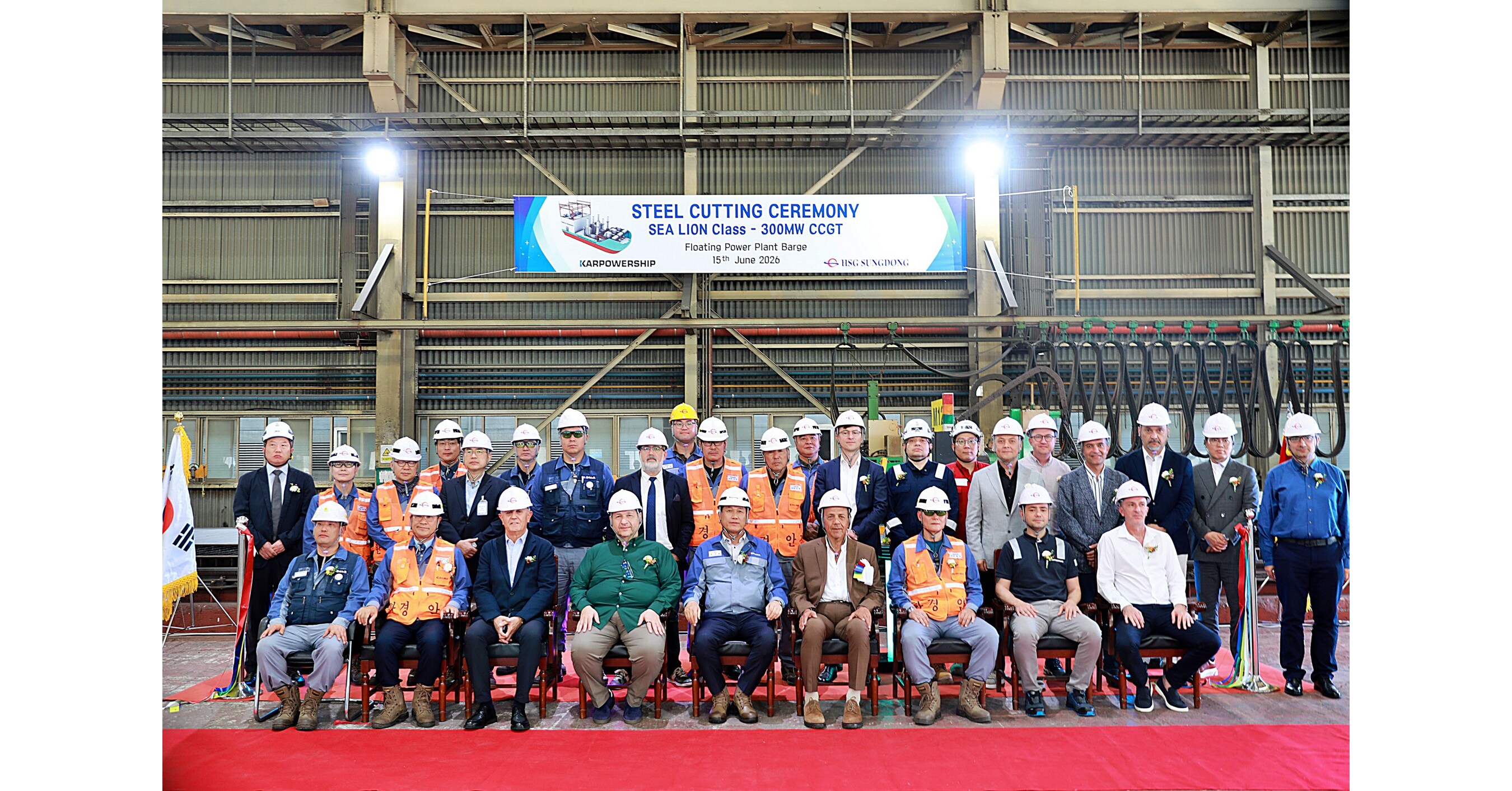
Karpowership broke ground on four new 300 MW "Sea Lion" class powerships, with steel-cutting starting construction in South Korea. The vessels use three high-efficiency gas turbines in combined-cycle configuration and are designed for plug-and-play electricity delivery in under 30 days where grid infrastructure exists, with deliveries scheduled on a rolling basis from January to May 2028. The expansion reinforces capacity growth toward Karpowership’s >8,000 MW platform, supporting demand for fast, flexible power solutions.
This reads less like a direct equity event and more like confirmation that the market for modular, rapidly deployable generation remains sticky in places where grid buildout is too slow. The investable read-through is not to the private sponsor, but to the suppliers that get paid when customers prioritize speed and reliability over the lowest headline LCOE: gas turbines, switchgear, substations, and floating LNG logistics. That favors names like GEV, ETN, and PWR on any incremental order evidence; it is neutral-to-slightly negative for pure renewable developers that rely on a cleaner-faster narrative to win in fragile grids.
The key second-order effect is that this extends the life of gas as a bridging fuel in emerging markets. If floating power keeps gaining share, it delays some diesel displacement and reduces urgency for battery-heavy solutions in outage-prone regions, but only at the margin because the capacity being added here is small versus global demand. The real catalyst is not the steel-cutting itself; it is whether this architecture keeps showing up in backlog, financing, and sovereign procurement over the next 1-3 quarters.
Contrarian view: the market may overread the symbolism and underread the timeline. Delivery is years away, so any near-term price reaction in public proxies is likely to be driven by narrative rather than cash flow. The thesis breaks if LNG delivered costs spike, port/grid access becomes more restrictive, or if governments accelerate land-based grid investment and battery procurement, which would compress the advantage of floating generation over the next 6-18 months.
AI-powered research, real-time alerts, and portfolio analytics for institutional investors.
Overall Sentiment
mildly positive
Sentiment Score
0.18
Ticker Sentiment
