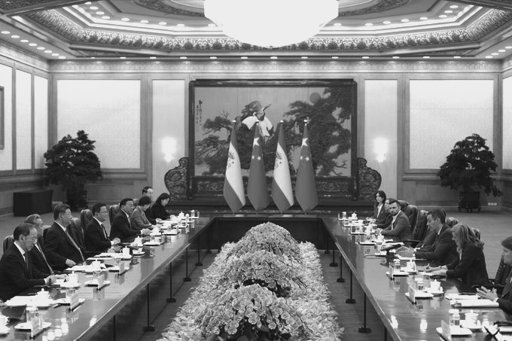
China and Spain reaffirmed stronger bilateral ties in Beijing, with Xi Jinping and Pedro Sánchez calling for greater cooperation and multilateralism amid rising global tensions. The leaders highlighted efforts to expand political dialogue and economic cooperation, including deeper commercial ties, but the article contains no concrete policy changes, trade deals, or market-moving numbers. The broader market relevance is limited, though the messaging is mildly supportive for China-Spain relations.
This is less about immediate market impact and more about incremental signaling that Europe is willing to hedge U.S. policy volatility by deepening commercial channels with China. The second-order effect is not a broad risk-on impulse; it is a gradual re-routing of marginal trade, capital, and diplomatic bandwidth toward a more multi-polar procurement map, which tends to help large-cap European exporters with China exposure and hurt companies reliant on a clean transatlantic policy regime.
The near-term winner is likely Spanish and broader southern European industrials, luxury, autos, and ag-related exporters that can benefit from easing political friction without needing a full thaw. The hidden loser is the cohort that profits from U.S.-led decoupling narratives: if Europe resists alignment on China restrictions, the premium multiple for “clean” supply-chain re-shoring beneficiaries can compress as the market prices slower friend-shoring and weaker policy follow-through.
The catalyst window is months, not days. The key risk is escalation in transatlantic trade or sanctions policy that forces Spain/EU back into line; conversely, if U.S. policy hardens further, this kind of bilateral EU-China signaling becomes more valuable and could spread to other peripheral EU states. The broader contrarian point is that markets may be underestimating how much geopolitical fragmentation benefits firms that can arbitrage jurisdictions, logistics, and regulatory regimes rather than those betting on a binary bloc structure.
For Chinese equities, this is mildly supportive at the margin but not enough to drive a durable rerating on its own. The stronger implication is for European names with China revenue exposure: sentiment can improve before earnings do, creating a tradeable window if policymakers avoid concrete escalation.
AI-powered research, real-time alerts, and portfolio analytics for institutional investors.
Request TrialOverall Sentiment
neutral
Sentiment Score
0.05
