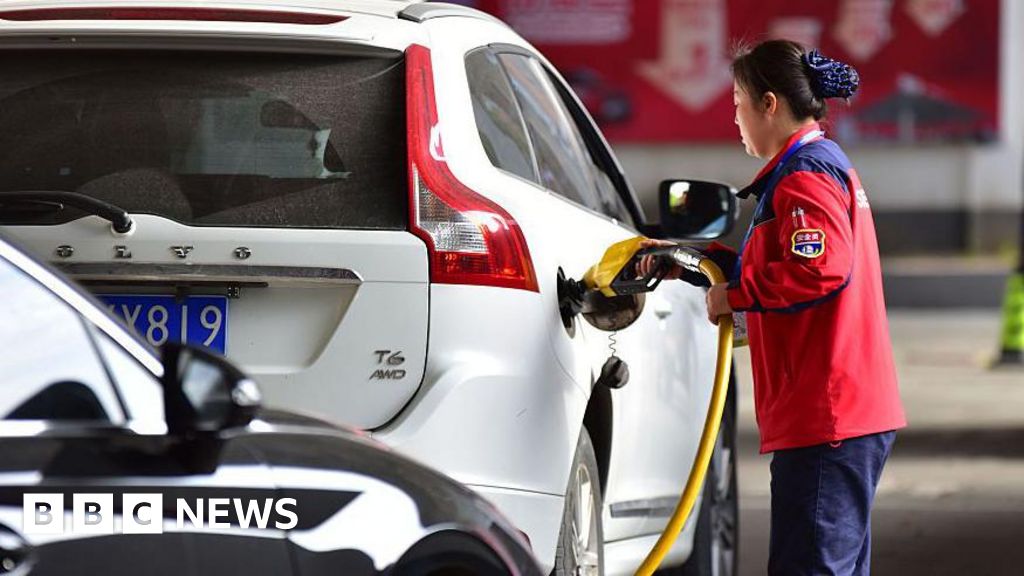
Brent crude jumped almost 7% to more than $126 a barrel, the highest since 2022, after reports that the US military is preparing new Iran strike options for President Trump. West Texas Intermediate rose 2.3% to around $109, while the more active July Brent contract traded near $113. The prospect of strikes and a prolonged Strait of Hormuz disruption raises the risk of a major global energy supply shock.
This is not just a spot-oil shock; it is a convexity event for any market with embedded continuity assumptions. The first-order winners are upstream producers and select energy infrastructure, but the larger second-order effect is margin compression across transport, chemicals, airlines, trucking, and any consumer discretionary chain already operating on thin pricing power. The key distinction is duration: a 1-2 week headline spike mainly boosts volatility and refiners, while a multi-month Strait disruption would begin to reprice earnings estimates, credit spreads, and inflation breakevens.
The market is likely underestimating policy response asymmetry. If oil stays elevated, the most probable reversals are not demand-led but supply-management-led: emergency releases, diplomacy, and tactical de-escalation once physical shipping disruptions start hitting non-energy trade. That means the highest-risk longs are crowded macro inflation hedges that only work if the conflict widens without a credible off-ramp. Energy equities should outperform the commodity on a risk-adjusted basis because balance sheets absorb duration better than futures, but only for producers with low decline rates and visible buyback capacity.
The more interesting opportunity is in relative-value dispersion, not outright beta. Refining and integrateds can benefit initially, but if freight and feedstock constraints persist, downstream demand destruction can arrive faster than consensus expects, especially in Asia where import exposure is concentrated. At the same time, higher gasoline prices are a tax on global growth; that creates a lagged bid for defensives and a headwind for cyclical industrials even if oil retraces on diplomacy. The contrarian view is that the move may be overdone in the near term if the market is pricing a full blockade rather than a short-lived military signaling event with limited physical damage.
AI-powered research, real-time alerts, and portfolio analytics for institutional investors.
Request DemoOverall Sentiment
strongly negative
Sentiment Score
-0.62
