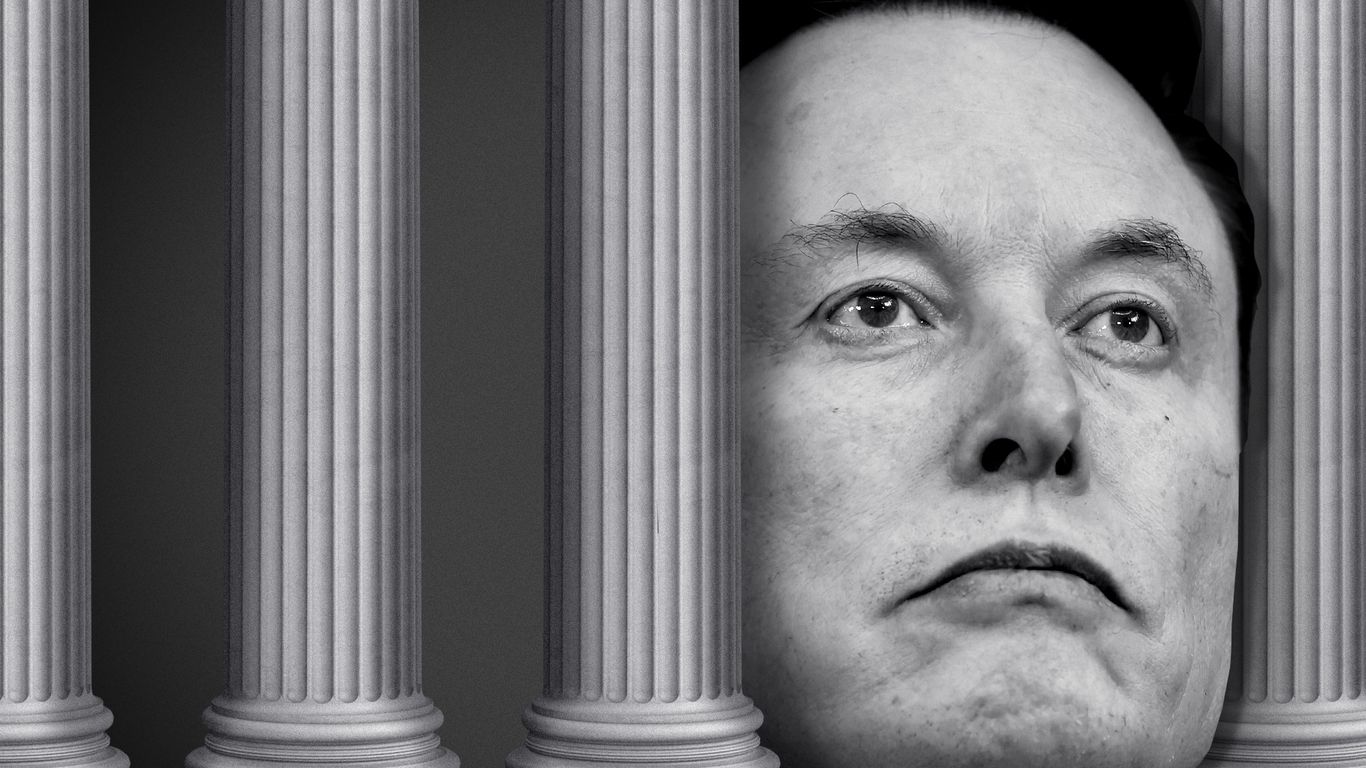
Elon Musk testified as the first witness in his lawsuit against OpenAI, which seeks to block the company’s shift from nonprofit roots to a for-profit AI powerhouse and could involve damages in the hundreds of billions. The case also targets Sam Altman and Greg Brockman, with Musk seeking governance changes and removal of key executives, while OpenAI is separately pursuing a reported Q4 IPO at an $852 billion valuation. The dispute is significant for OpenAI’s control structure and governance, but the immediate market impact is likely limited to the company and related AI names.
The immediate market read is not about binary court outcome so much as duration risk: a legal cloud over OpenAI raises the discount rate for the entire AI capital stack. That matters most for Microsoft because the market has been paying for optionality on OpenAI-driven cloud, model, and product integration; any injunction, governance constraint, or forced restructuring would delay monetization, increase legal spend, and weaken the strategic moat around Azure AI workloads. For Tesla, the linkage is more indirect but still relevant: Musk’s attention, cash, and credibility are finite, and a high-friction multi-month trial can keep xAI and Tesla strategically entangled at the exact moment investors want focus on execution.
The second-order winner, if the case drags, is every credible OpenAI competitor selling “governance-safe” AI capacity to enterprises and regulators. Buyers that have been slow to multi-source because OpenAI looked inevitable now have a reason to hedge concentration risk, which should marginally benefit MSFT’s broader cloud franchise but also independent model providers and inference infrastructure names outside this tape. The IPO overhang is the bigger macro effect: a Q4 public listing at a peak valuation becomes harder to price if courts force a narrative that the corporate structure is unstable, and that can compress multiples across late-stage AI private names by 10-20% as investors demand cleaner governance before paying top quartile revenue multiples.
Near term, the catalyst path is asymmetric: courtroom headlines can move these names in days, but the real risk is a months-long drip of discovery, injunction threats, and reputational spillover that bleeds into partner negotiations, talent retention, and enterprise procurement cycles. The bearish setup on MSFT is not revenue impairment today; it is optionality haircut plus litigation overhang on one of its most important strategic assets. The contrarian view is that the market may be overpricing outright breakup risk and underpricing a settlement that preserves economics while only tweaking governance, which would quickly re-rate the risk premium back down.
AI-powered research, real-time alerts, and portfolio analytics for institutional investors.
Request DemoOverall Sentiment
neutral
Sentiment Score
-0.10
Ticker Sentiment
