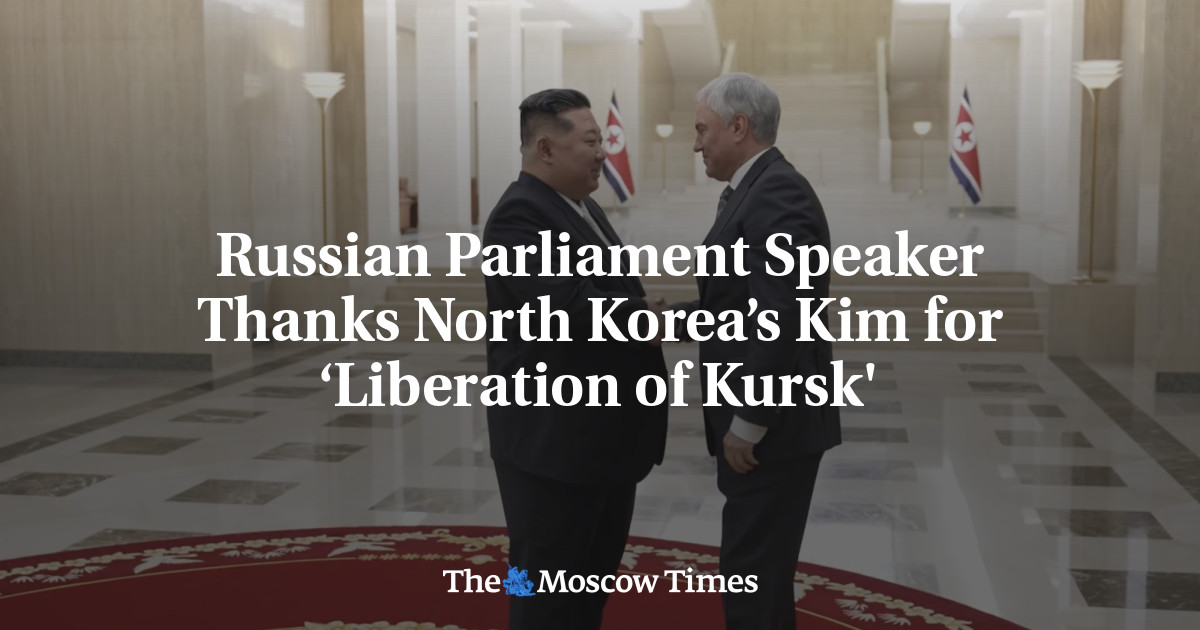
Russia and North Korea are deepening military cooperation, with Moscow thanking Pyongyang for sending thousands of troops, missiles, and munitions to support the war in Ukraine. The two sides also said they are prepared to put military cooperation on a long-term footing and sign a 2027-2031 plan, reinforcing the Russia-North Korea defense axis. The article highlights continued sanctions circumvention risk and reported North Korean casualties of about 2,000, but it contains no direct market price data.
This is less about battlefield optics and more about a durable widening of the Russia–North Korea logistics loop. The practical market implication is that sanctions leakage is becoming institutionalized: Russia is effectively converting constrained hard-currency and tech access into a barter channel for labor, munitions, and expendable manpower. That reduces near-term pressure on Russia’s force-generation constraints and makes the war economy harder to price as a short-duration event.
For defense and sanctions-policy names, the second-order effect is mixed. Near term, the signal supports continued elevated demand for interceptors, EW, ISR, and counter-UAS systems because a more stable Kremlin–Pyongyang supply line implies sustained attritional warfare rather than negotiation. Over a 6–18 month horizon, the bigger trade is on export-control enforcement: if Western governments respond with secondary sanctions or tighter maritime enforcement, the bottleneck shifts from hardware availability to shipping/financing/insurance, which tends to hit smaller, Asia-exposed logistics and commodity intermediaries first.
The contrarian read is that this may be strategically stabilizing for Moscow but economically suboptimal for Pyongyang, which likely becomes more dependent on external support and thus more brittle to a sudden policy reversal in Beijing or Moscow. That creates a tail risk of abrupt dislocation if North Korea is forced to pay a higher domestic cost than implied by the headline alliance. In that scenario, the market reaction would not be in the obvious “war escalation” basket alone; it would also show up in a short-lived spike in sanctions-sensitive shipping, rail, and dual-use procurement channels before authorities clamp down.
This is mildly negative for any Ukraine-adjacent risk basket because it reduces the odds of an imminent de-escalation premium. The key catalyst is not the ceremony itself but whether the announced long-dated military plan turns into a formalized procurement pipeline in 2H25, which would be evidence that the relationship is moving from opportunistic to industrial scale.
AI-powered research, real-time alerts, and portfolio analytics for institutional investors.
Request DemoOverall Sentiment
mildly negative
Sentiment Score
-0.20
Ticker Sentiment
