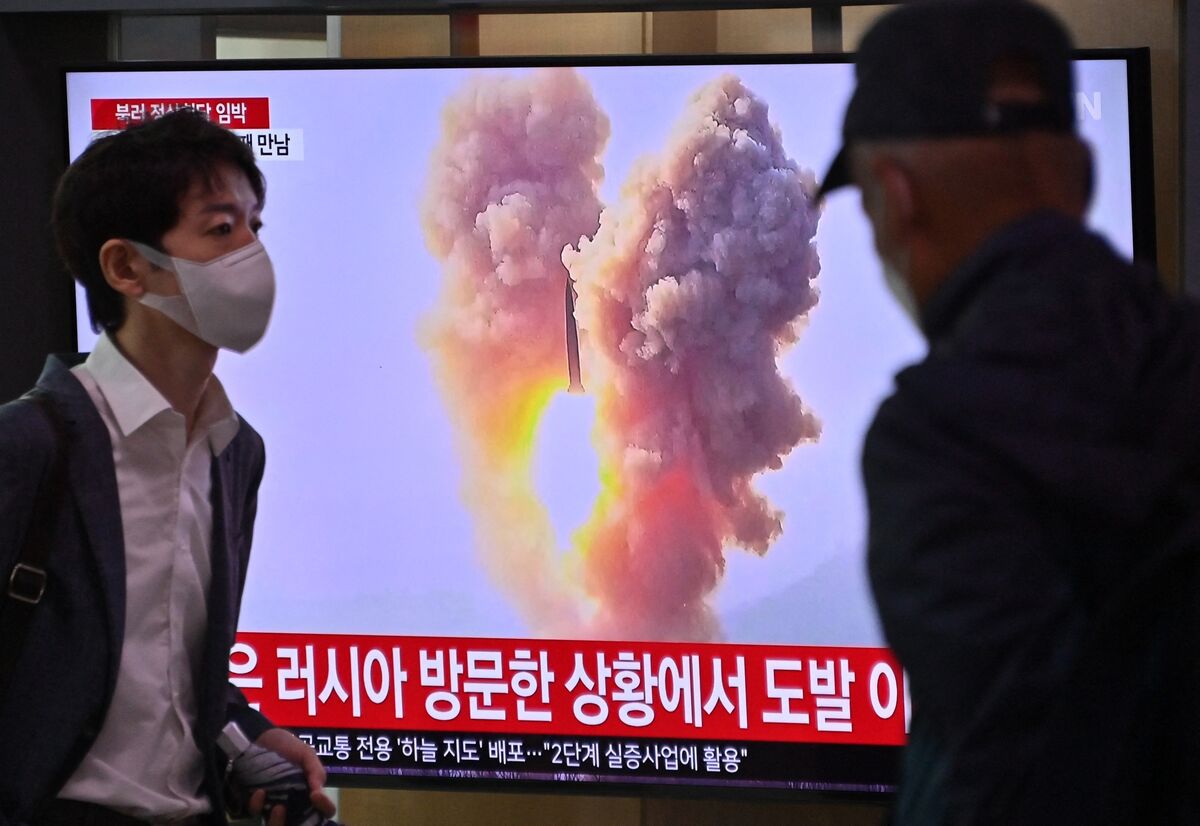
South Korea's President Lee Jae Myung asked President Trump to help engage North Korea on its nuclear program during a brief G7 sideline exchange. The request underscores ongoing geopolitical tensions on the Korean Peninsula, but the article reports no concrete policy change or market-moving development. The immediate financial impact is likely limited.
This is less about immediate peninsula risk than about the probability of a diplomatic “headline cycle” that can reprice defense, Japan/Korea security assets, and rate-sensitive Asia risk for weeks at a time. The market usually underweights how quickly North Korea-related rhetoric can compress implied volatility in Korean equities while simultaneously lifting the long-dated strategic premium on missile defense, sensors, and integrated air-defense supply chains. If Washington even appears more engaged, the first-order beneficiaries are the prime contractors and regional defense electronics vendors; the second-order losers are the names most exposed to de-risking in Korea, especially cyclicals with leverage to consumer/investment sentiment.
The key catalyst window is days-to-months, not years: a single leader-level interaction can shift expectations, but durable repricing requires a real negotiation track, sanctions signaling, or military de-escalation steps. The tail risk is the opposite of détente — a failed outreach can harden markets into a higher-alert regime, which tends to support defense budgets and keep Korea equity risk premium elevated. For investors, the asymmetry is that positive headlines can create tactical upside in Korea risk assets, but structural beneficiaries remain defense names because any progress is likely to be partial and reversible.
The contrarian point is that a push for engagement does not necessarily reduce defense spend; it can raise the probability of “peace through strength” procurement, especially around interceptors, ISR, and command-and-control upgrades. Consensus often treats diplomacy and defense as substitutes, when in practice they can be complements in the 3-12 month horizon. That makes the trade less about betting on peace and more about owning the policy hedge that benefits from either stalled talks or negotiated deterrence.
AI-powered research, real-time alerts, and portfolio analytics for institutional investors.
Request DemoOverall Sentiment
neutral
Sentiment Score
0.00
