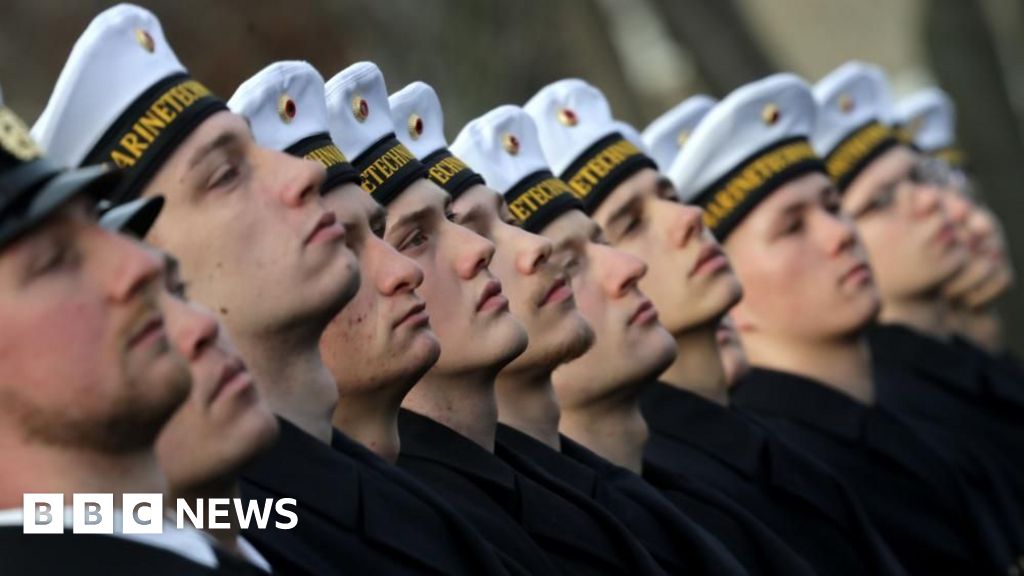
The Bundestag voted 323-272 to reintroduce a voluntary military service program that will send mandatory questionnaires to all 18-year-olds from January 2026 (mandatory for men, voluntary for women), with universal medical exams from July 2027 if required. Defence Minister Boris Pistorius plans to raise active Bundeswehr personnel from roughly 182,000 by 20,000 next year with a long-term target of 260,000 plus ~200,000 reservists to meet NATO goals; volunteers are offered about €2,600/month. The move accompanies domestic political friction — youth protests and narrow coalition margins — and comes alongside a contentious pensions bill preserving current state pension levels until 2031, creating potential fiscal and political considerations for investors focused on defense contractors, budgetary pressures and German domestic stability.
Market structure: Germany’s move to reintroduce voluntary service and plan for ~260k active plus ~200k reservists (up from ~182k today) materially favors European and German defence primes (e.g., RHM.DE, AIR.PA, HO.PA) and upstream suppliers (steel, electronics, engines). Recruit pay (~€2,600/mo) and a planned +20k recruits this year imply ~€0.6–0.8bn/yr in direct payroll alone; equipment/procurement will drive the much larger multi‑year capex cycle (likely €several bn). Bund fiscal space tightness will raise issuance and upward pressure on 10y Bund yields over 12–36 months.
Risk assessment: Near term (days–weeks) market impact should be muted; short term (3–12 months) risk centers on coalition politics (pension vote fragility) and protests that can delay procurement; long term (1–5 years) execution risk — supply chain bottlenecks, export controls, and protectionist bias — could compress margins or re‑route orders. Tail scenarios: coalition collapse or reversal of policy within 6–12 months, or a sudden spike in geopolitical tensions triggering emergency conscription and capex spikes. Key hidden dependency is EU/NATO procurement harmonization which can shift order flow between domestic and international suppliers.
Trade implications: Tactical plays: size selective long exposure to Rheinmetall (RHM.DE) and Airbus (AIR.PA) with 6–24 month horizons via equity or call spreads; use short Bund futures to express fiscal/yield repricing (target +20–40bp in 12 months). Layer in options (9–18m call spreads on RHM.DE) to limit downside; for downside political tail risk buy 3–6m put spreads on Bund futures. Rotate into Materials (steel, copper suppliers) and Aerospace/Defense; trim consumer discretionary exposure in Germany by 1–3%.
Contrarian angles: Consensus underestimates timing friction — procurement lifecycles mean revenue won’t spike instantly, so avoid overpaying for near‑term multiples; domestic protectionism can concentrate winners among German SMEs (Rheinmetall, MTU) not global primes. Historical parallel: post‑2014 rearmament produced a 2–4 year revenue ramp for defence names, not an immediate jump. Unintended consequence: higher defence spending plus pension freezes raise medium‑term interest rate risk — size positions modestly (2–3% each) and stagger entries.
AI-powered research, real-time alerts, and portfolio analytics for institutional investors.
Request DemoOverall Sentiment
neutral
Sentiment Score
0.05
