
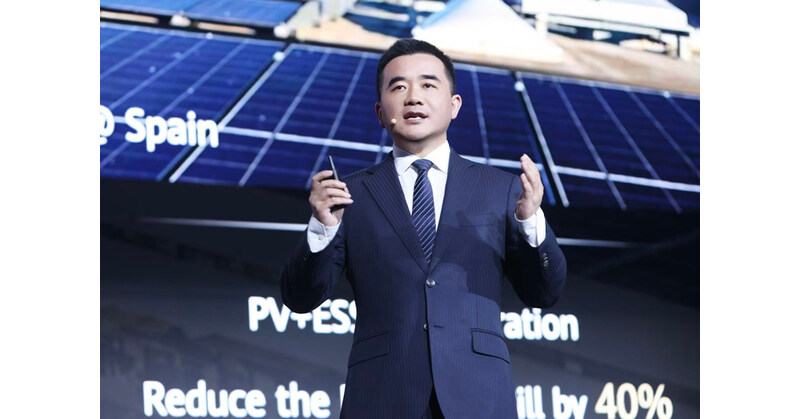
Huawei na The Smarter E 2026 představila strategii „tvorby sítě“ pro fotovoltaiku a BESS s cílem posílit stabilitu evropské sítě při růstu podílu obnovitelných zdrojů. Uvedla konkrétní dopady: obchodní park AHS v Německu zvýšil tržby o 10 % za dva roky nasazení univerzálního řešení a supermarket Carrefour ve Španělsku snížil náklady na elektřinu téměř o 40 %, s dobou návratnosti investice ~5 let. Článek je primárně produktová/strategická informace s pozitivními výsledky z projektů, bez náznaku okamžitého širšího tržního šoku.
This is less a fundamental update for Carrefour than a signal that behind-the-meter power systems are moving from “green branding” to operating leverage. For retailers with large, predictable load profiles, the real economics are demand-charge reduction, outage resilience, and deferred capex on backup power—not headline kWh savings. That means the first beneficiaries are the grid-integrators and high-voltage equipment vendors that can bundle controls, inverters, storage, and software; the losers are merchant thermal peakers and, over time, ancillary-service prices as more grid-forming BESS enters the stack.
The market is likely underestimating how much of this is a regulation-and-interconnection story rather than a pure battery story. Over the next 1-3 months, the catalyst is not one case study but procurement language: if European TSOs start standardizing grid-forming requirements, demand should shift toward ABB, Schneider Electric, Siemens Energy, and other control-heavy vendors. The second-order risk is that Huawei’s presence may be partially offset by critical-infrastructure procurement scrutiny in Europe, which could redirect share back to Western suppliers even if the technical solution is attractive.
For CRRFY, the equity read-through is modest. A 40% electricity-cost reduction in a single store format is helpful, but it is not enough by itself to move group margins unless replicated across a large portion of the estate and financed without meaningful balance-sheet drag. The contrarian view is that investors may be overpaying for “AI + batteries” narratives while underestimating cycle-time, permitting, and the fact that storage economics compress quickly once every merchant stack chases the same balancing revenues. Falsifier: if European ancillary-service spreads remain elevated and grid-forming procurements accelerate into 2H26, the adoption curve could steepen materially.
AI-powered research, real-time alerts, and portfolio analytics for institutional investors.
Request TrialOverall Sentiment
mildly positive
Sentiment Score
0.35
Ticker Sentiment
