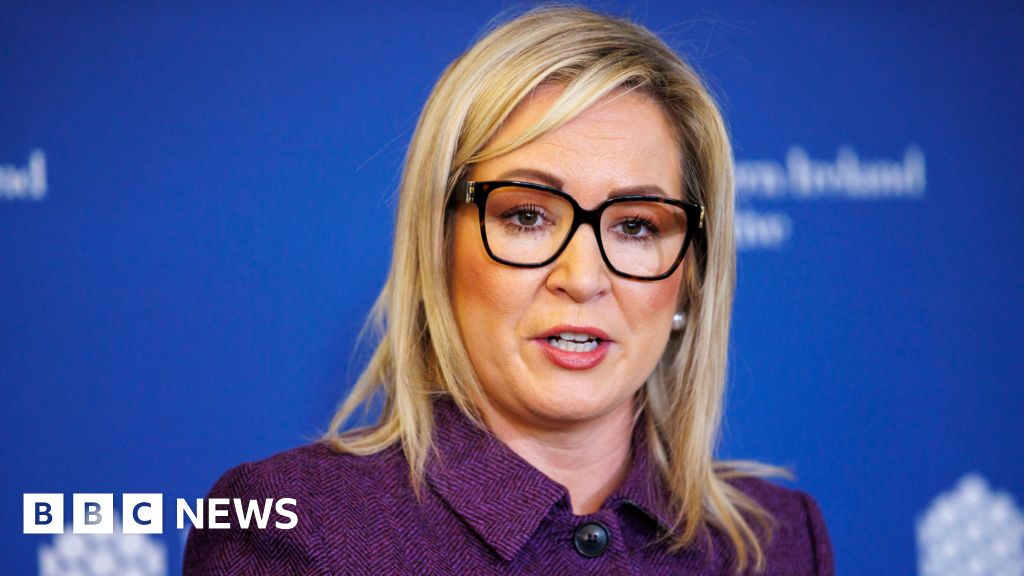
Prime Minister Sir Keir Starmer approved a US request to use British military bases for defensive strikes on Iranian missile sites, after which Iran launched ballistic missiles and drones at US assets and regional allies including Israel, Bahrain, Kuwait, Qatar, Jordan and the UAE. First Minister Michelle O'Neill condemned the decision as joining a 'reckless war', did not attend a government security briefing (her deputy did), and accused the DUP of politicising her absence—heightening domestic political tensions while underscoring regional escalation risks that investors may monitor for potential spillovers to risk assets and energy markets.
Market structure: Near-term winners are defense primes (US: LMT, RTX, NOC; UK: BA.L) and oil exporters if strikes disrupt Gulf flows; losers are airlines, travel leisure and regional Gulf service providers. Pricing power shifts toward large defense contractors with backlog visibility (expect 5–15% revenue re-rating potential over 3–12 months) while short-term oil supply shocks would push Brent +5–20% on outages, lifting integrated producers (XOM, CVX).
Risk assessment: Tail risks include a wider regional war (low probability, high impact) that could spike crude >$100 and hit global PMI; immediate (days) risk is volatility and flow-driven bid for safe havens, short-term (weeks) is commodity squeeze and insurance cost increases, long-term (quarters) is sustained defense budgets and supply-chain re-routing. Hidden dependencies: UK domestic political friction may widen gilt spreads vs. USTs and impair sterling; a UK policy reversal on base use would remove a key escalation vector.
Trade implications: Tactical longs in large-cap defense (2–3% portfolio across LMT/RTX/NOC/BA.L, 3–12 month horizon) and hedges in GLD (1–2%) and long-duration Treasuries (TLT/IEF 1–2%) to offset equity drawdowns. Short 1–2% exposure to airlines (AAL, IAG.L) and use volatility plays — buy 3-month call spreads on XLE (cost <1% portfolio) if Brent > +5% intraday — and purchase 3-month GBP puts (0.5–1%) as targeted currency insurance.
Contrarian angles: The market may underprice duration of defense rerating — a sustained conflict could lift sector multiples 10–20% over 6–12 months, benefitting mid-cap primes (GD, RTX supply chain names). Conversely, oil spikes are often mean-reverting within 2–3 months absent supply-side damage, so pure commodity longs without defined exits are riskier. Watch insurance/shipping rates and Israel/Iran direct-engagement headlines as fast catalysts that can flip trades within 48–72 hours.
AI-powered research, real-time alerts, and portfolio analytics for institutional investors.
Request TrialOverall Sentiment
moderately negative
Sentiment Score
-0.35
