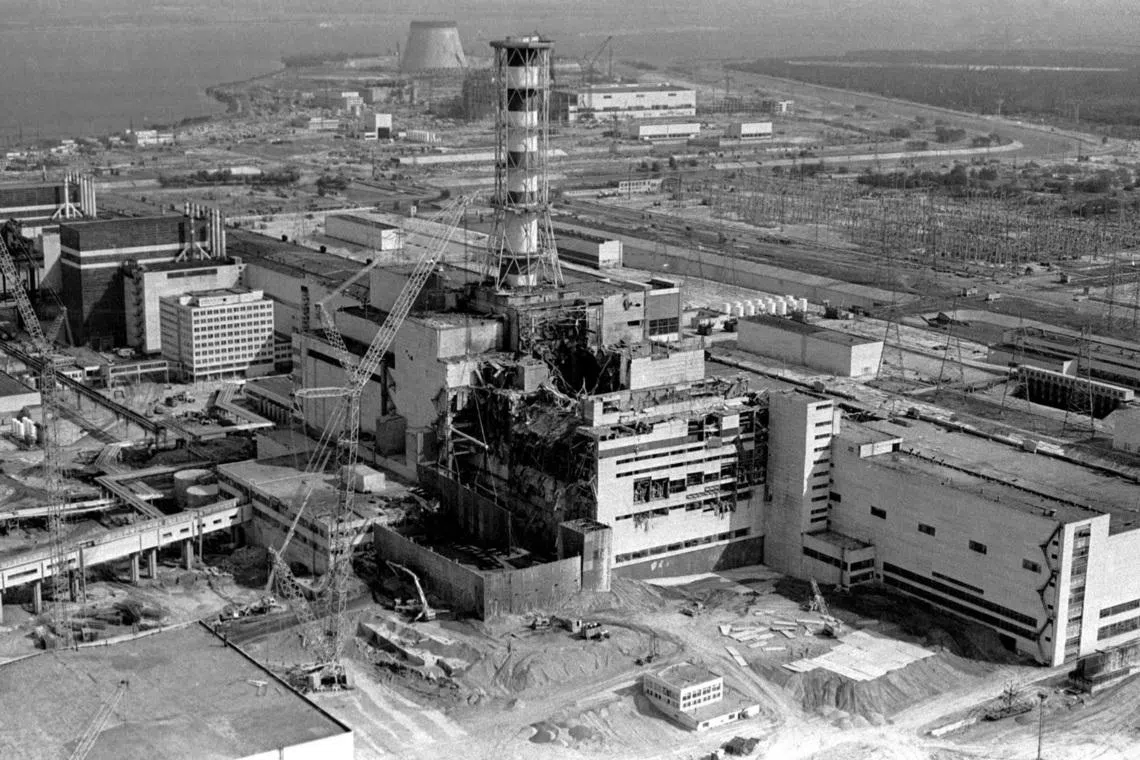
The US pledged up to $100 million toward repairs to Chernobyl’s damaged protective dome, covering nearly one-fifth of the estimated €500 million restoration cost. The February 2025 Russian drone strike created a large hole in the outer radiation shell, renewing nuclear-safety concerns amid the ongoing Russia-Ukraine war. The news is primarily geopolitical and safety-related, with limited direct market impact.
This is less about the repair bill than about the policy signal: nuclear-risk spending is becoming one of the few bipartisan defense-adjacent fiscal buckets that can move even under a hardline administration. That matters because it normalizes a higher baseline of spending on nuclear containment, radiation monitoring, and critical infrastructure hardening across Eastern Europe, creating a modest but durable tailwind for specialist engineers, remote sensing, and industrial safety vendors with NATO exposure. The second-order winner is not the prime contractor set broadly, but the small-cap niche suppliers that can win incremental work as governments fast-track procurement outside ordinary budget cycles.
The bigger market implication is sequencing. In the next few weeks, headlines should support a short-lived boost in “Europe stabilization” assets, but over the next 3-12 months the more relevant catalyst is whether this becomes a template for broader war-damage remediation funding. If yes, it modestly lowers the probability of extreme tail-risk events around nuclear facilities, but it also reinforces the view that the conflict will require recurring fiscal outlays rather than a near-term diplomatic resolution. That tends to keep defense spend elevated and discourages complacency in European utilities and insurers with Ukraine-facing exposure.
The contrarian read is that the direct economic impact is probably underwhelming, while the political impact is larger than the dollar amount suggests. Markets may overreact to the symbolism of U.S. participation and underprice the fact that a coordinated G7 funding response can de-risk future damage claims and procurement pipelines. But if the funding process stalls in Congress or allies free-ride, the headline fades quickly and the investable signal disappears within days; the durable trade only exists if this is followed by a broader international commitment framework.
AI-powered research, real-time alerts, and portfolio analytics for institutional investors.
Request DemoOverall Sentiment
neutral
Sentiment Score
-0.10
