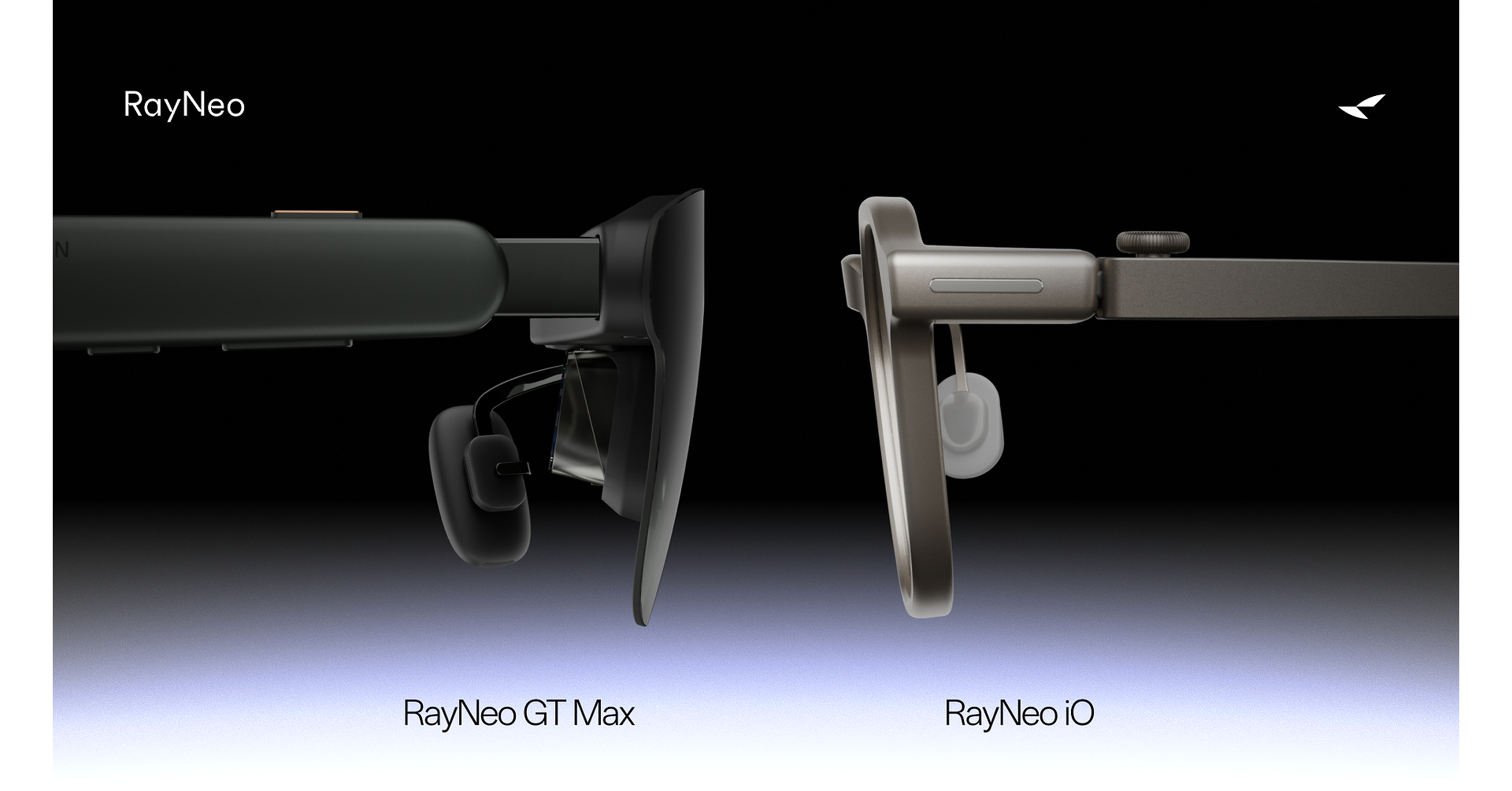
RayNeo launched two new consumer AR glasses lines—the RayNeo iO (33g) for all-day ambient productivity and the cinema-grade RayNeo GT Series (68g GT / 78g GT Max, up to 59° FOV). The company cites a 23.7% global consumer AR smart-glasses market share by shipment volume (Counterpoint Q1 2026) and both series are scheduled to go on sale September 4, 2026, via RayNeo’s website and Amazon. While details are product-focused, the expansion of its AR lineup and distribution timing are modestly positive for the company’s near-term consumer momentum.
This is more of a category-validation event than a direct earnings inflection. The only obvious P&L winner in the near term is TCLHF through brand halo and potentially better channel leverage, but the bigger economic question is whether consumer AR is crossing from demo to repeat usage; if it does, the upside accrues to whoever controls distribution, software, and accessory attach, not just the headset OEM. AMZN gets a small positive read-through from being an early retail rail, but this is not material enough to change the stock on its own.
The competitive takeaway is that category fragmentation may actually help adoption: a productivity-first device and a media-first device reduce the “one device does everything” failure mode. The risk is inventory complexity and return rates—multiple sizes, prescription inserts, and premium feature sets usually look good in launch PR but can pressure gross margin if sell-through is weaker than channel fill. For AAPL, the event is mildly narrative-negative in that it keeps spatial/AI wearables in the conversation, but there is no credible near-term substitution effect versus the iPhone cycle.
The contrarian view is that consensus may be overvaluing spec-sheet leadership and undervaluing comfort, app retention, and post-launch review velocity. If the product is truly sticky, the first independent signal will be Amazon rank, review quality, and any guidance on replenishment, not the launch itself. Time horizon matters: days = sentiment and retailer traffic; 1-3 months = sell-through and returns; 6-18 months = whether this becomes a viable consumer hardware subcategory or remains niche wearables theater.
AI-powered research, real-time alerts, and portfolio analytics for institutional investors.
Request DemoOverall Sentiment
mildly positive
Sentiment Score
0.25
Ticker Sentiment
