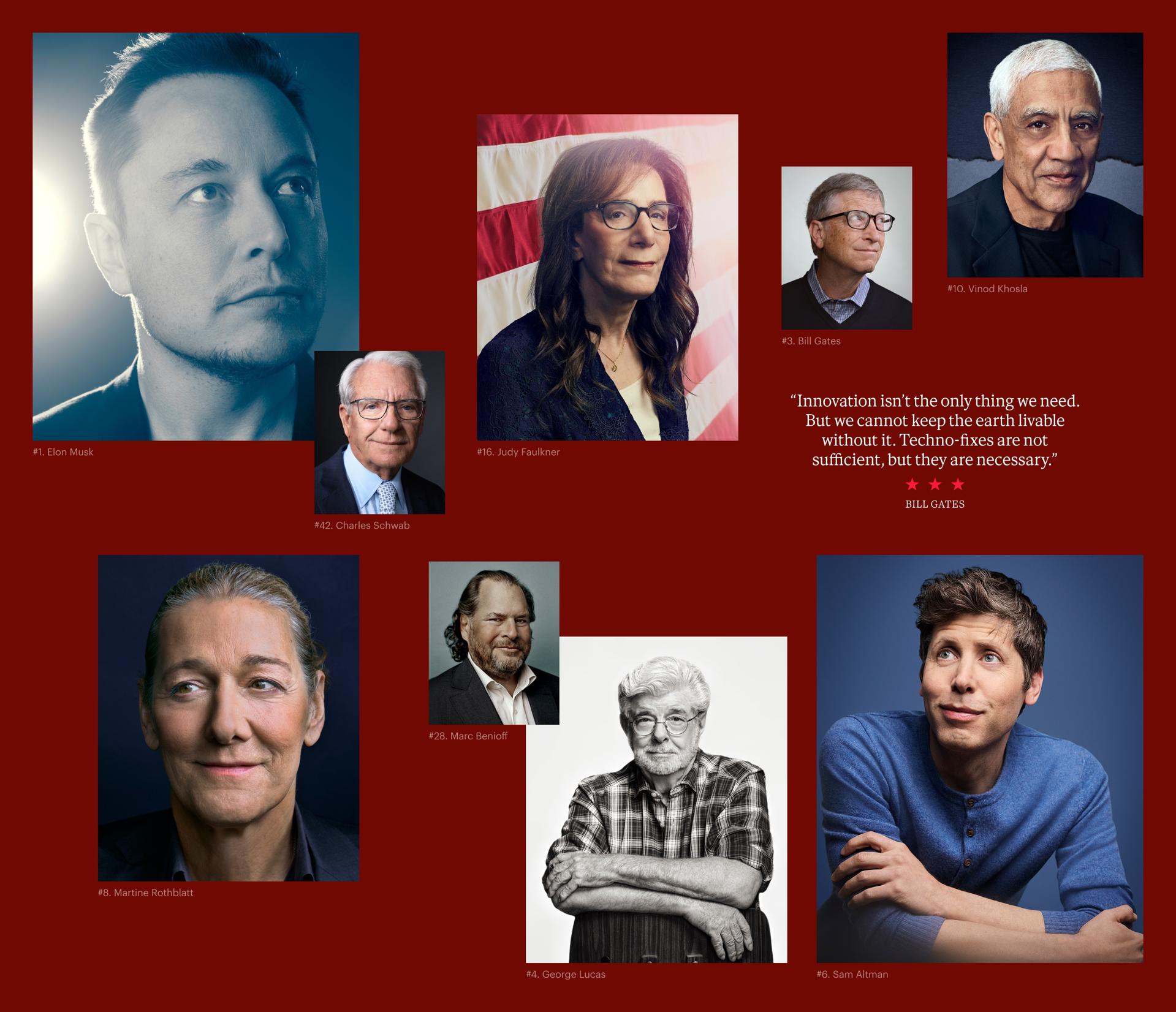
Forbes publishes its “250 America’s Greatest Innovators,” ranked via reporter nominations, a panel of judges (including Jim Breyer, Kara Swisher and Rita McGrath) and AI inputs (ChatGPT and Gemini). Top-ranked individuals include Elon Musk (#1), Jeff Bezos (#2) and Bill Gates (#3), with sector highlights spanning AI (Nvidia noted at $187 billion trailing 12‑month revenue), cloud/retail disruption (Amazon’s role in a $7.4 trillion U.S. retail market), biotech and fintech. The roster—all U.S. citizens—covers serial founders, VCs and scientists across industries and notes that more than one-third are women and people of color, underscoring breadth of commercial and technological influence rather than a discrete market-moving event.
Market structure: The Forbes list is a directional validation of AI, cloud and biotech winners—NVDA, MSFT, GOOGL, AMZN and MRNA stand to capture disproportionate demand for compute, data and therapeutics over 6–24 months. GPU scarcity and lead times (TSMC/ASML constraints) sustain pricing power for NVDA and AVGO for at least the next 2–3 quarters, while legacy hardware (INTC, legacy media FOXA) face margin pressure and slower capex recovery. Cross-asset: stronger tech flows likely tighten credit spreads modestly (bps move) and support USD; copper/oil demand implications are mixed—EV metals up (short to medium term) while oil demand growth could moderate long term if electrification accelerates.
Risk assessment: Tail risks include new U.S./EU export controls on advanced nodes or an AI safety regulation that curtails monetization—each could knock 15–30% off forward multiples for exposed names within 3–12 months. Short-term (days-weeks) volatility will be earnings and GPU inventory prints; medium-term (3–12 months) risks are supply-chain shocks and clinical/ trial failures in biotech (MRNA/UTHR). Hidden dependencies: talent concentration (OpenAI/Anthropic hires), datacenter power constraints, and counterparty exposure in OTC AI licensing deals could create second-order liquidity events.
Trade implications: Tactical: overweight NVDA (core) and MSFT/GOOGL (infrastructure) while trimming exposure to GM and FOXA; implement 2–4 tranche entries over 2–6 weeks to manage headline risk. Use pair trades (long NVDA / short INTC equal notional) to isolate secular GPU demand; size at 1–3% notional each. Options: buy 6-month NVDA 10–15% OTM call spreads to cap capital with upside capture; hedge concentrated tech exposure with 3-month SPX 5% OTM puts sized to cover 10–15% portfolio risk.
Contrarian angles: Consensus may underprice dispersion risk—NVDA concentration risk is high: a 20% guidance miss or inventory destocking could mean 30–40% downside in 1–3 months. Underappreciated longs: AVGO and QCOM (broad silicon content, lower single-product concentration) and mid-cap biotech names with upcoming catalysts (MRNA readouts) may offer better risk-adjusted returns. Historical parallels: 2010 mobile surge led to hardware bottlenecks then oversupply; expect similar boom-bust in GPU vs. silicon capacity over 12–24 months.
AI-powered research, real-time alerts, and portfolio analytics for institutional investors.
Request DemoOverall Sentiment
moderately positive
Sentiment Score
0.50
Ticker Sentiment
